









Content ITV PRO
This is Itvedant Content department
Learning Outcome
5
Communicate solutions confidently and logically
4
Make clear and informed decisions under pressure
3
Solve logical reasoning and aptitude problems
2
Use structured thinking to organize responses
1
Apply critical thinking in workplace scenarios
You’ve already learned how to think critically...
how to pause, analyze, and respond.
But in an interview...
can you actually use it at that moment?”
(Pause... look around)
“Because knowing critical thinking is step one...
applying it under pressure is the real test.”
In that moment, there’s a silent battle in your mind—
one voice says, ‘Answer fast!’
other says, ‘Wait… think.’
And whichever voice wins... shapes your answer.
Because under pressure, you don’t use what you know—
you use what you’ve practiced.
So it’s not just about learning critical thinking...
It's about training your mind to use it.
And that’s where we’re heading next
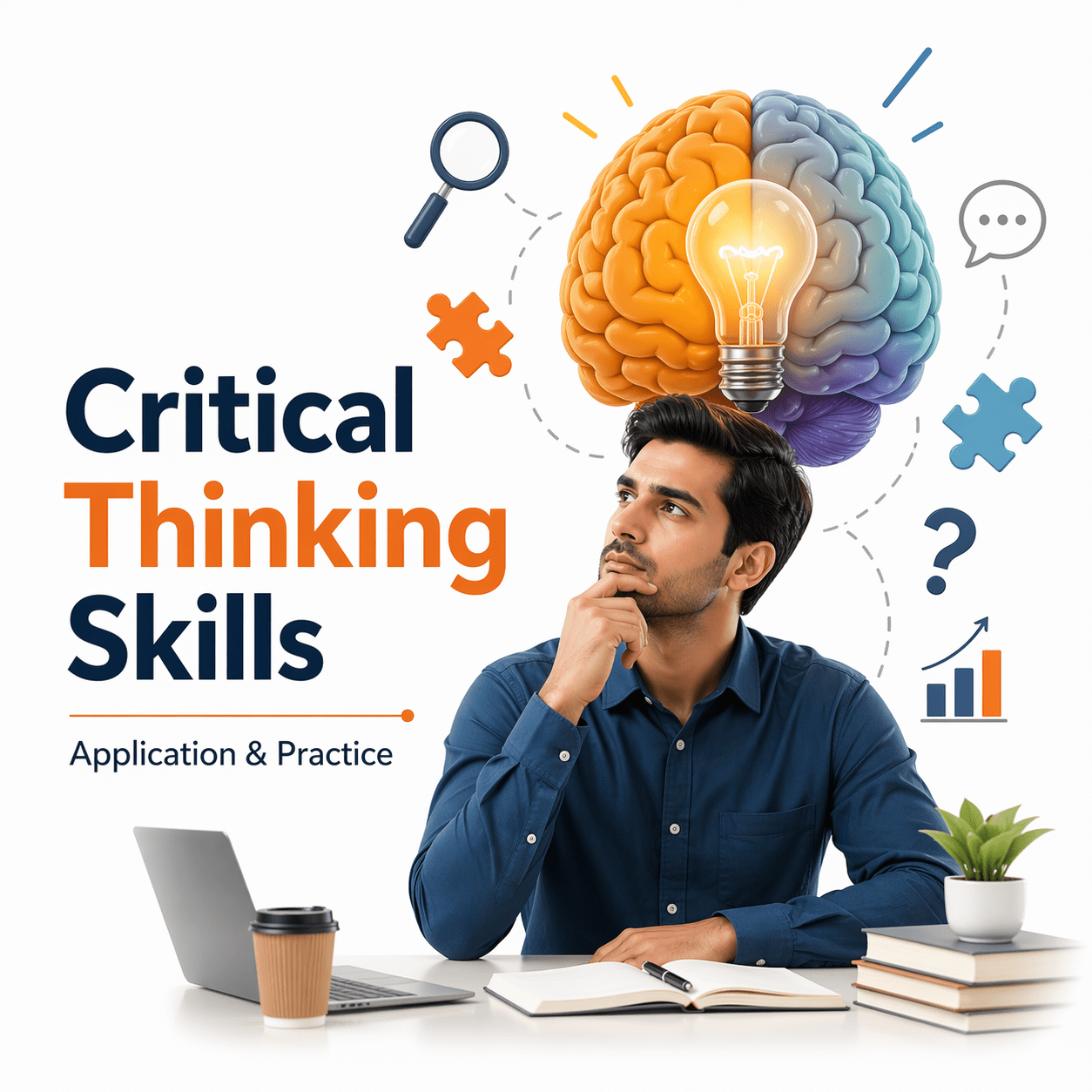
Application & Practice of Critical Thinking.
Why Applying Critical Thinking matters (Workplace)
1.Helps solve real workplace problems
2.Improves decision-making under pressure
3.Reduces errors and confusion
4.Builds confidence in communication
5.Increases professional effectiveness
Applying Critical & Structured Thinking at Work
1.Solves real workplace problems effectively
2.Improves decision-making under pressure
3.Brings clarity to complex situations
4.Organizes thoughts logically
5.Enhances clear and confident communication
6.Increases overall professional effectiveness
Why Aptitude Practice Matters?
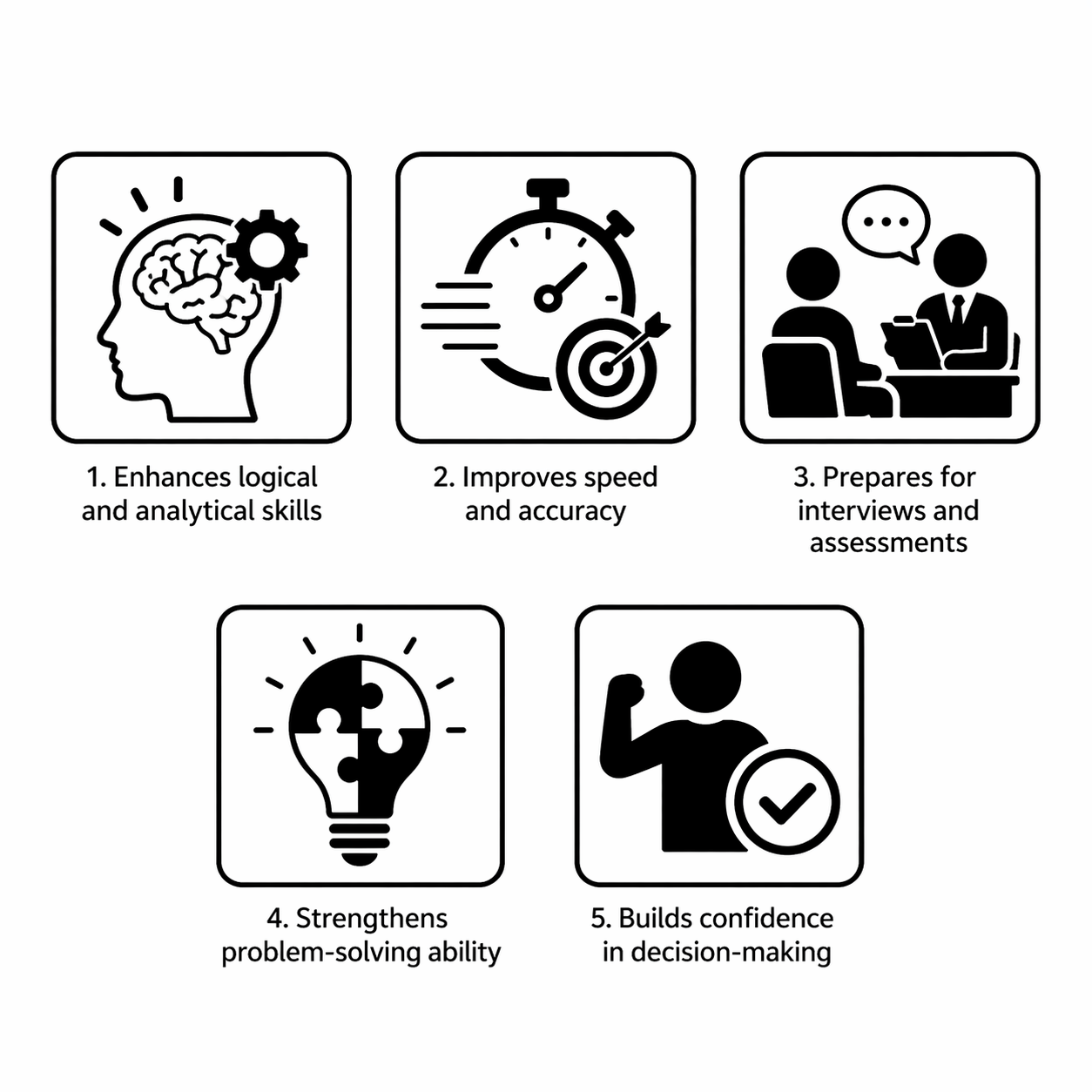
1.Enhances logical and analytical skills
2.Improves speed and accuracy
3.Prepares for interviews and assessments
4.Strengthens problem-solving ability
5.Enhances logical and analytical skills
kindly refer below deck
Copy paste slide 2,3,4,5,6,7,9,10,11,12,13
What is Structured Thinking
1.Breaking problems into steps
2.Organizing ideas logically
3.Using frameworks (Problem → Analysis → Solution)
4.Presenting clear, structured responses
In-Class Activity
Case Study Activity – Guidelines
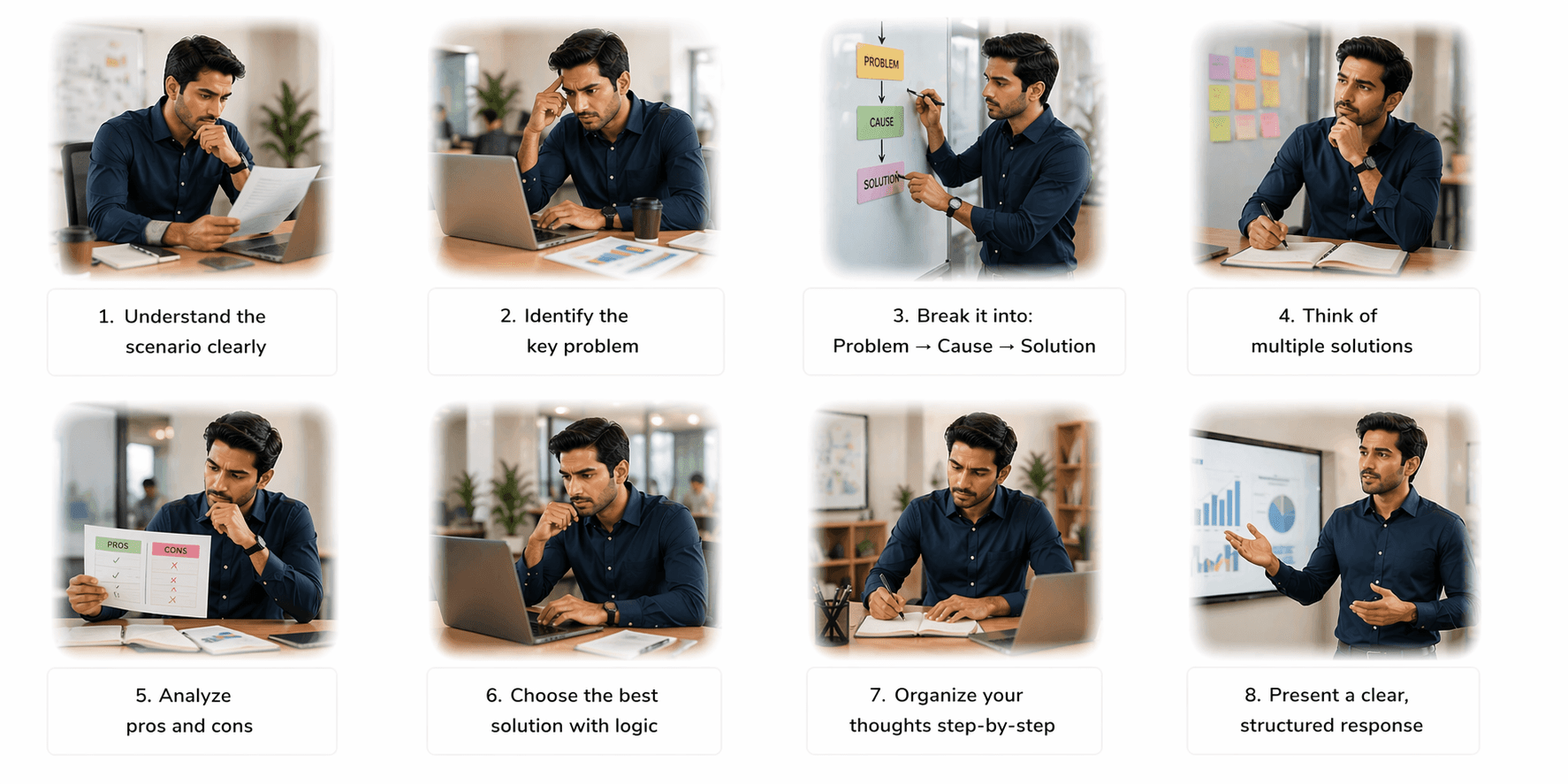
1.Understand the scenario clearly
2.Identify the key problem
3.Break it into: Problem → Cause → Solution
4.Think of multiple solutions
In-Class Activity
5.Analyze pros and cons
6.Choose the best solution with logic
7.Organize your thoughts step-by-step
8.Present a clear, structured response
Summary
5
Clear thinking leads to confident decisions
4
Practice regularly to improve thinking
3
Apply logic in real situations
2
Use structure to organize ideas
1
Think before you respond
Quiz
Aptitude practice mainly improves:
A. Memory only
B. Communication only
C. Logical and analytical skills
D. Writing skills
Quiz-Answer
Aptitude practice mainly improves:
A. Memory only
B. Communication only
C. Logical and analytical skills
D. Writing skills
By Content ITV