Display Advertising


Responsive Ads


Learning Outcome
5
Understand the concept of Ad Strength
4
Explain how Google’s AI combines and optimizes ad assets
3
Identify the key assets required to create effective RDAs
2
Differentiate Responsive Display Ads and Static Banner Ads
1
Understand what Responsive Display Ads are
Tailor Analogy
Unlike him, his competitor sold only one standard size and expected customers to adjust. Naturally, many customers walked away.
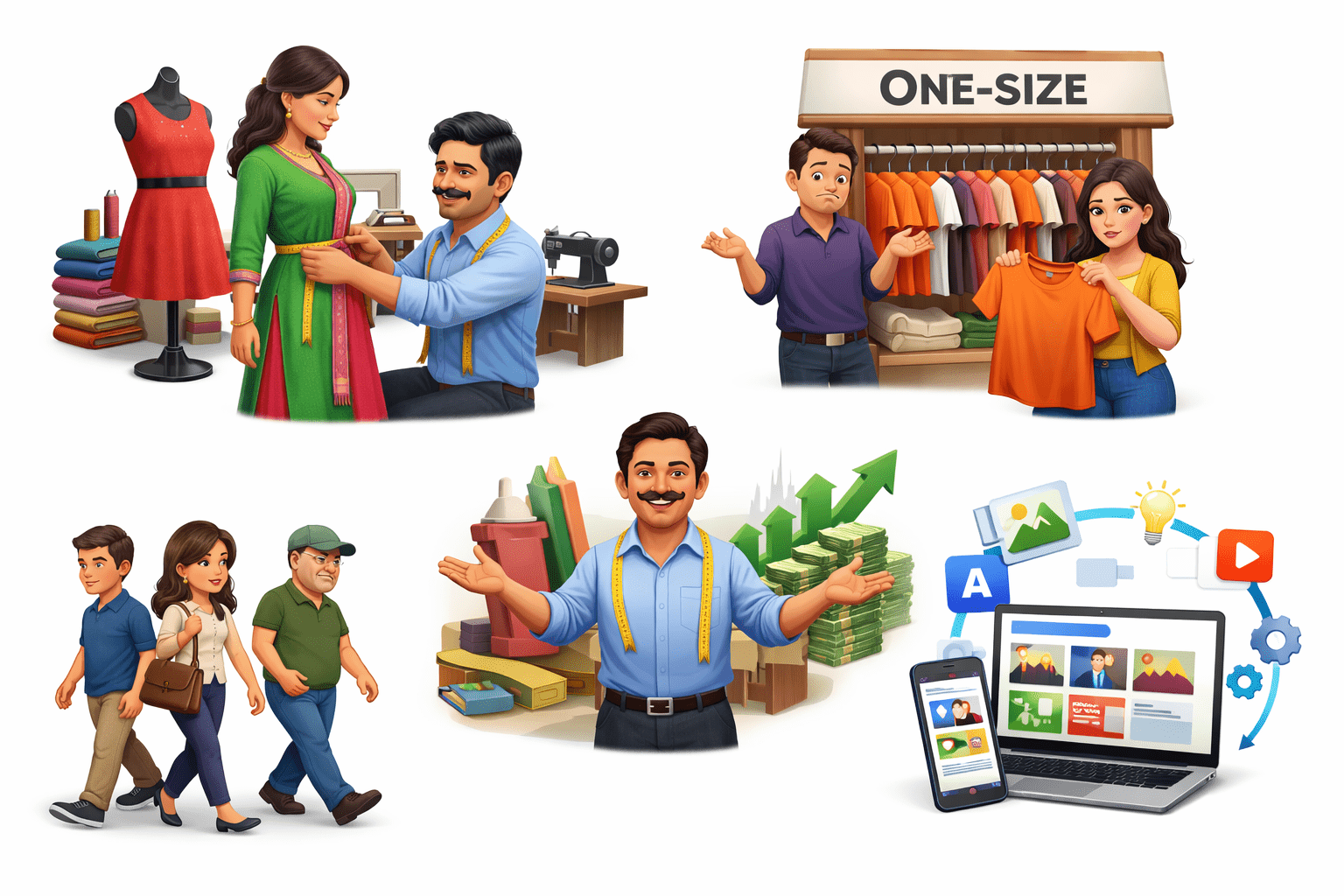
Hasmukh, a tailor in Surat, created custom-fit outfits based on each customer’s measurements, preferred colors, and style.
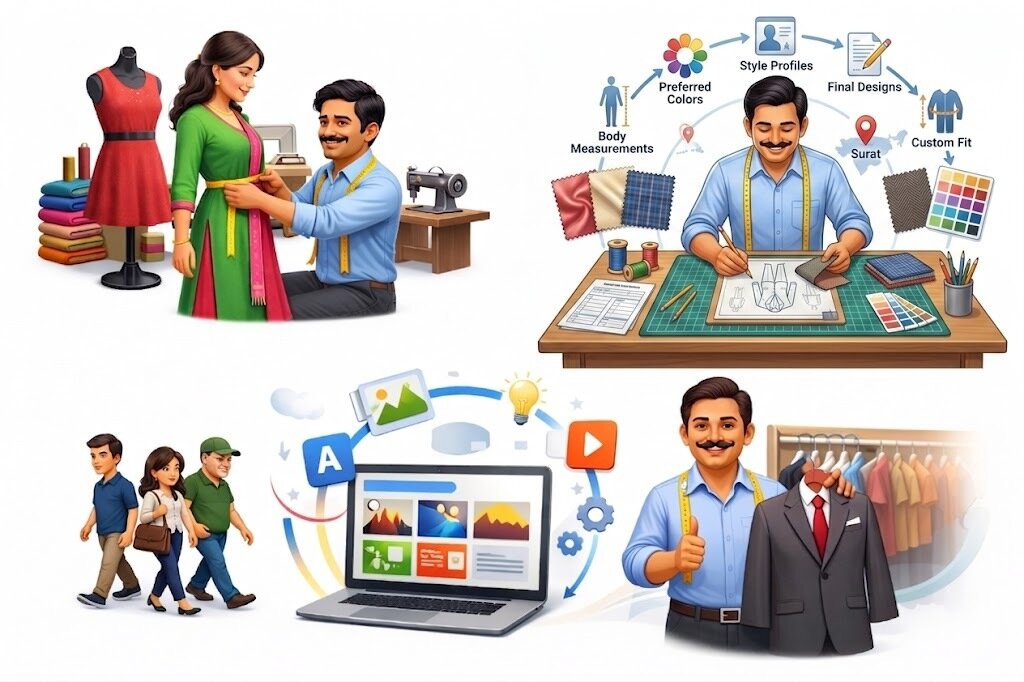
Tailor Analogy
While Hasmukh’s business grew 4x because he adapted to customer needs.
Responsive Display Ads work the same way—you provide assets (images, headlines, descriptions), and Google’s AI automatically creates the best-fitting ad for each user, device, and placement.
Moral:
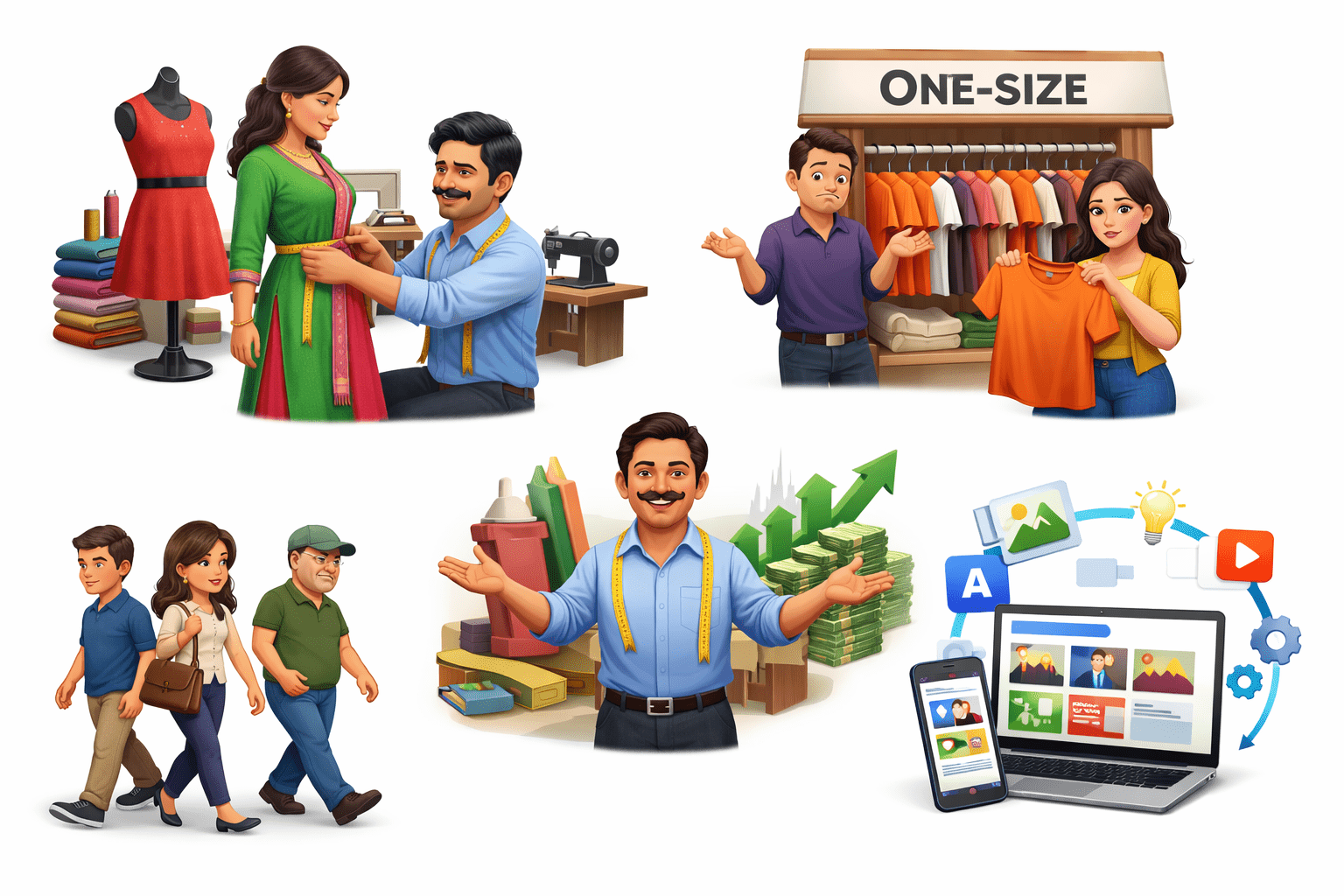
From Tailored Fits to Smart Ads
Just like Hasmukh’s tailoring business succeeded by adapting to each customer, digital advertising also works best when ads adapt to different users and placements.
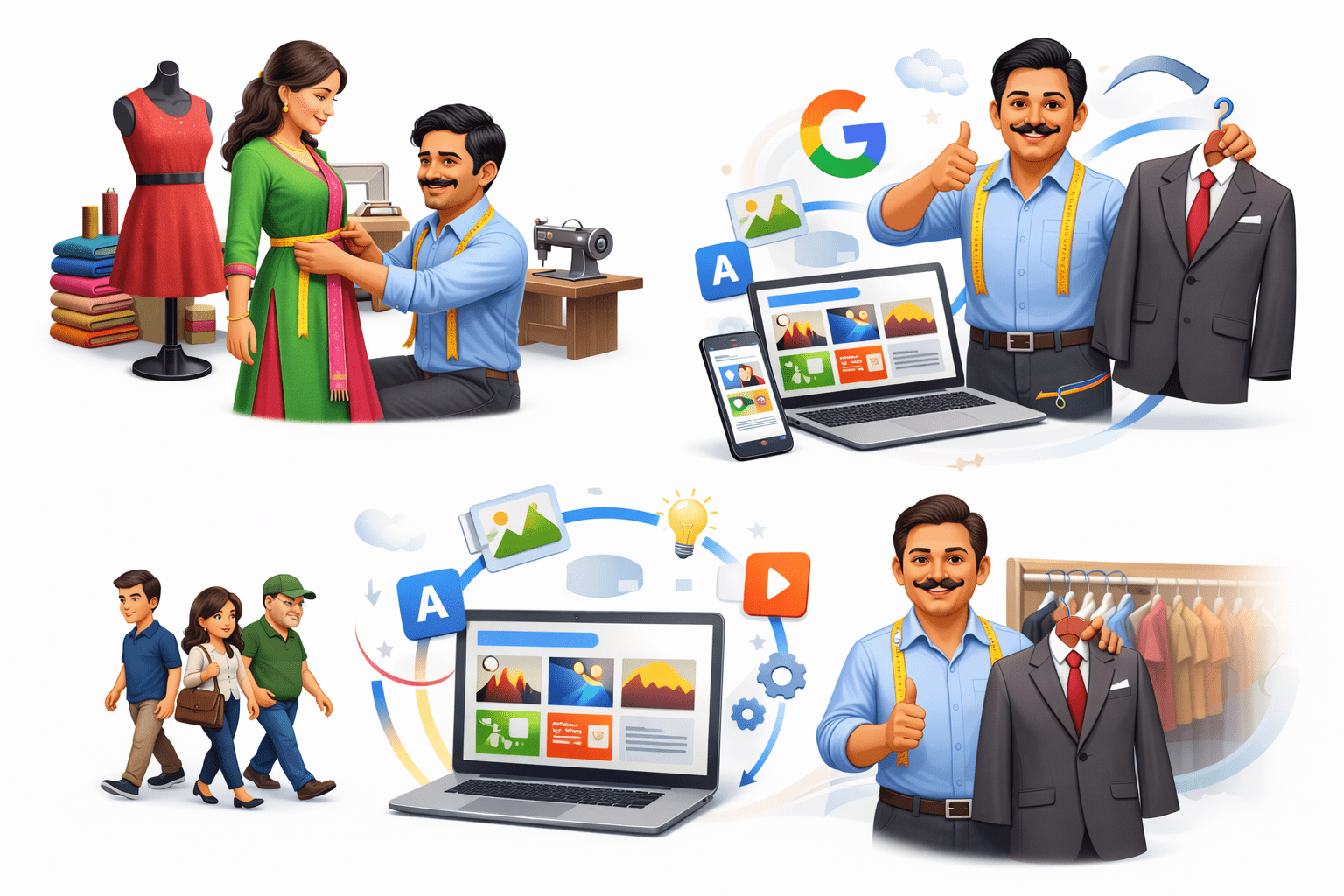
From Tailored Fits to Smart Ads
Instead of creating one fixed ad and expecting it to perform everywhere, marketers now use a smarter approach—providing multiple assets and letting the system customize the ad automatically.

From Tailored Fits to Smart Ads
This brings us to Responsive Display Ads, where Google’s AI creates the best-fitting ad for every situation, just like a perfectly tailored outfit.

What are Responsive Display Ads (RDA)?
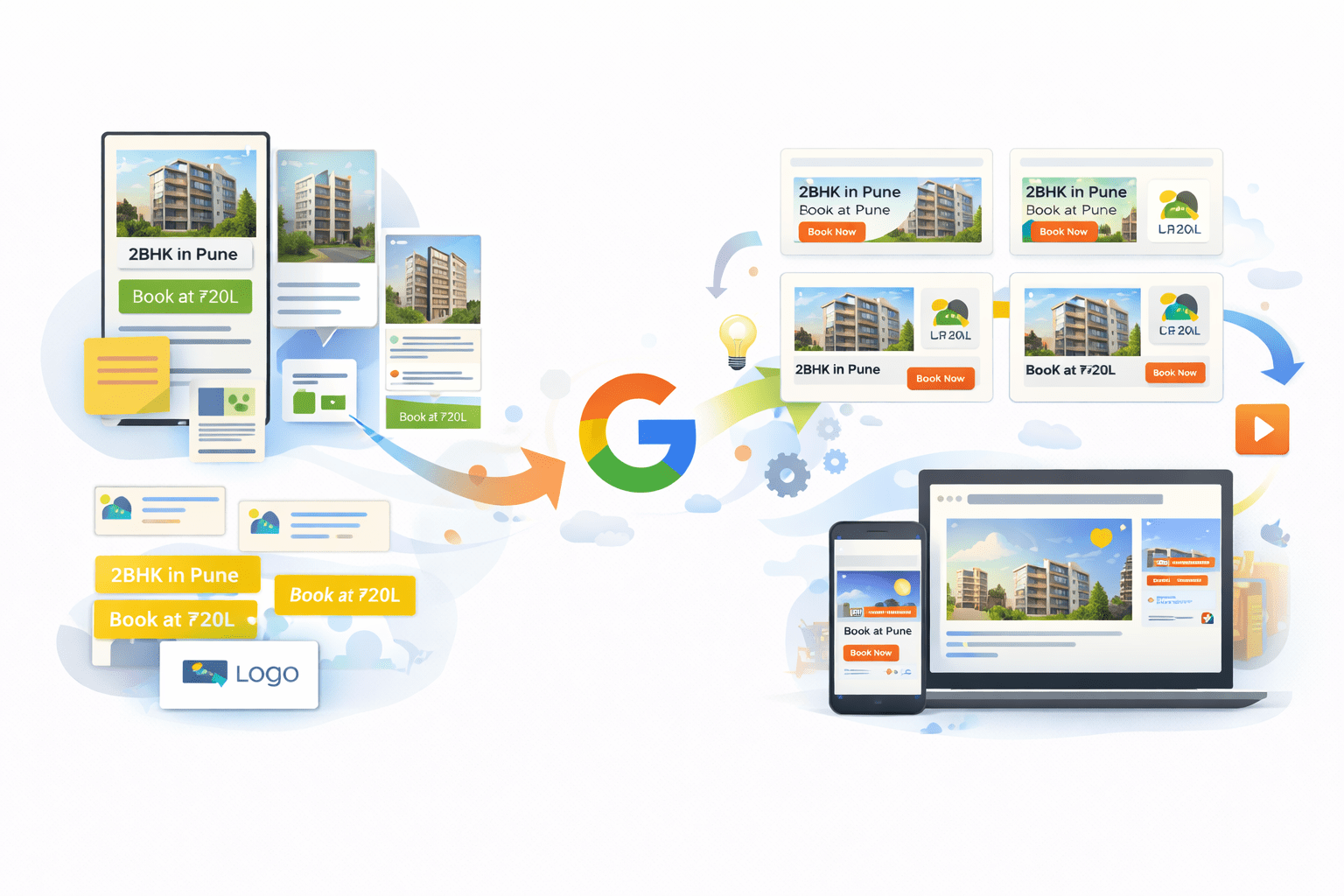
Responsive Display Ads are ads where advertisers provide multiple assets (images, headlines, logos, descriptions), and Google automatically combines them to create different ad variations that fit various placements, devices, and audiences.
What are Responsive Display Ads (RDA)?
Example: A real estate company uploads:
Descriptions and logo
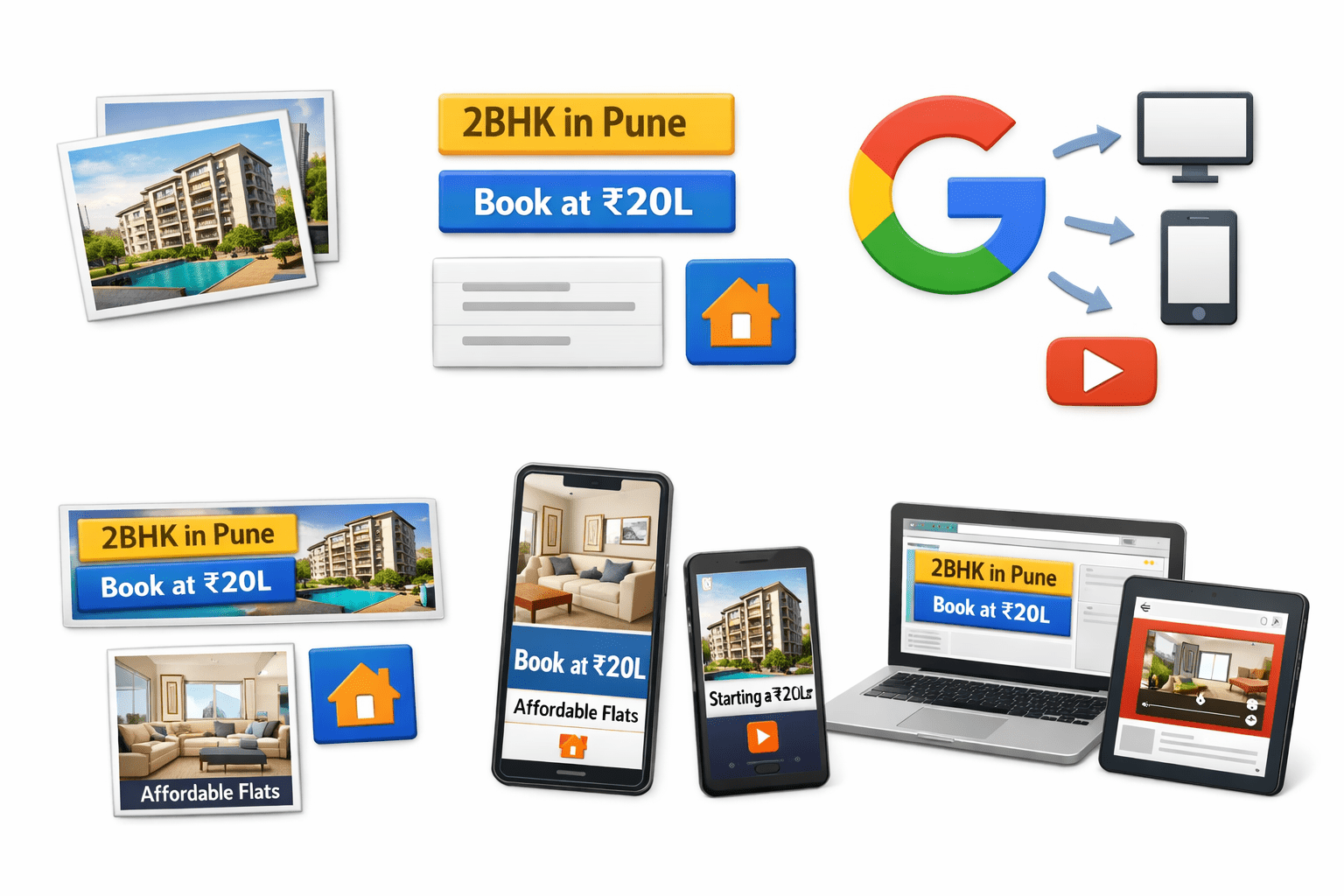
Images of apartments
Headlines like “2BHK in Pune”, “Book at ₹20L”
Google then creates multiple ad versions and shows the best combination to each user across websites, apps, and YouTube.
What are Responsive Display Ads (RDA)?
No need to design multiple banner sizes manually

Helps increase reach and engagement
Uses machine learning to improve performance
Ads automatically adjust size, format, and layout
Saves time and design cost
Responsive Display Ads vs Static Banner Ads — Core Difference
Key Difference:
RDAs are flexible & automated, Static Ads are fixed & manual.
Responsive Display Ads:
AI optimizes performance

Adjust to all sizes & placements
Auto-created using assets
Static Banner Ads:
Fixed design & size
No automation
Manual creation for each size
Assets Required for Responsive Display Ads
More variety = better performance

Images (landscape & square formats)
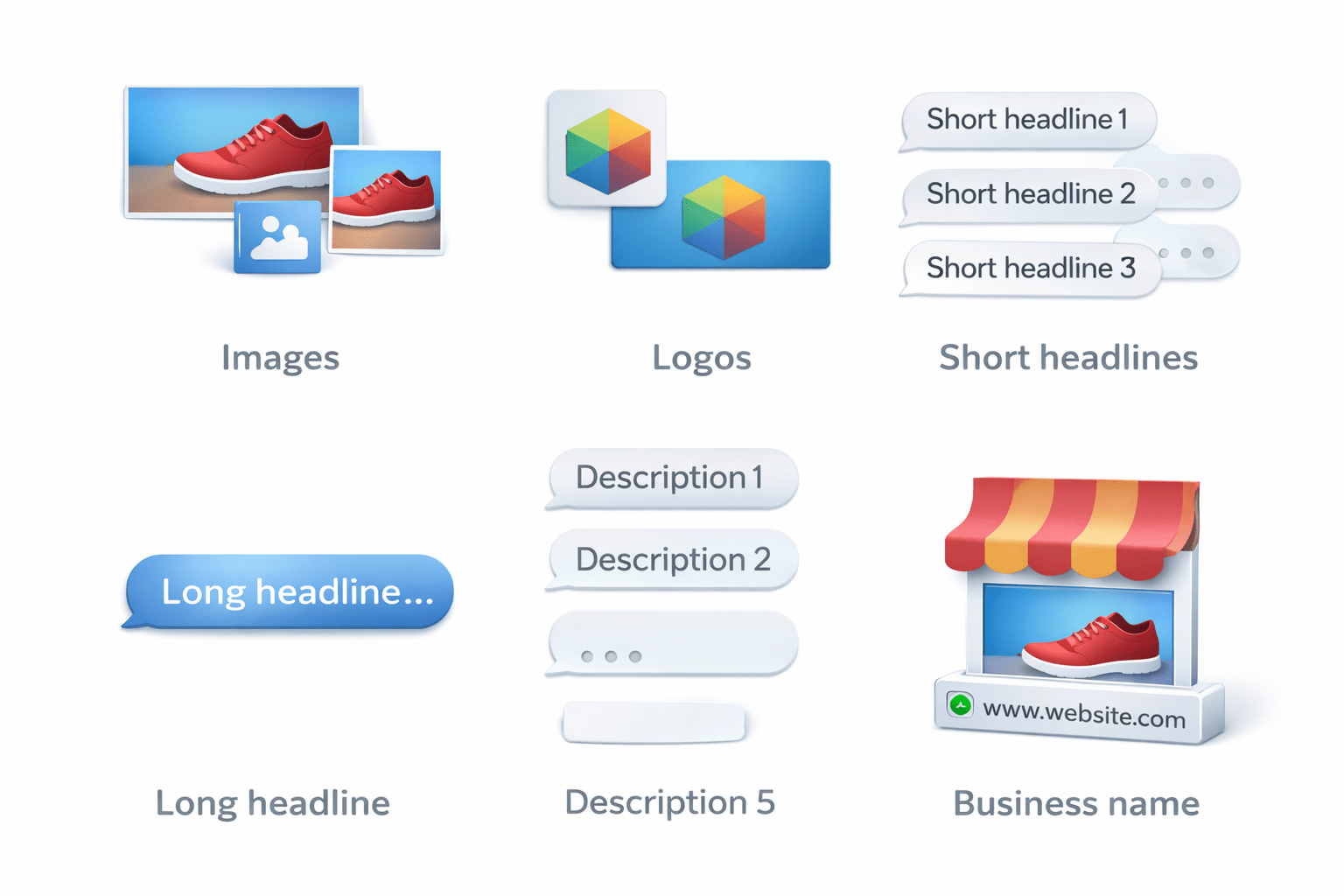
Logos (square & landscape)
Short headlines (up to 5)
Descriptions (up to 5)
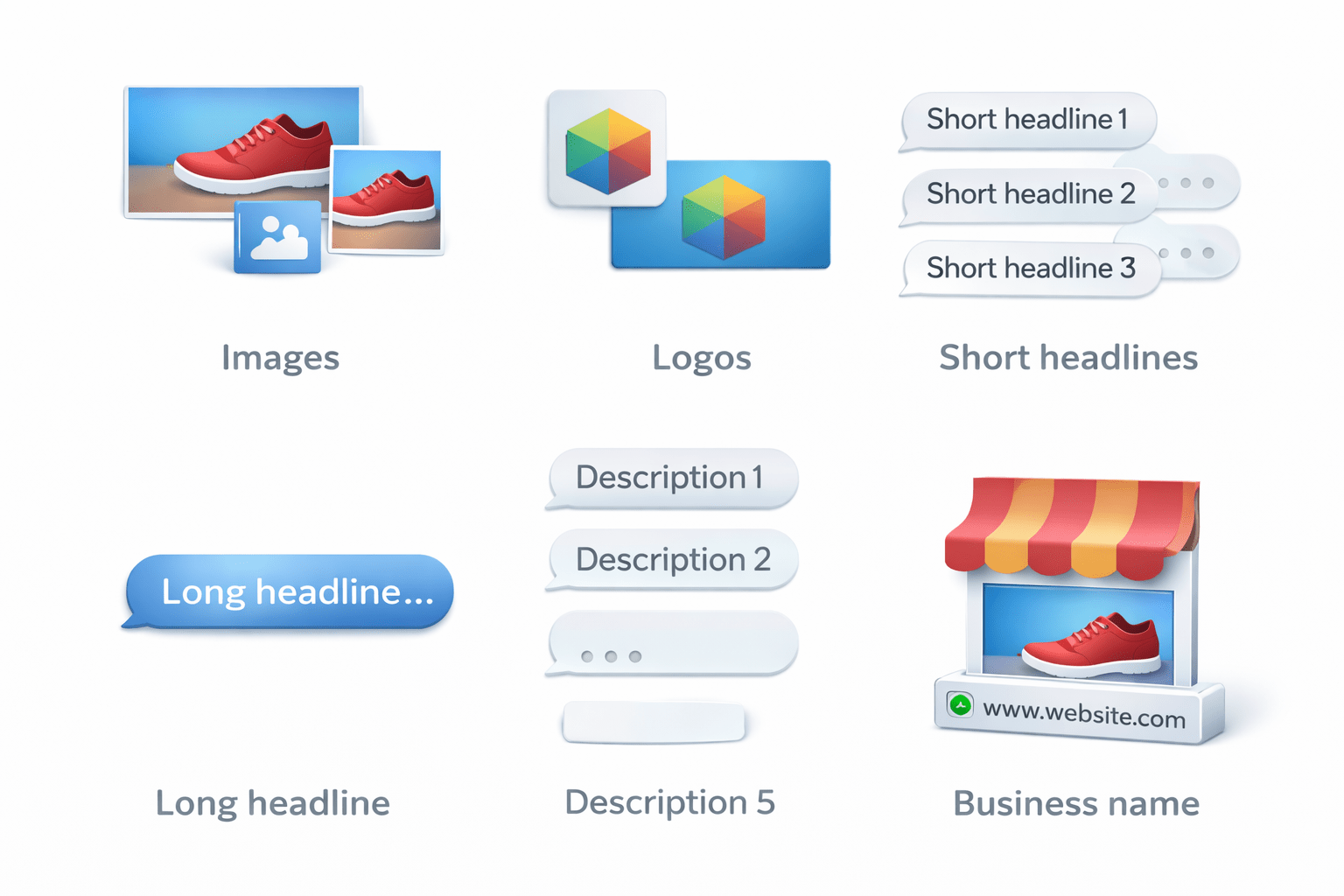
Final URL
Business name

Long headline (1)
How Google AI Combines RDA Assets
AI tests different combinations of headlines, images, and descriptions
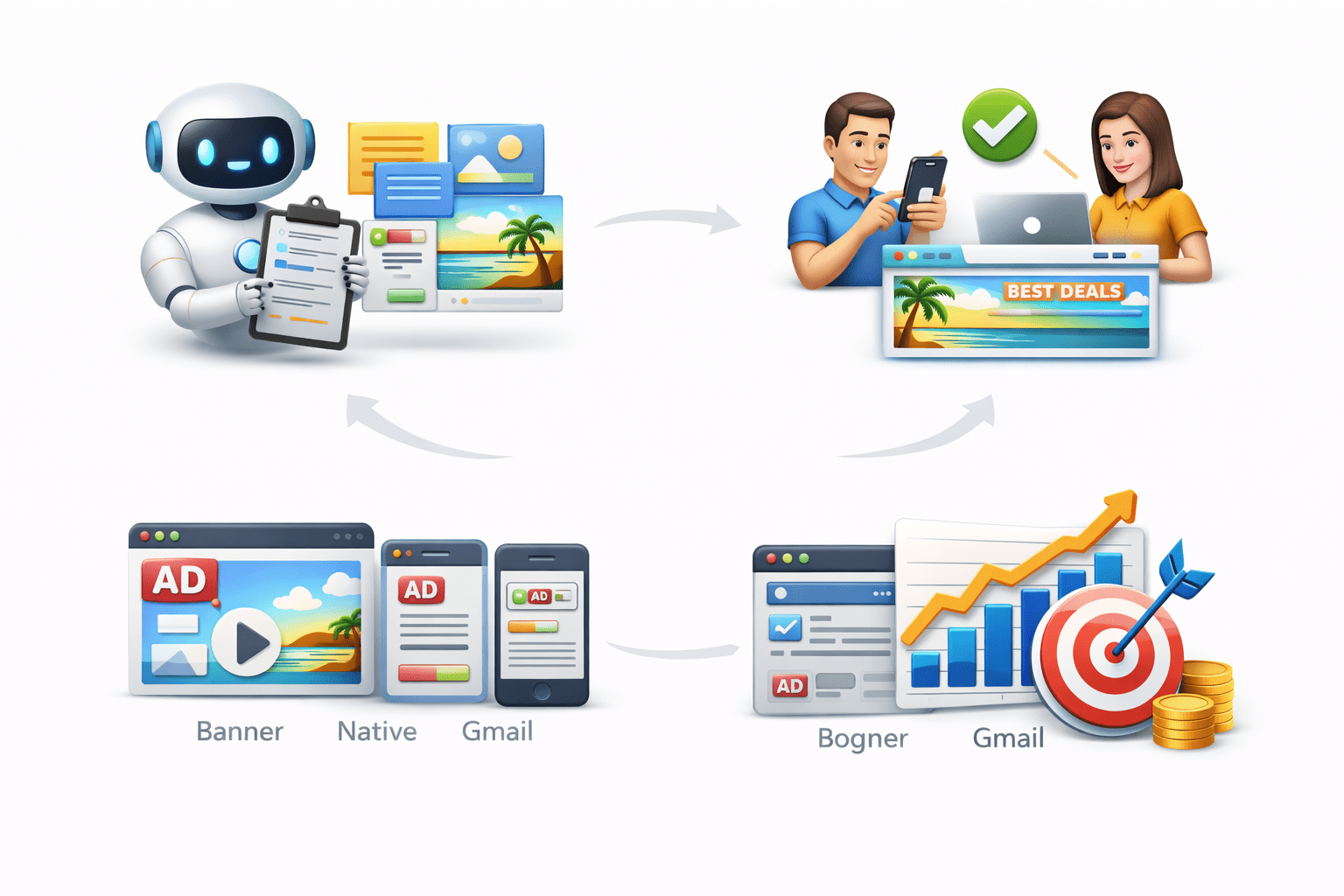
Matches best-performing combinations to users
Ad format adjusts automatically (banner, native, Gmail, etc.)
How Google AI Combines RDA Assets
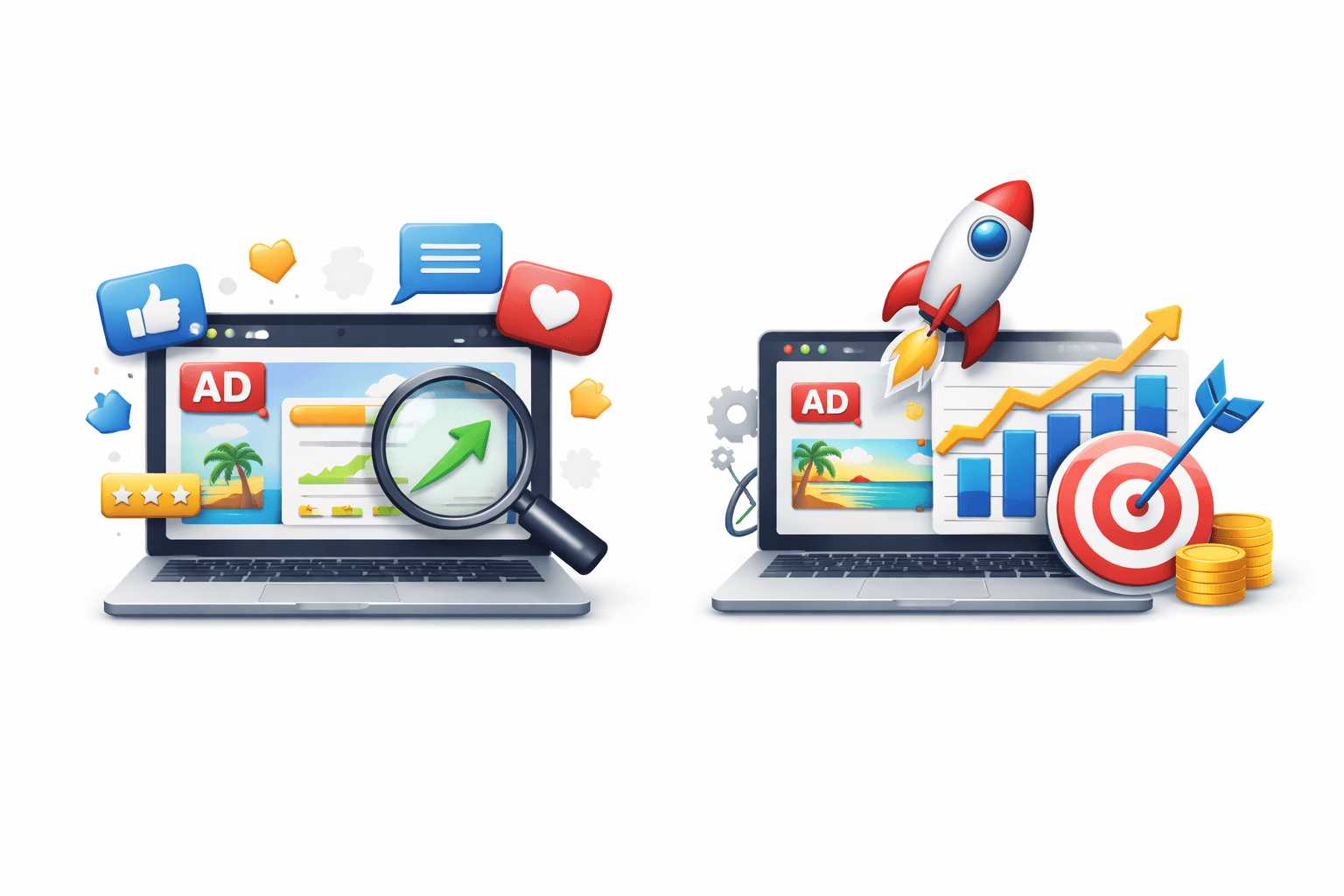
Learns from user behavior (clicks, engagement)
Continuously optimizes for higher CTR and conversions
Ad Strength in Responsive Display Ads
Ad Strength shows how good and effective your ad setup is based on the variety and quality of assets you provide.
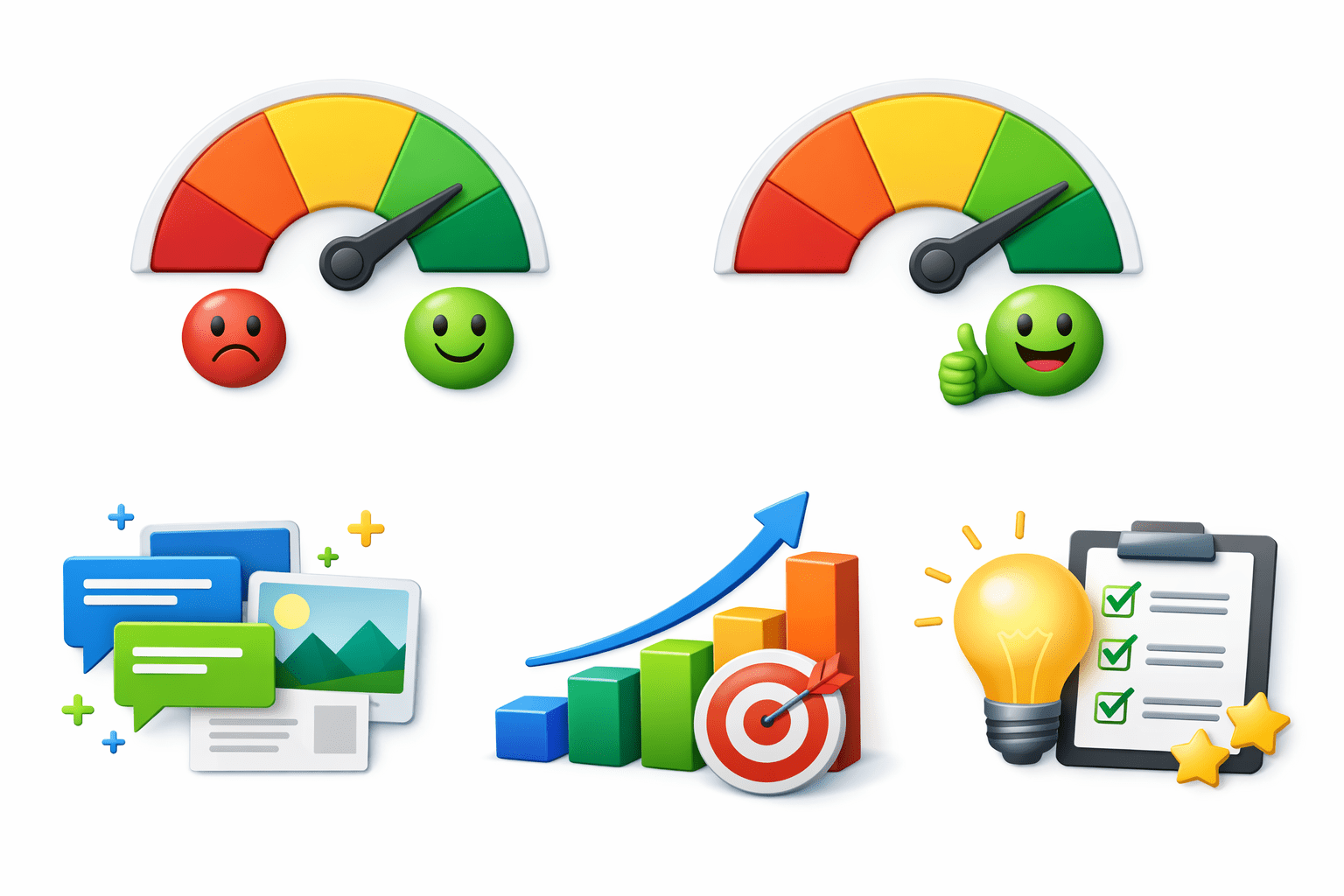
Ad Strength in Responsive Display Ads
Example:
If you upload only 2 similar headlines, your ad strength may be Low.
If you add multiple different headlines, images, and descriptions, it becomes Excellent.

Ad Strength in Responsive Display Ads
- More variety = better ad strength
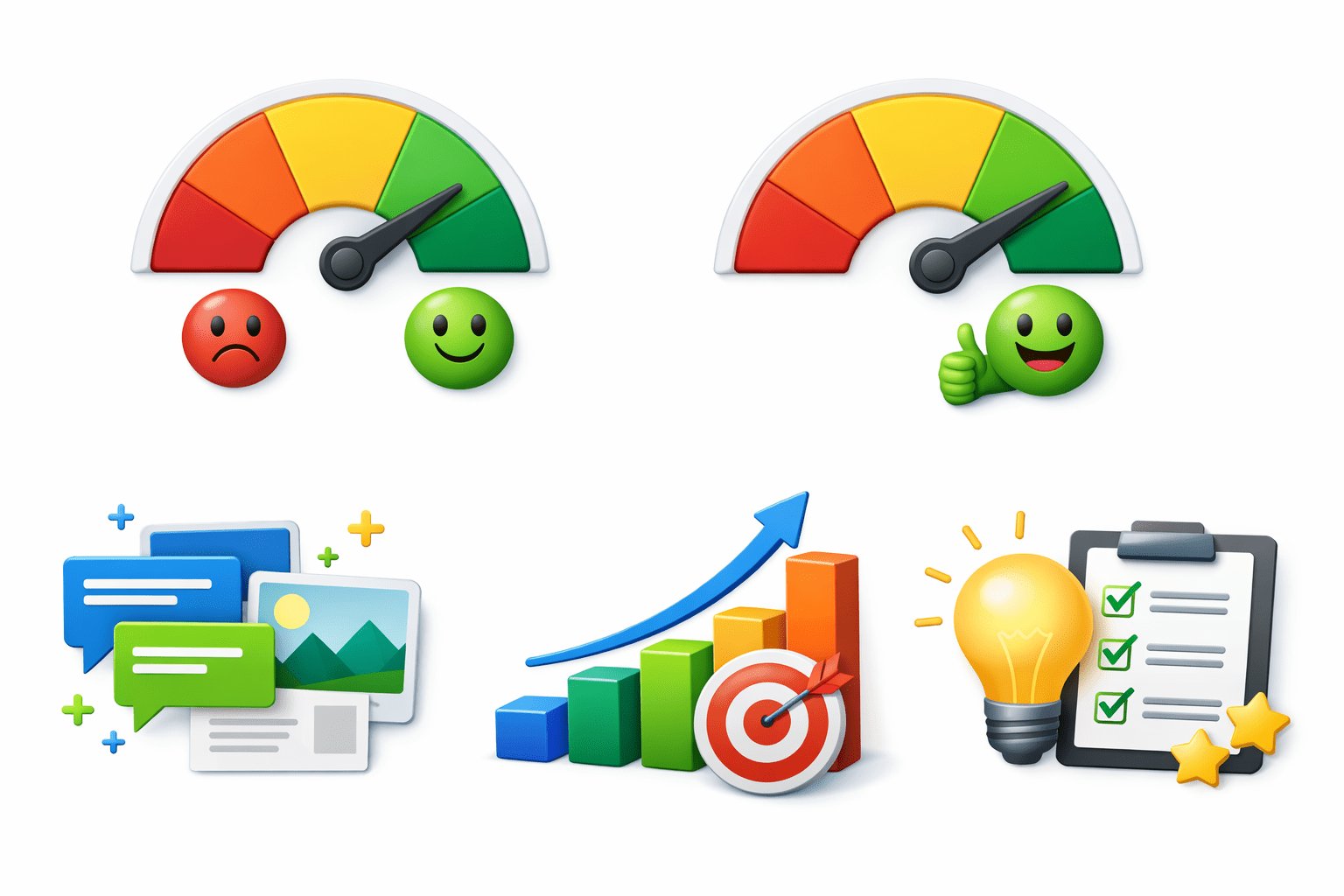

- Helps improve performance and reach
- Suggests what to add or improve
- Better ad strength → better results
Summary
5
Ad Strength and best practices help improve results
4
Google AI combines and optimizes ads for better performance
3
Require multiple assets like images, headlines, and descriptions
2
Different from Static Ads which are fixed and manually designed
1
RDA use assets to create flexible, auto-adjusting ads
Quiz
Which statement is TRUE about RDA?
A. Ads do not change format
B. Ads adjust size, format, and layout automatically
C. Ads only work on desktops
D. Ads require coding

Quiz-Answer
Which statement is TRUE about RDA?
A. Ads do not change format
B. Ads adjust size, format, and layout automatically
C. Ads only work on desktops
D. Ads require coding
