

Incident Response and Investigation
Threat detection techniques

Learning Outcome
4
Explain threat detection using logs, network, endpoint, and UEBA.
3
Compare Signature, Anomaly, Behavior, and Heuristic detection.
2
Differentiate IOCs, IOAs, and TTPs.
1
Explain the purpose of Threat Detection.
5
Differentiate Threat Detection and Threat Hunting in a SOC.
A shopping mall has security guards and cameras watching customers and stores to keep the mall safe.
Continuous watching = Security Monitoring
Some guards have a list of known shoplifters. If they see someone matching the list, they immediately become alert.
Matching known threats = Signature-Based Detection
Other guards watch for unusual behavior, such as someone repeatedly entering stores, hiding items, or moving around suspiciously.
Detecting unusual activity = Behavior-Based and Anomaly-Based Detection
When a guard notices suspicious behavior, they check the CCTV footage and other information before deciding whether it is a real threat.
Checking suspicious activity = Threat Investigation
If the person is confirmed to be stealing, the security team responds quickly to prevent further loss.
Stopping the threat = Incident Response
Introduction to Threat Detection
Threat Detection is the process of identifying malicious activities, suspicious behavior, and potential security threats in an organization.
Security teams use tools and techniques to detect attacks early and reduce damage. It is a key function of a Security Operations Center (SOC).
Importance of Threat Detection

Identify attacks early
Minimize damage
Protect sensitive information
Improve incident response
Reduce business disruption

Goals of Threat Detection
Identify malicious activity
Detect attacks early
Reduce security risks
Support incident response
Improve security

Understanding Cyber Threats
A cyber threat is any activity, event, or actor that can compromise the confidentiality, integrity, or availability (CIA) of information systems.
Threats can come from external attackers, insiders, or accidental actions.
Threat Actors

Threat actors are individuals or groups that carry out cyberattacks, such as:
Cybercriminals
Nation-state attackers
Hacktivists
Insider threats
Organized cybercrime groups

Common Threat Categories
Malware: Malicious software used to damage, disrupt, or gain unauthorized access. Examples: viruses, worms, ransomware, and trojans.
Phishing: Deceptive emails, messages, or websites used to steal sensitive information.
Insider Threats: Threats caused by individuals inside an organization, intentionally or accidentally.
Credential Attacks: Attacks targeting usernames, passwords, or authentication. Examples: brute force, password spraying, and credential stuffing.
APTs: Sophisticated, long-term attacks that use stealth techniques to maintain access to target environments.

Indicators of Compromise (IOCs)
IOCs are evidence that a system may be compromised, such as:
Malicious IP addresses
Malicious domains
File hashes
Suspicious registry entries

Indicators of Attack (IOAs)
IOAs focus on attacker behavior, such as:
Unusual PowerShell execution
Privilege escalation attempts
Lateral movement
Tactics, Techniques, and Procedures (TTPs)
TTPs describe how attackers operate:
Tactics: Attacker objectives
Techniques: Methods used to achieve objectives
Procedures: Specific implementation of techniques
Detection vs Prevention
- Detection: Identifies malicious activity that is occurring or has occurred.
- Prevention: Blocks threats before they affect systems.
Detection Approaches
Signature-Based Detection:
Matches activity against known attack signatures or patterns.
Advantages: Fast, accurate for known threats, low false positives.

Limitations: Cannot detect unknown threats and requires updates.

Anomaly-Based Detection:
Identifies activity that deviates from normal behavior.
Advantages: Detects unknown threats and unusual behavior.
Limitations: Can produce false positives and requires baseline learning.
Behavior-Based Detection:
Identifies suspicious activities associated with attacker behavior.
Advantages: Detects sophisticated and fileless attacks.
Limitations: Requires advanced analytics and may produce false positives.
Heuristic Detection:
Evaluates characteristics and behaviors associated with malicious activity.
Advantages: Detects modified and previously unseen malware.
Limitations: May produce false positives and requires tuning.
Detection Engineering Basics
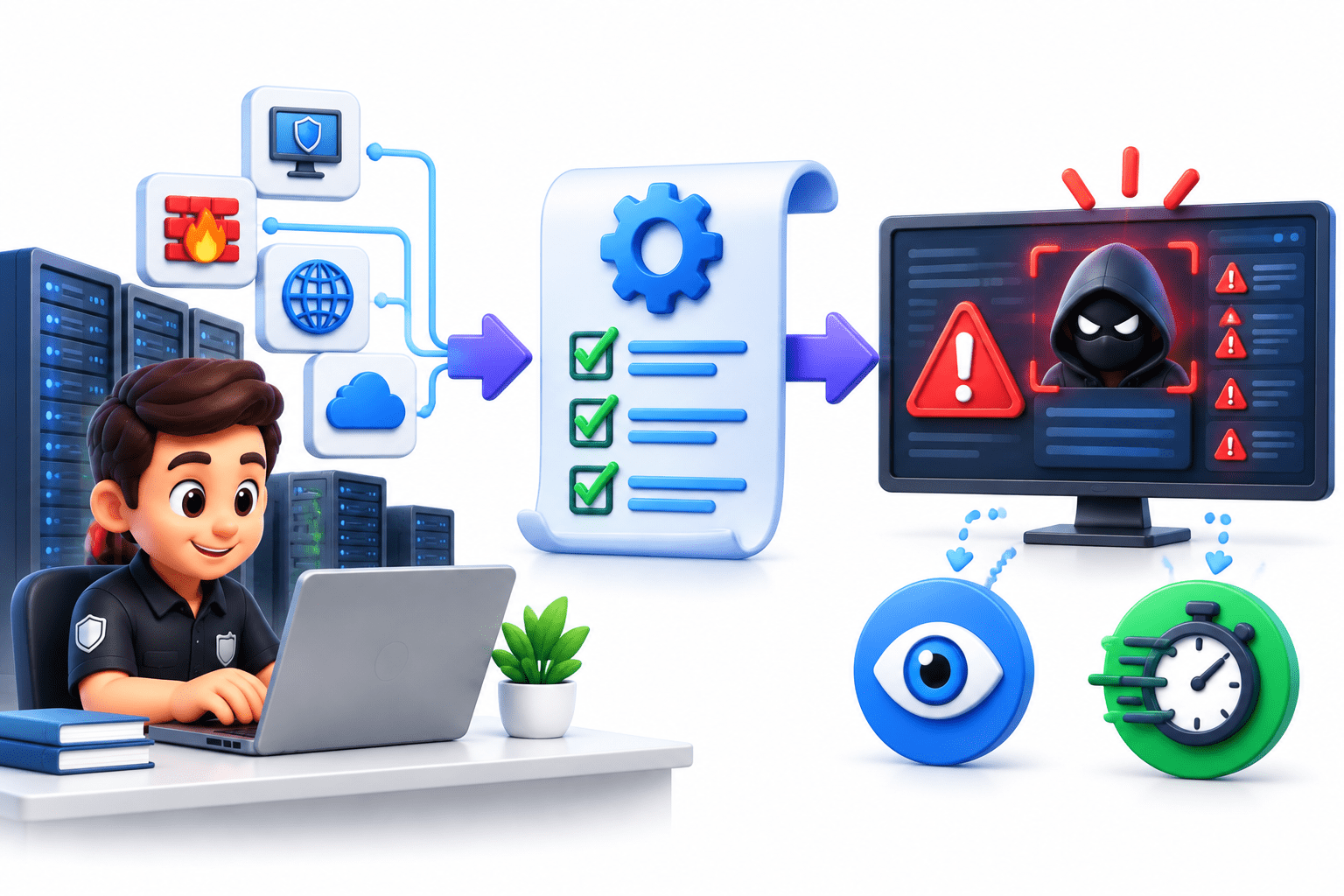
Detection engineering involves designing, testing, and improving detection rules and monitoring capabilities.
Why Detection Rules Matter:

Detection rules help security tools automatically identify suspicious activities, improving visibility and reducing investigation time.
Continuous Improvement
Detection rules should be regularly updated based on new threats, incidents, and threat intelligence.

Threat Detection Through Security Logs
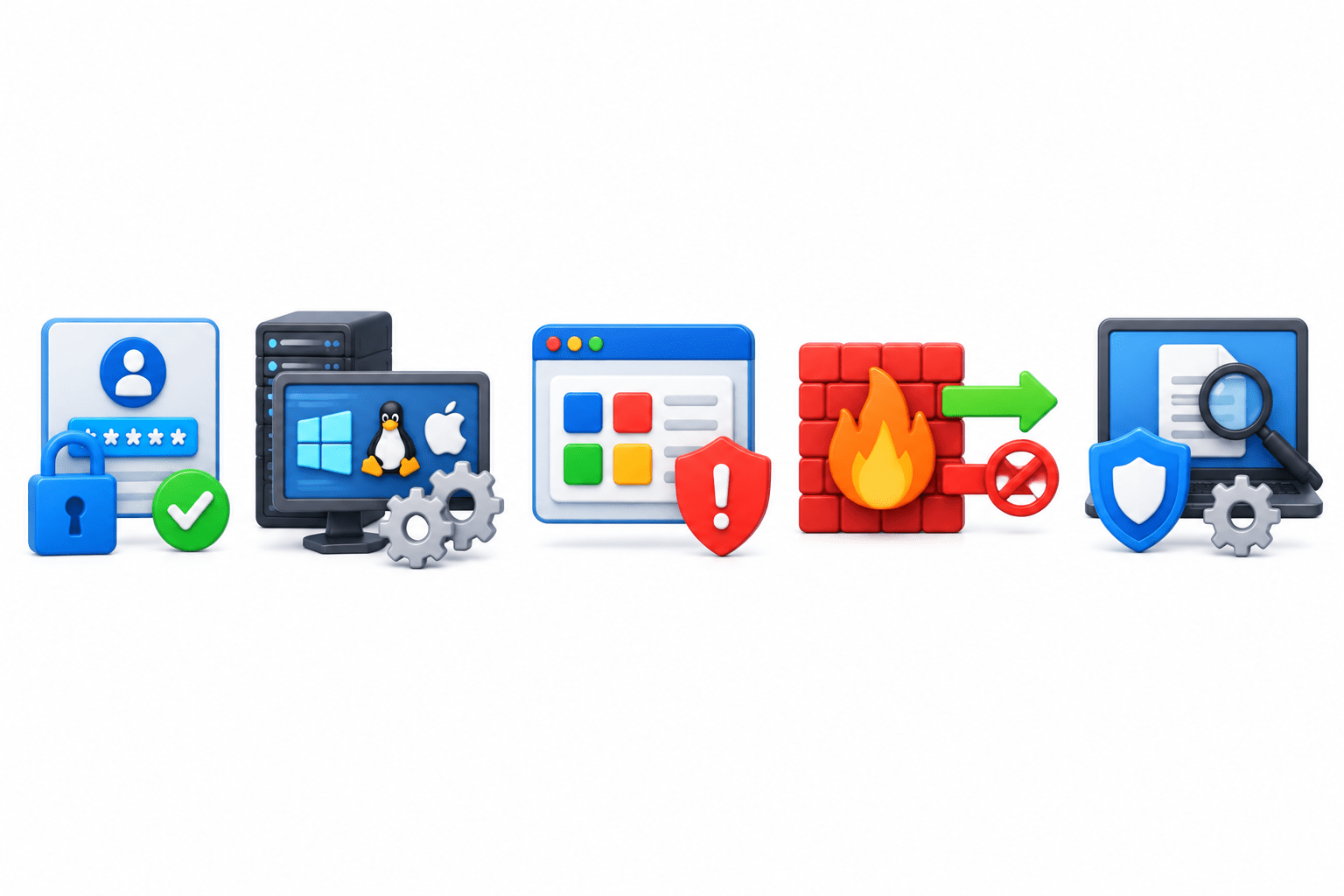
Authentication Logs
Detect suspicious logins, brute-force attacks, and unauthorized access.
1
System Logs
Show OS activities, system changes, and administrative actions.
2
Application Logs
Help identify unauthorized access and application attacks.
3
Firewall Logs
Show network connections and filtered traffic.
4
Endpoint Logs
Provide information about processes, files, software, and security events.
5
Network-Based Threat Detection
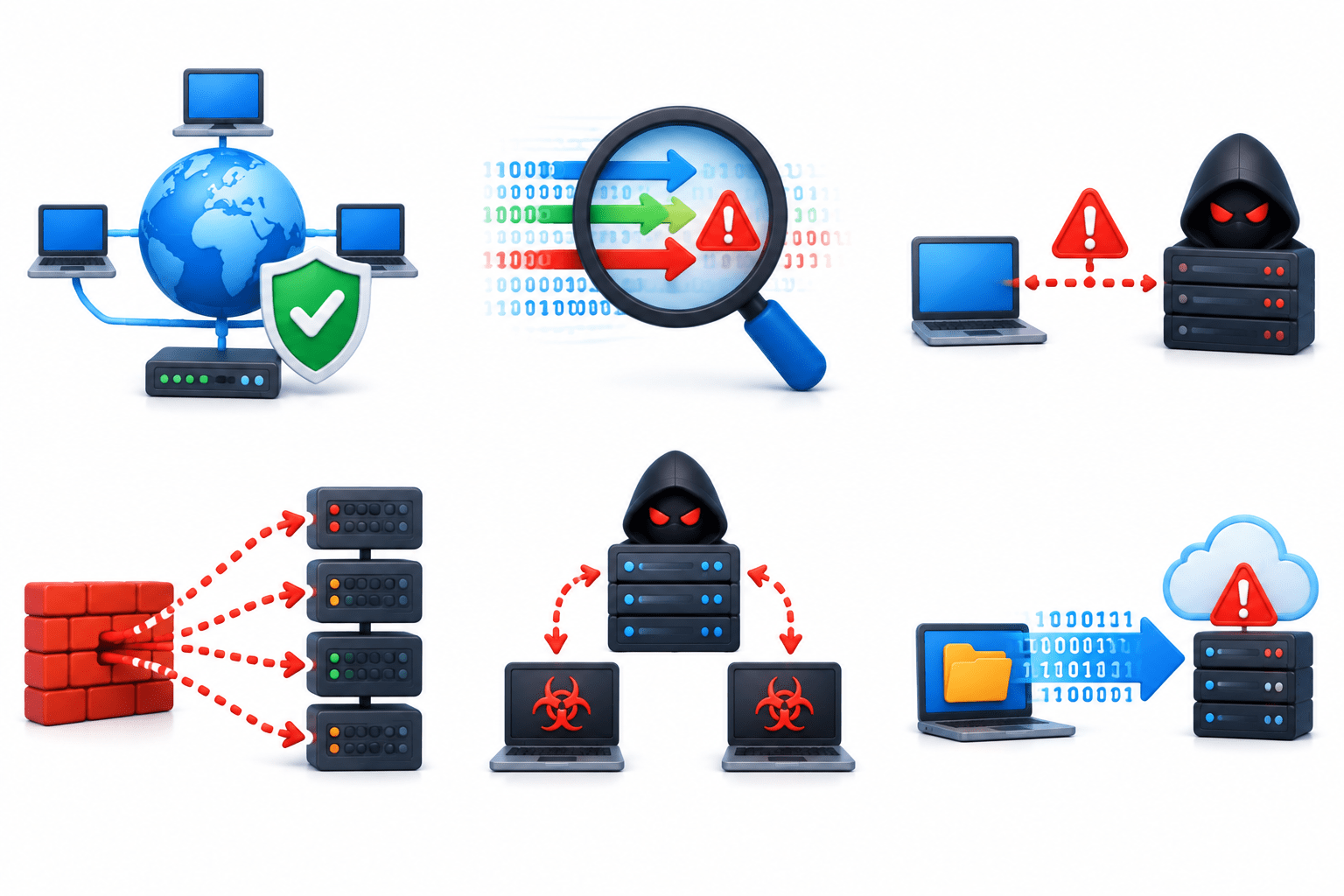
Network Security Monitoring (NSM)
NSM continuously collects and analyzes network traffic to identify suspicious activities and threats.
Network Traffic Analysis (NTA)
NTA examines network communications for anomalies, suspicious connections, and malicious activity.
Suspicious Connections
Unusual connections to unknown or malicious external systems may indicate compromise.
Port Scanning Detection
Repeated connection attempts to multiple ports may indicate attacker reconnaissance
Endpoint-Based Threat Detection
Process Monitoring: Tracks running processes to identify suspicious activities.
Malware Detection: Identifies known and unknown malware using signatures, behavior, or heuristics.
Unauthorized Software Detection: Identifies unauthorized software installations.
File Integrity Monitoring (FIM): Detects unauthorized changes to important files and configurations.
Suspicious User Activity: Identifies unusual behavior that may indicate compromised accounts or insider threats.

Network-Based Threat Detection

UEBA uses analytics and machine learning to identify unusual behavior by users, systems, and devices.
Abnormal User Behavior:
UEBA can detect:
Unusual login times
Unfamiliar locations
Excessive file downloads
Unusual account activity
Insider Threat Detection
UEBA detects deviations from normal user behavior to identify potential insider threats.
Detection Rules and Use Cases
Detection rules are predefined conditions used to identify suspicious or malicious activity. When conditions are met, an alert is generated.
Common Detection Use Cases
- Brute Force: Multiple failed login attempts
- Phishing: Suspicious emails and malicious links
- Privilege Escalation: Unexpected privilege elevation
- Malware: Known signatures or suspicious behavior
- PowerShell Abuse: Unusual or malicious PowerShell activity
Threat Hunting vs Threat Detection
Threat Detection
Threat Hunting
Reactive
Proactive
Alert-based
Automated monitoring
Detects known threats
Hypothesis-based
Manual investigation
Searches for hidden threats
Challenges in Threat Detection
Alert Fatigue: Too many alerts can overwhelm analysts.
False Positives: Legitimate activities trigger alerts.
False Negatives: Malicious activities remain undetected.
Evolving Threats: New techniques may bypass existing detections.
Encrypted Traffic: Encryption can reduce network visibility.

Best Practices for Effective Threat Detection
Monitor Critical Assets: Prioritize important systems and sensitive data.
Use Multiple Detection Methods: Combine signature, behavior, anomaly, and heuristic detection.
Update Detection Rules: Regularly address new threats and techniques.
Use Threat Intelligence: Improve detection and investigation.
Improve Detection Coverage: Regularly identify and close detection gaps.

Summary
5
SOC Analysts support cybersecurity and business continuity.
4
Analysts are divided into L1, L2, and L3 based on expertise.
3
SOC teams have leadership, management, and operational levels.
2
They protect digital assets and reduce cybersecurity risks.
1
SOC Analysts monitor, detect, investigate, and respond to threats.
Quiz
Which SOC Analyst tier performs the initial investigation of alerts?
B. L2 Analyst
C. L1 Analyst
D. SOC Manager

A. L3 Analyst
Quiz-Answer

C. L1 Analyst
Which SOC Analyst tier performs the initial investigation of alerts?
A. L3 Analyst
B. L2 Analyst
D. SOC Manager