LESSON 1.04
Ambition checks ambition
How does the Constitution prevent tyranny?
AP TOPICS 1.5 + 1.6
LESSON 1.04
AMBITION CHECKS AMBITION
ESSENTIAL QUESTION
How does constitutional friction prevent tyranny?
AP TOPICS 1.5 + 1.6
TODAY'S AGENDA
01
VOTER REGISTRATION
02
FINISH DAVE (1993)
03
CONCEPT PRACTICE 1.1-1.6
04
WORK ON IDEALS + MODELS TEST CORRECTIONS
VOTER REGISTRATION DRIVE
SENIORS: EARN 10 EXTRA-CREDIT POINTS
Register or pre-register to vote—or show Mr. Rogers that you are already registered—by September 25.
-
Eligible 16- and 17-year-olds may pre-register.
-
Show your confirmation to Mr. Rogers privately.
-
Do not submit your address, registration number, or party preference.
-
Not eligible or prefer not to register? Talk to Mr. Rogers
THE BRIDGE
Even agreeing on one food order created FRICTION. The more agreement we needed, the harder it became to move forward.
What if the Constitution creates some of that friction on purpose?
-
How ARTICLE V makes broad agreement necessary
-
Why SEPARATION OF POWERS + CHECKS AND BALANCES keep power from concentrating in one place
[ADD SQUARE IMAGE]
An easier mode
The FRAMERS, the delegates designing the Constitution, knew they would not get everything right. Future Americans needed a way of AMENDING the Constitution, or changing its written rules when problems emerged.
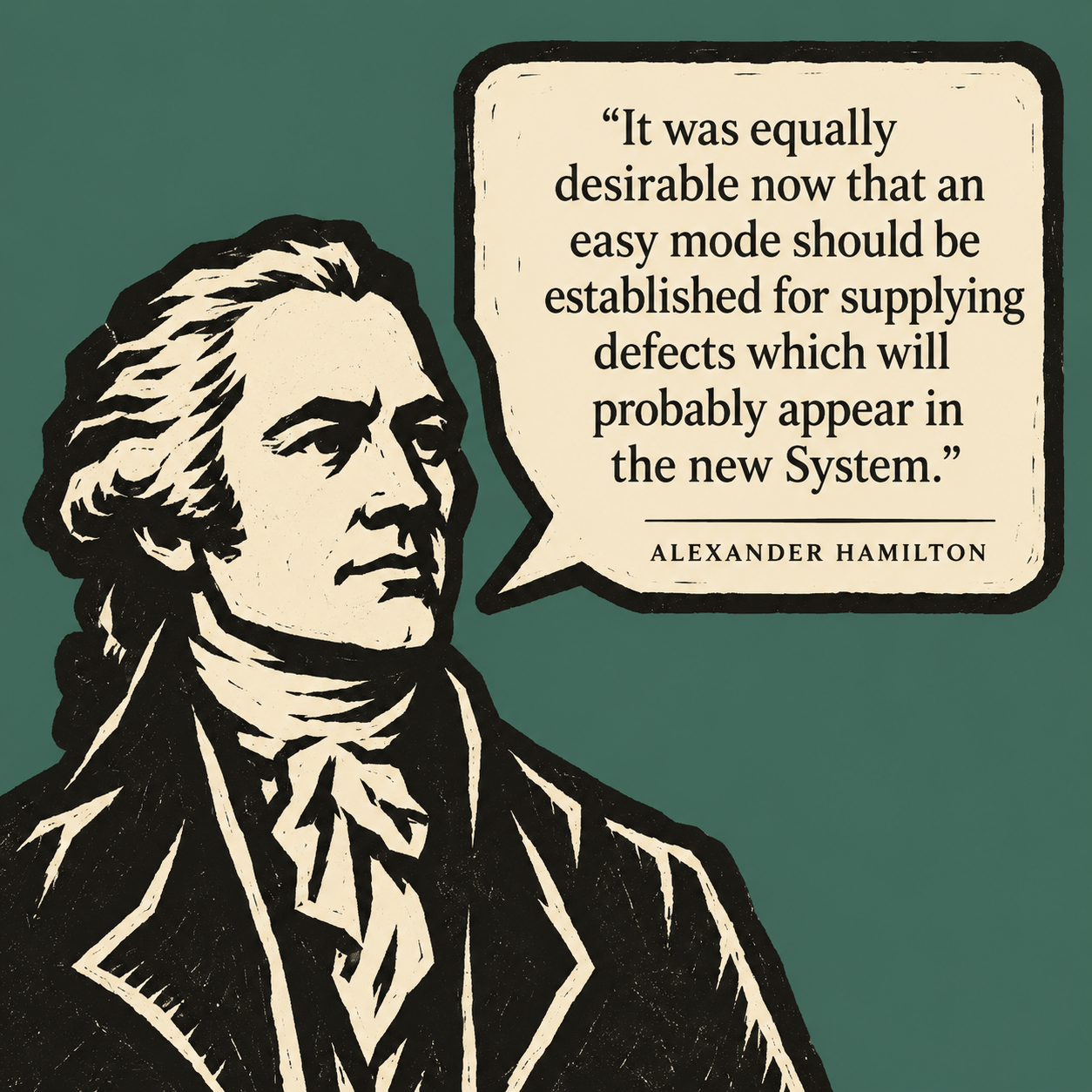
At the Convention, Alexander Hamilton argued for “an easy mode” of correcting problems in the new government. Other delegates worried about how that power might be used.
The question was not whether change should happen. It was how much agreement should be required before the Constitution itself could change?
EQ: How does constitutional friction prevent tyranny?
Deem it necessary
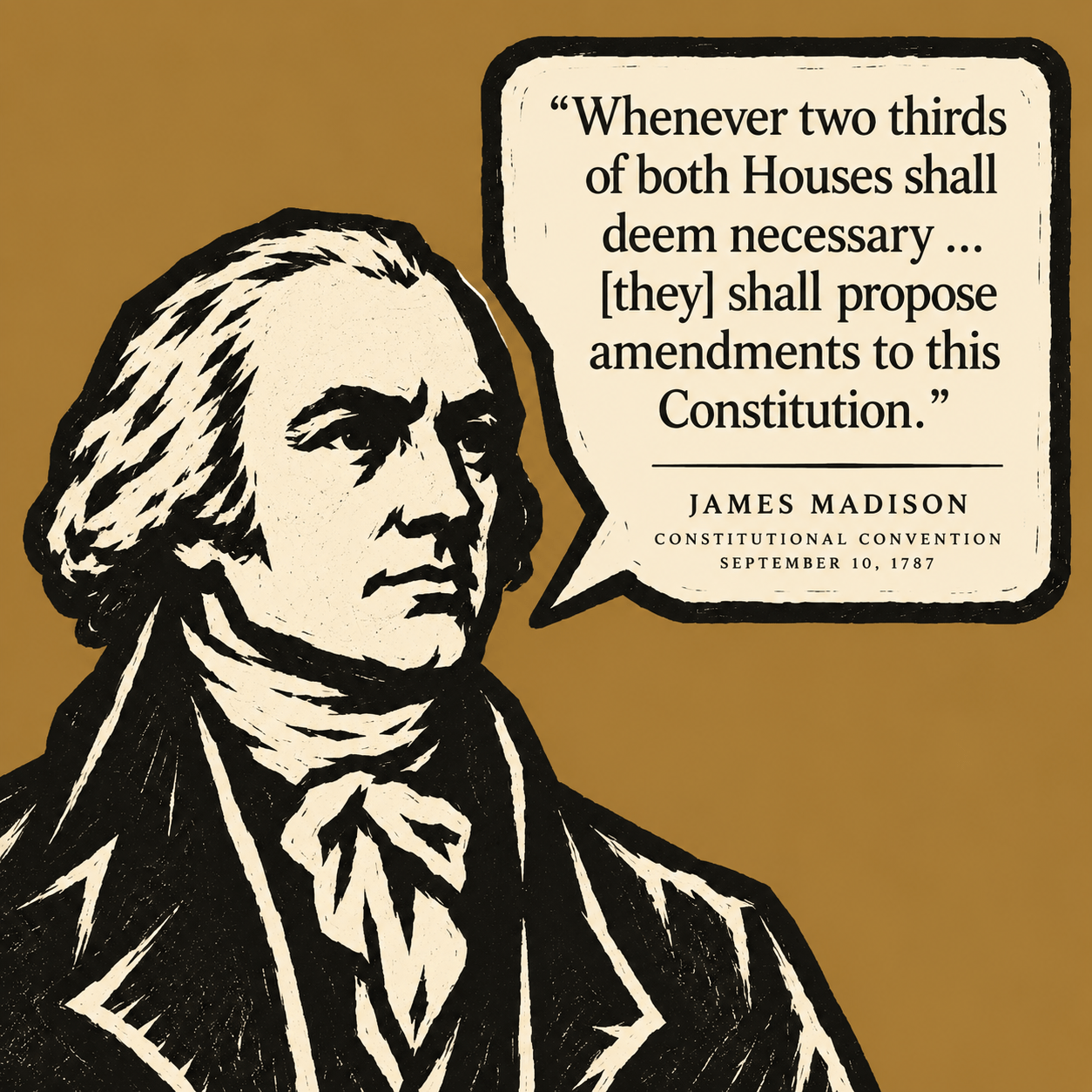
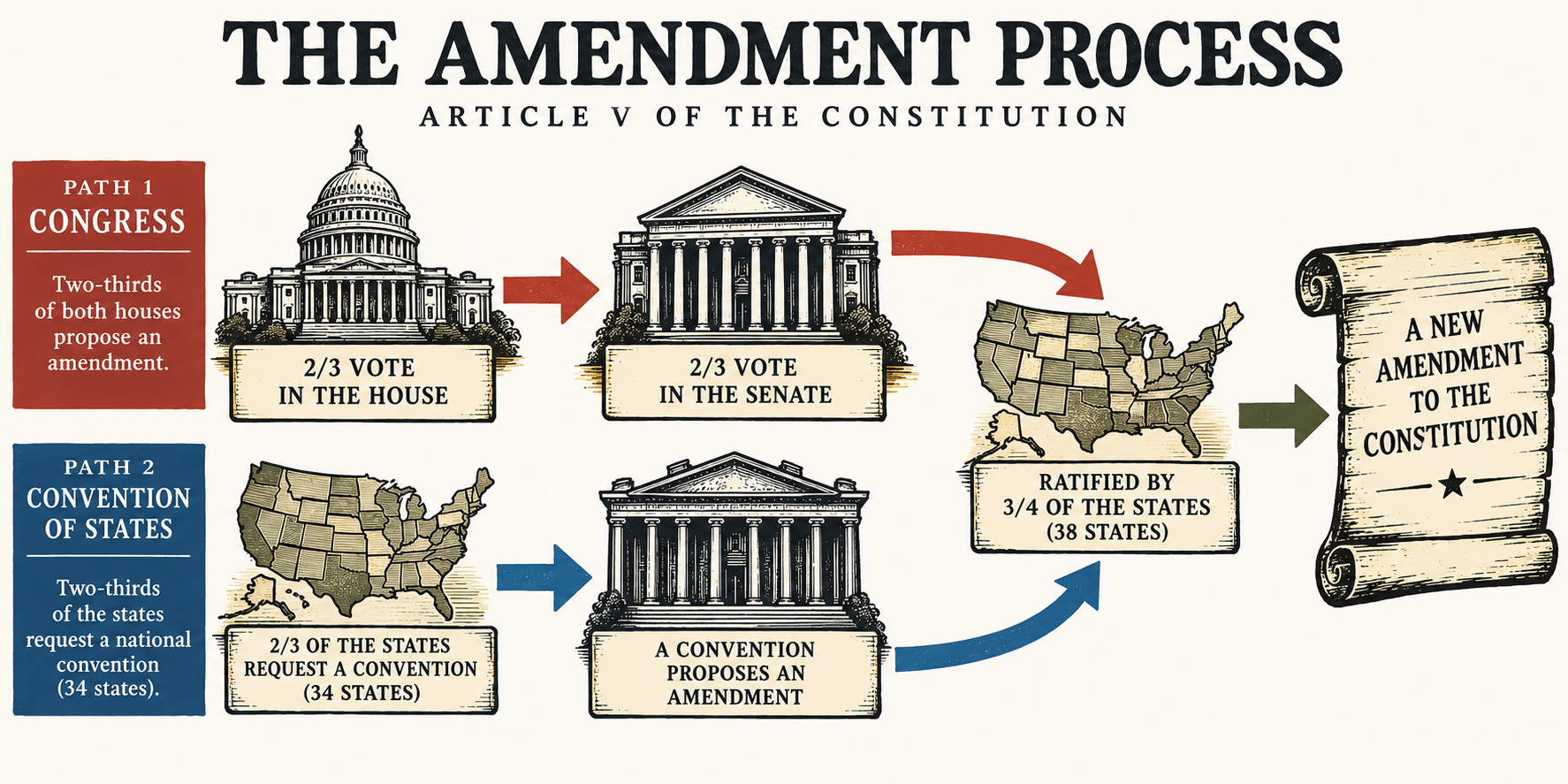
The answer they added to the Constitution, ARTICLE V, allowed change but required agreement far beyond a simple majority. James Madison helped shape the final approach, proposing the two major thresholds that made the process clear.
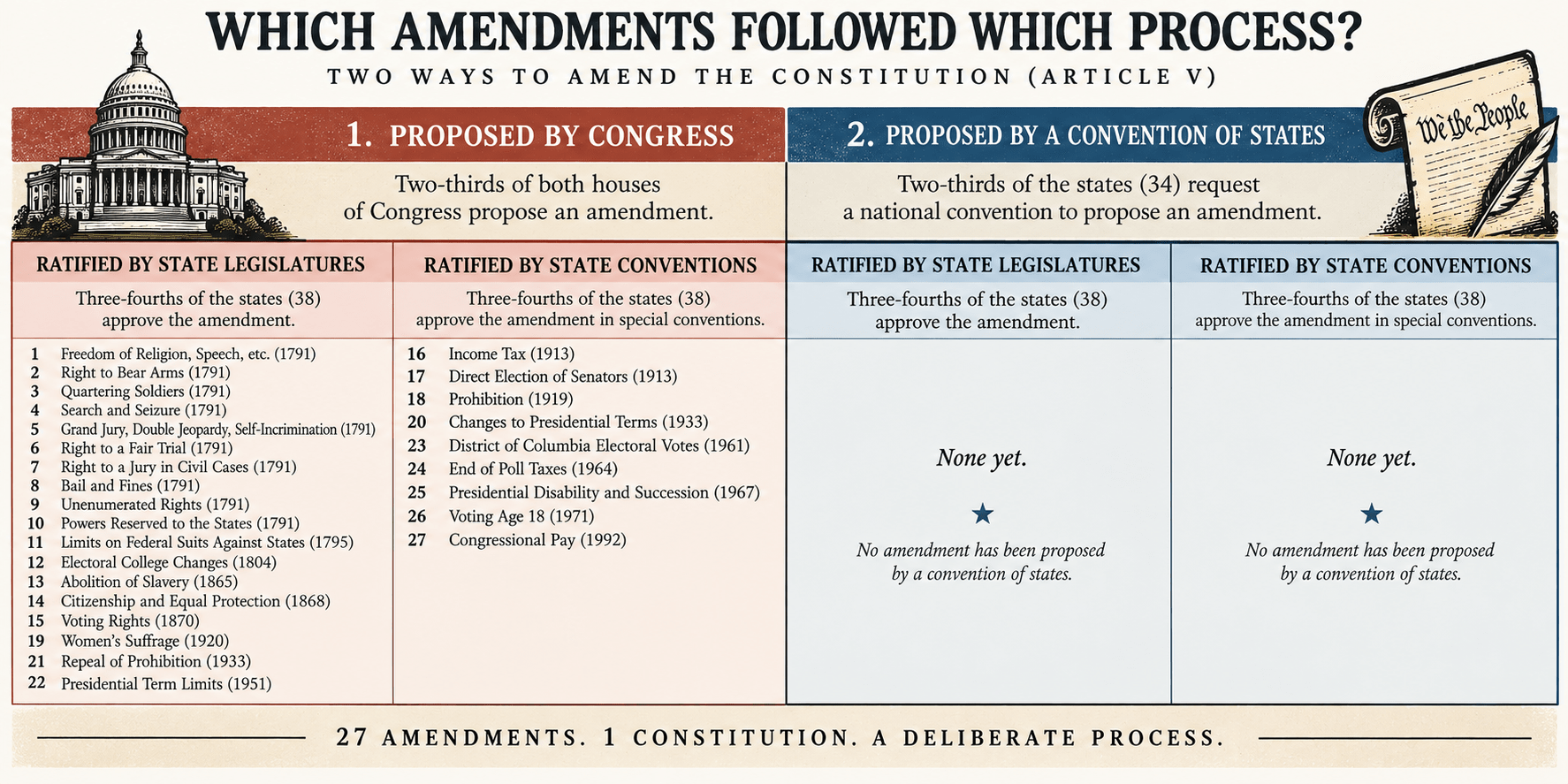
Congress can PROPOSE an amendment with support from two thirds of both houses. But proposal alone changes nothing.
An amendment must still be RATIFIED, or formally approved, by three fourths of the states.
The Constitution could change, but no small political victory could change it alone.
[ADD SQUARE IMAGE]
EQ: How does constitutional friction prevent tyranny?
[ADD SQUARE IMAGE]
necessity of AUXILIARY PRECAUTIONS
The Framers were replacing the ARTICLES OF CONFEDERATION partly because the national government was too weak. The new CONSTITUTION had to give the government more power if it was actually going to work.
But that created a new problem. How do you make government stronger without making anyone inside it too powerful?
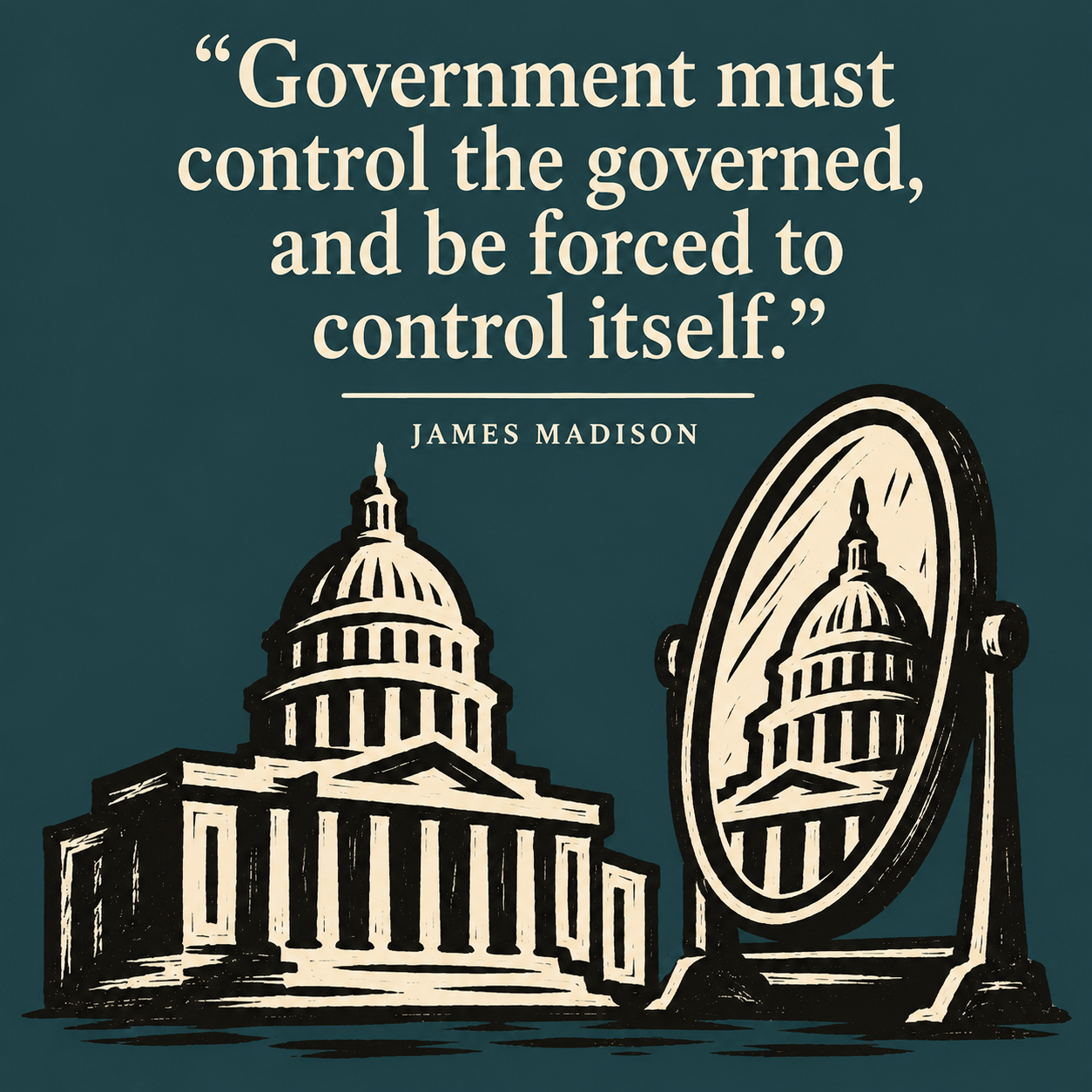
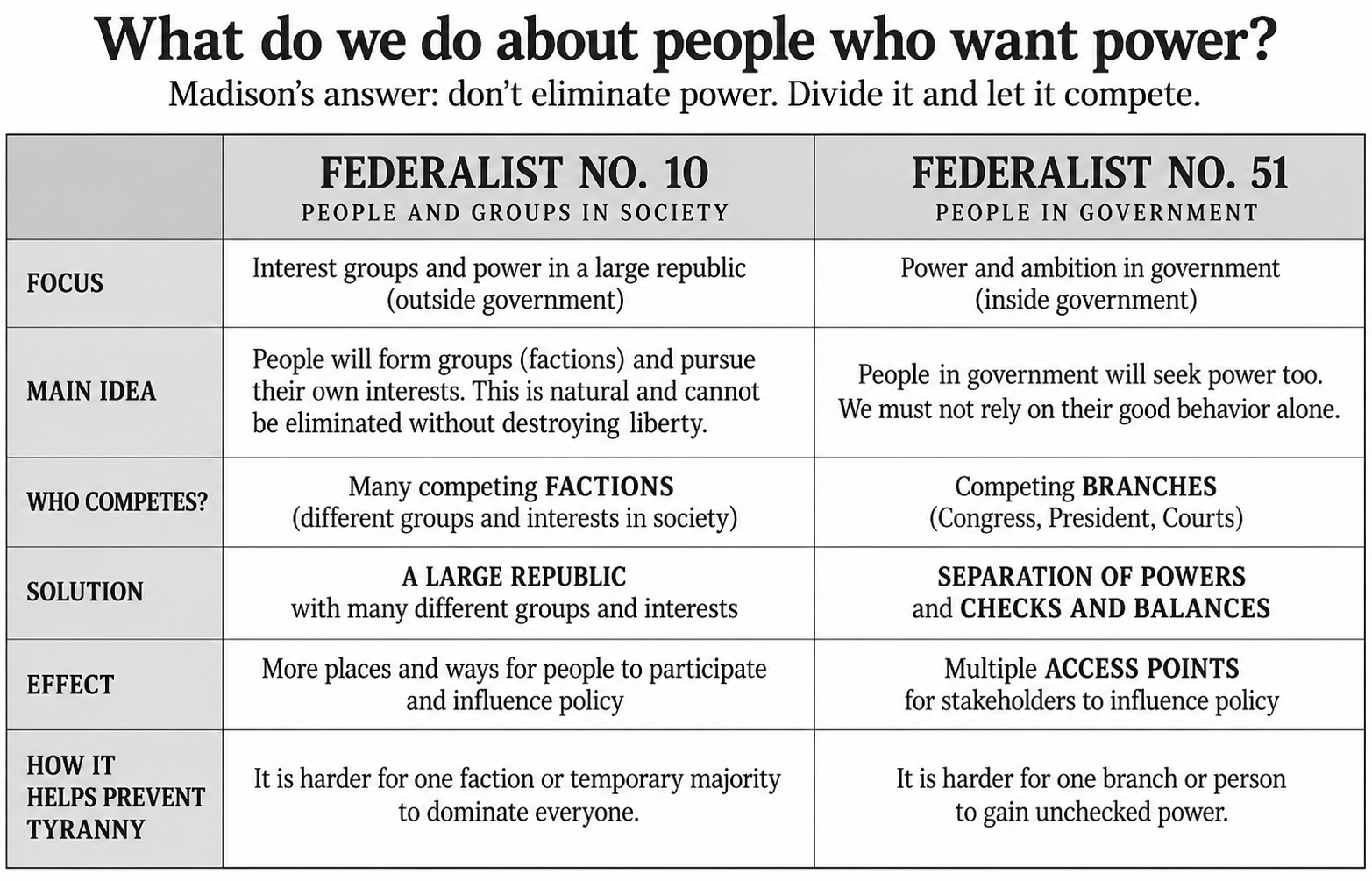
In FEDERALIST NO. 51, James Madison called this “the great difficulty.”
Government had to “control the governed” while also being forced to “control itself.”
EQ: How does constitutional friction prevent tyranny?
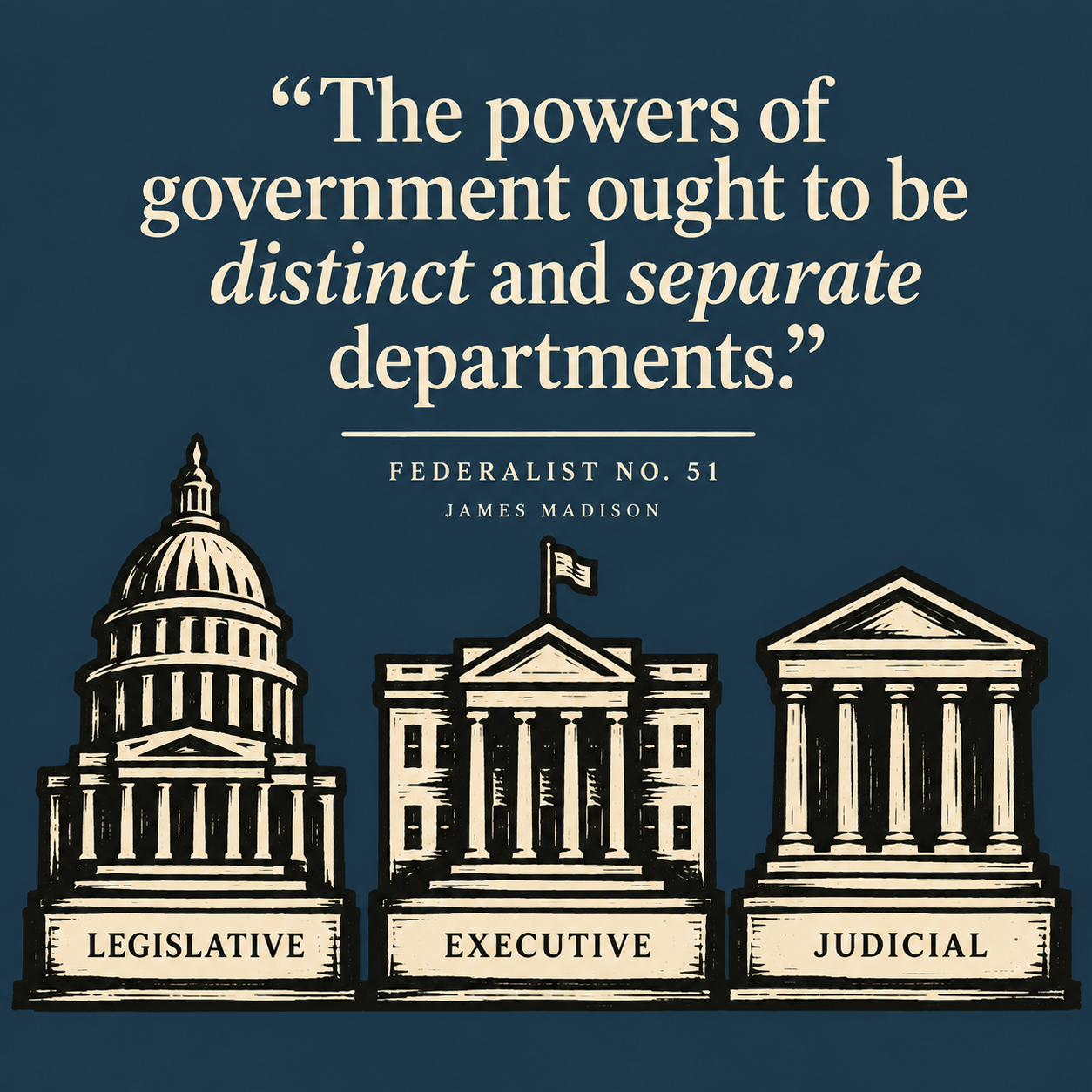
Distinct and separate departments
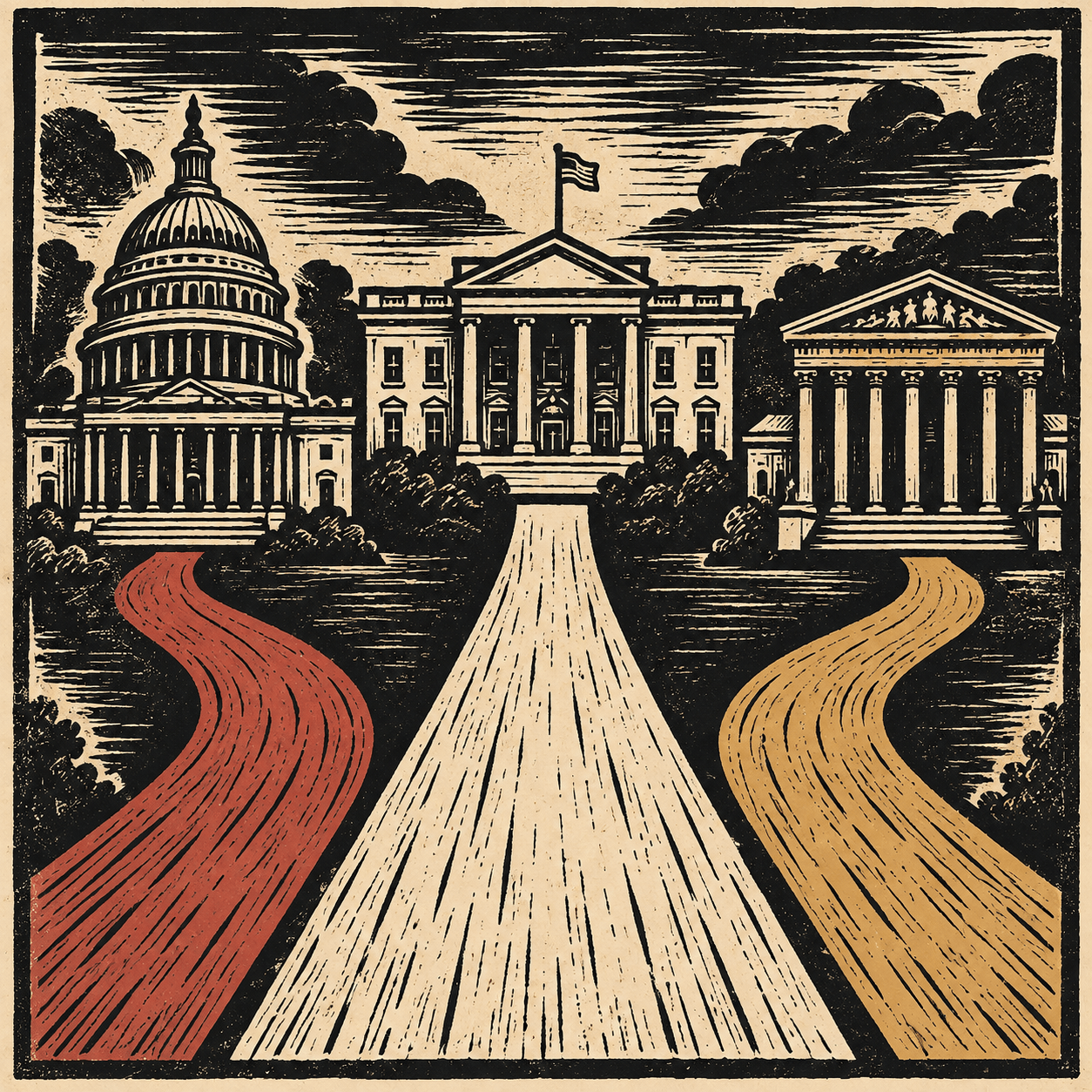
Madison’s first safeguard was to keep government power from collecting in one place. The Constitution uses SEPARATION OF POWERS to divide national authority among three branches with different jobs.
CONGRESS makes laws. The PRESIDENT carries them out. The FEDERAL COURTS interpret and apply them in cases.
That division matters because no single person or institution gets every major power of government.
But Madison knew separating power was not enough. What stops one branch from reaching into the power of another?
[ADD SQUARE IMAGE]
EQ: How does constitutional friction prevent tyranny?
[ADD SQUARE IMAGE]
necessary partition of power
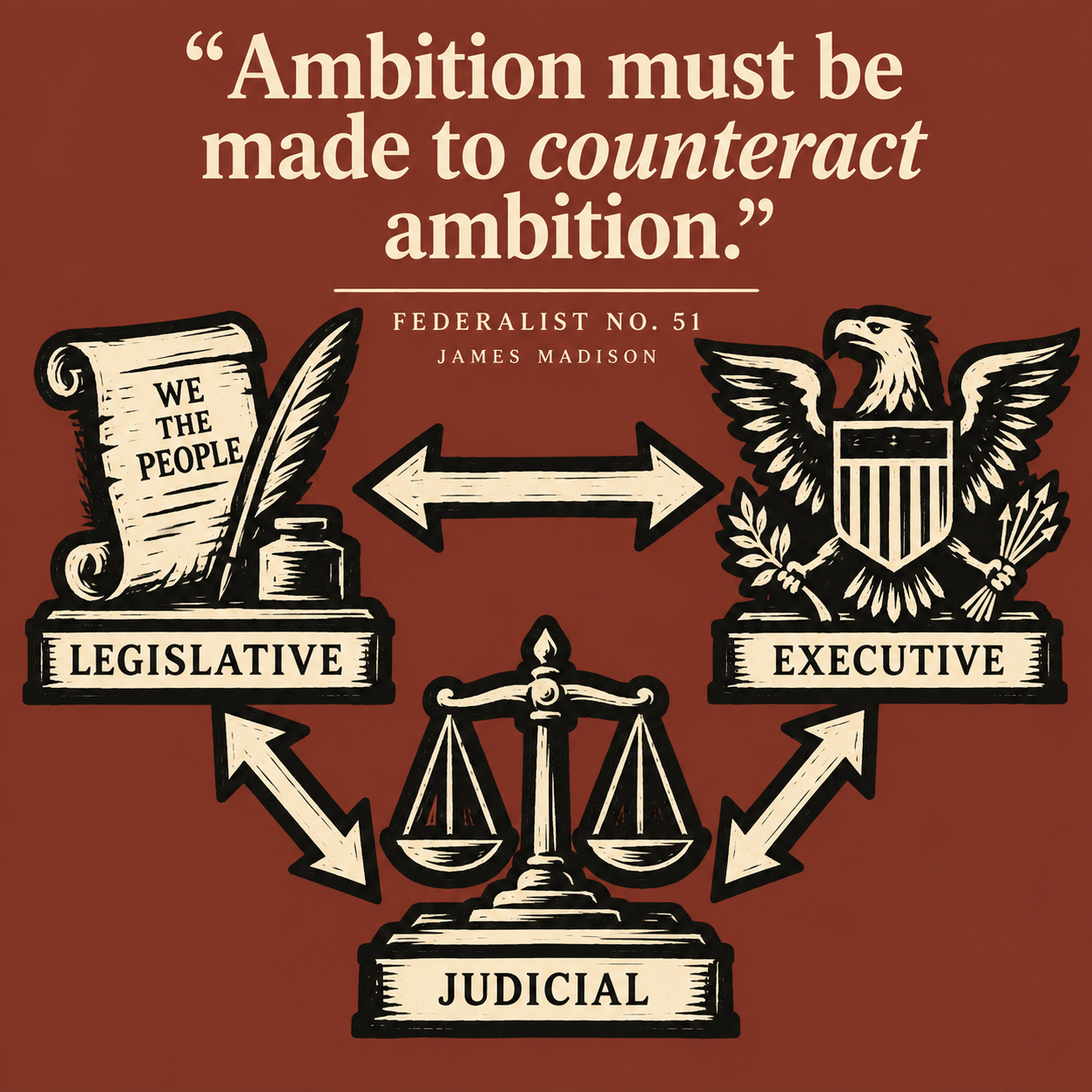
Simply separating the branches was not enough. Madison argued that each needed “constitutional means” to resist the others when they reached too far.
That idea becomes CHECKS AND BALANCES. The president can veto a bill. Congress can override that veto. The Senate confirms major appointments, while federal courts can determine whether government actions violate the Constitution.
The branches are separate, but they are not powerless against one another.
Madison captured the logic perfectly. “Ambition must be made to counteract ambition.”
EQ: How does constitutional friction prevent tyranny?
OPPOSITE AND RIVAL INTERESTS
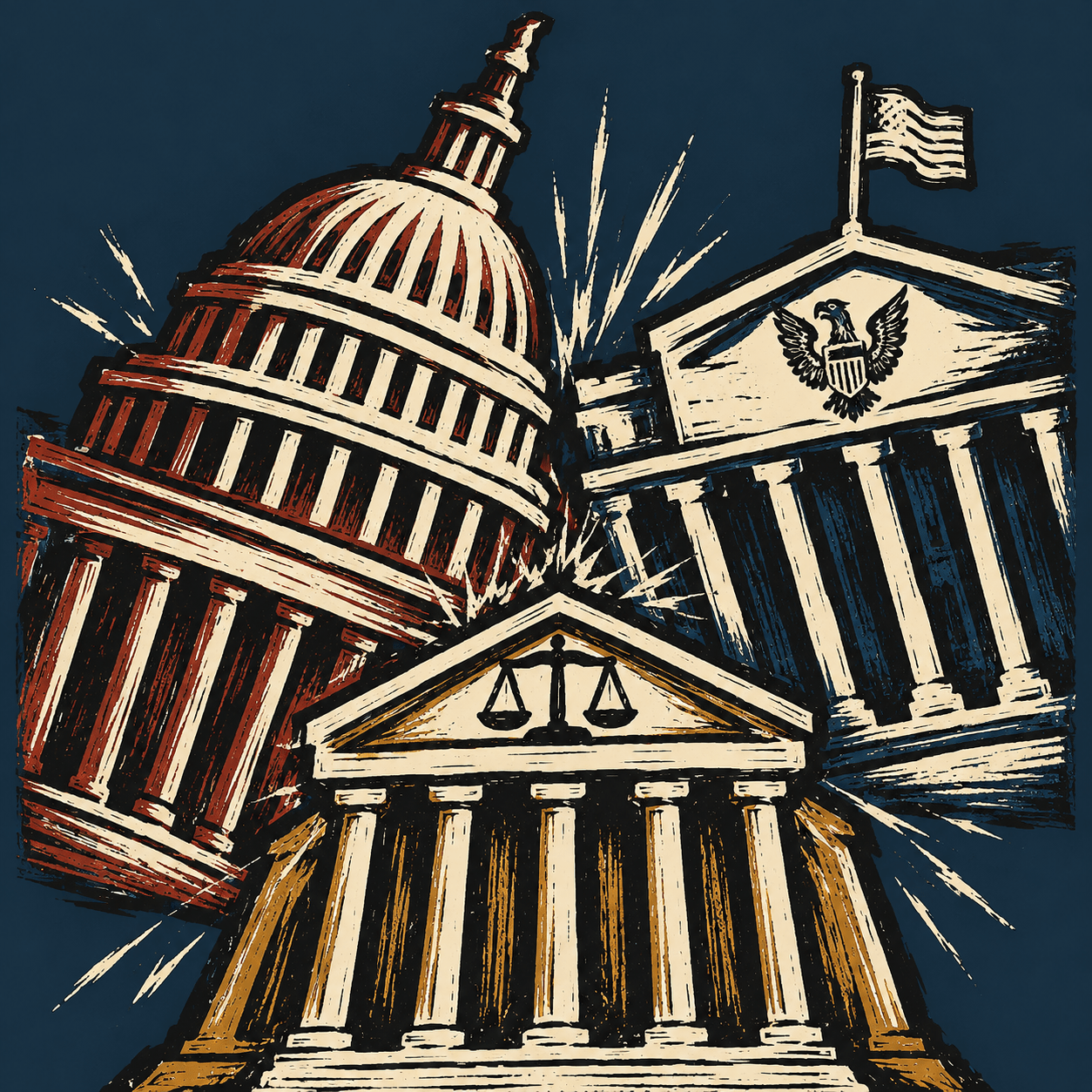
There is a consequence to this CONSTITUTIONAL DESIGN. When different branches share power and can check one another, getting government to act can become slower, messier, and more difficult.
A president may want one thing while Congress wants another. Courts may block actions taken by either.
That CONSTITUTIONAL FRICTION is not necessarily a failure. Madison expected institutions to compete.
The same barriers that can slow government down also make it harder for any person or branch to gain unchecked power.
[ADD SQUARE IMAGE]
EQ: How does constitutional friction prevent tyranny?
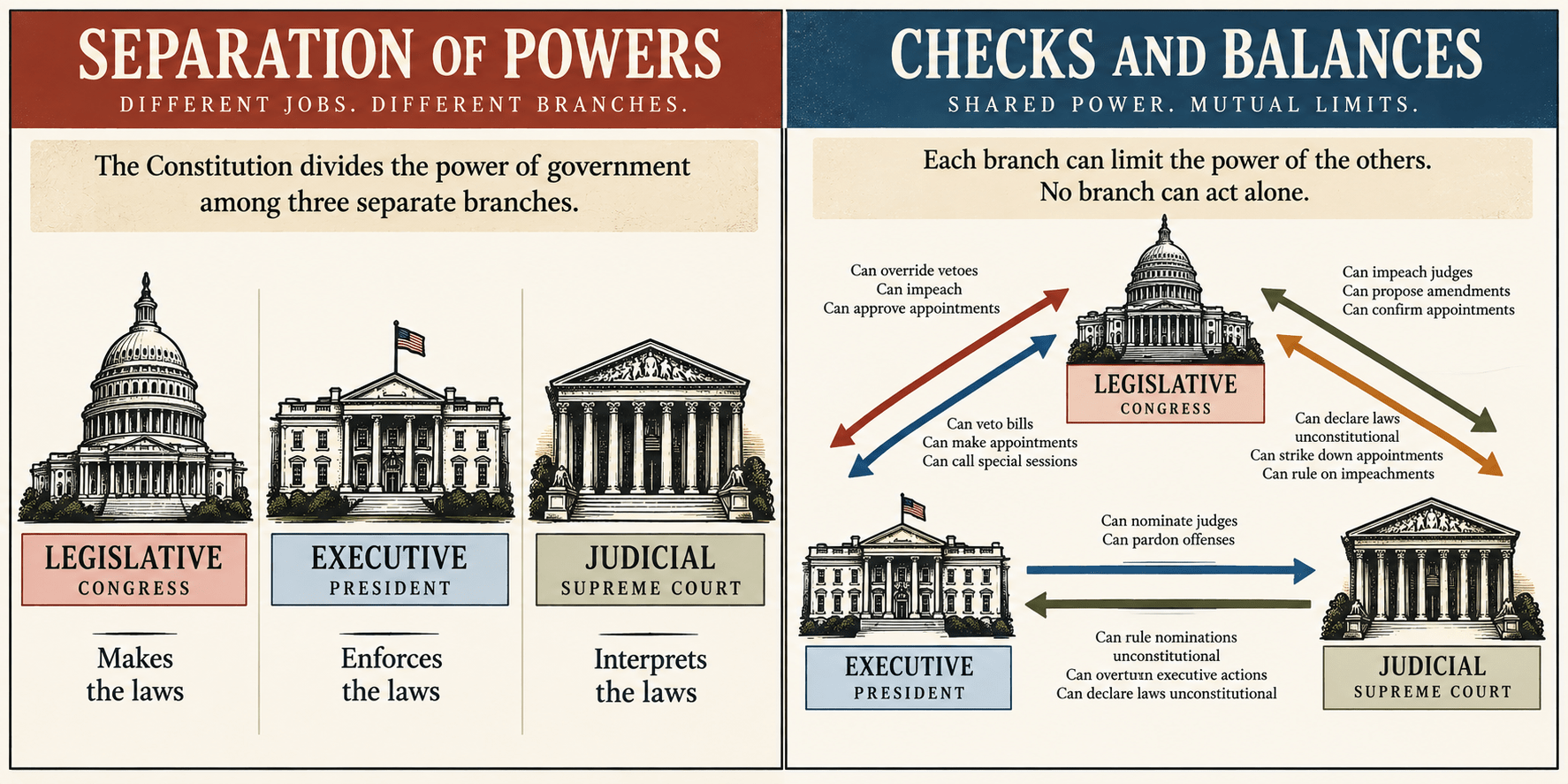
Review the diagrams and look for the AI mistake
[ADD SQUARE IMAGE]
DIFFERENT INTERESTS NECESSARILY EXIST
Dividing government power has another effect. If you want government to do something, there is not just one door you can knock on.
STAKEHOLDERS, people or groups affected by an issue, can approach different institutions. They might pressure CONGRESS for a law, push the PRESIDENT to act, or challenge a policy through the COURTS.
These ACCESS POINTS create multiple opportunities to influence PUBLIC POLICY.
The same design that prevents one institution from controlling government also gives others more than one way in.
EQ: How does constitutional friction prevent tyranny?
LESSON RECAP
How does constitutional friction prevent tyranny?
The Constitution prevents TYRANNY by making it difficult for any person, branch, or temporary majority to gain unchecked power.
-
ARTICLE V requires broad agreement before the Constitution itself can change.
-
SEPARATION OF POWERS divides government authority among three branches.
-
CHECKS AND BALANCES make those branches share power and restrain one another.
-
FEDERALIST NO. 51 explains why competition creates CONSTITUTIONAL FRICTION; divided power also gives STAKEHOLDERS multiple ACCESS POINTS to influence government.
BEHIND THE FRAME
[ADD PORTRAIT IMAGE]
[ADD PORTRAIT IMAGE]
[IMAGE TITLE]
• [FIRST IMPORTANT FACT]
• [SECOND IMPORTANT FACT]
• [WHAT THE IMAGE REVEALS]
• [ONE FINAL DETAIL OR MYTH CHECK]
[ACTIVITY TITLE]
1. [WRITE THE FIRST INSTRUCTION.]
2. [CONTINUE IN THE SAME TEXT BOX.]
3. [ADD, REMOVE, OR FORMAT STEPS AS NEEDED.]
THE BIG IDEA
[BIG IDEA]
HOLD THAT THOUGHT
[PLACE THE THOUGHT, QUOTATION, CLAIM, OR SHORT PASSAGE HERE.]
[OPTIONAL SOURCE OR ATTRIBUTION]
TPS: [ONE OR TWO QUESTIONS.]
RETRIEVAL BEAT
BRING IT BACK
[FIRST PRIOR-LEARNING PROMPT]
[SECOND PRIOR-LEARNING PROMPT]
“
[QUOTATION]
[SOURCE OR ATTRIBUTION]
“
[REPEAT THE QUOTE]
[SOURCE OR ATTRIBUTION]
THINK–PAIR–SHARE
[QUESTION OR DISCUSSION PROMPT]
WORD WALL
[TERM ONE]
[Concise, student-friendly definition.]
[TERM TWO]
[Concise, student-friendly definition.]
[TERM THREE]
[Concise, student-friendly definition.]
[TERM FOUR]
[Concise, student-friendly definition.]
[TERM FIVE]
[Concise, student-friendly definition.]
[TERM SIX]
[Concise, student-friendly definition.]
NOW PLAYING:
[MOVIE TITLE]
VIEWING EXPECTATIONS
• No talking.
• No headphones or gaming.
• Pay attention, even if passively.
[ADD 2:3 POSTER]
[ADD 2:3 POSTER OR IMAGE]
THEMES TO WATCH FOR
• [FIRST THEME OR IDEA]
• [SECOND THEME OR IDEA]
• [THIRD THEME OR IDEA]
• [FOURTH THEME OR IDEA]
[CHECKLIST CATEGORY]
[CHECKLIST TITLE]
[LEFT COLUMN]
☐ [FIRST ITEM]
☐ [SECOND ITEM]
☐ [THIRD ITEM]
[RIGHT COLUMN]
☐ [FOURTH ITEM]
☐ [FIFTH ITEM]
[OPTIONAL NEXT-STEP LABEL]
[OPTIONAL NEXT STEP]
[ANNOUNCEMENT CATEGORY]
[ANNOUNCEMENT TITLE]
[ONE-SENTENCE CONTEXT OR PURPOSE.]
01
[FIRST HEADING]
[FIRST DETAIL OR ACTION.]
02
[SECOND HEADING]
[SECOND DETAIL OR ACTION.]
03
[THIRD HEADING]
[THIRD DETAIL OR ACTION.]
[CALL TO ACTION OR DEADLINE]
DEVICES READY · EYES UP
ASSESSMENT READY
ASSESSMENT
[ASSESSMENT NAME]
LOCATION
[WEBSITE OR APP]
PASSCODE
[PASSCODE]
MY CORE EXPECTATIONS
#1
[EXPECTATION]
WHY IT MATTERS
[EXPLAIN WHY THIS EXPECTATION MATTERS IN ONE SENTENCE.]
COLLABORATIVE BRAINSTORM
1 · THINK
[INDIVIDUAL BRAINSTORM PROMPT]
2 · SHARE
[HOW AND WHEN STUDENTS SHARE THEIR IDEAS]
3 · CONNECT
[FOLLOW-UP QUESTION, CONNECTION, OR THINK-PAIR-SHARE]
THINK · SHARE · CONNECT
EXIT TICKET
[EXIT TICKET THOUGHT OR QUESTION]
COMPLETE ON THE CLASS SITE
CIVIC CHECK
[CIVIC CHECK TITLE]
[LARGE CIVIC CHECK DIRECTIONS]
[GAME NAME]
[TYPE THE QUESTION HERE]
[CHOICE A]
[CHOICE B]
[CHOICE C]
[CHOICE D]
TRUE OR FALSE
[TYPE THE TRUE OR FALSE STATEMENT]
TRUE
FALSE
ANSWER
[CORRECT ANSWER]
[EXPLAIN WHY THIS IS THE CORRECT ANSWER.]
[ADD AN IMPORTANT CONNECTION, RULE, CASE, PIECE OF EVIDENCE, OR REAL-WORLD IMPACT.]
APG-1.4-checks
By Weston Rogers