LESSON 2.1
TWO HOUSES,
ONE CONGRESS
How does the structure of Congress shape the way national policy is made?
AP U.S. GOVERNMENT & POLITICS • TOPICS 2.1–2.2
UNIT 2: INTERACTIONS AMONG BRANCHES OF GOVERNMENT
ESSENTIAL QUESTION
How does a government designed to divide power manage to make policy?
EXAM WEIGHT
Approximately
25–36%
of the AP U.S. Government and Politics exam
In Unit 2, we’ll study how the Legislative, Executive, and Judicial Branches—and the federal bureaucracy—share power and make public policy: the laws, rules, and government actions that address issues affecting society. You’ll examine how these institutions use their powers, check one another, and interact as policy is created and carried out.
GO TO: https://ahaslides.com/VRERP
THE HOOK
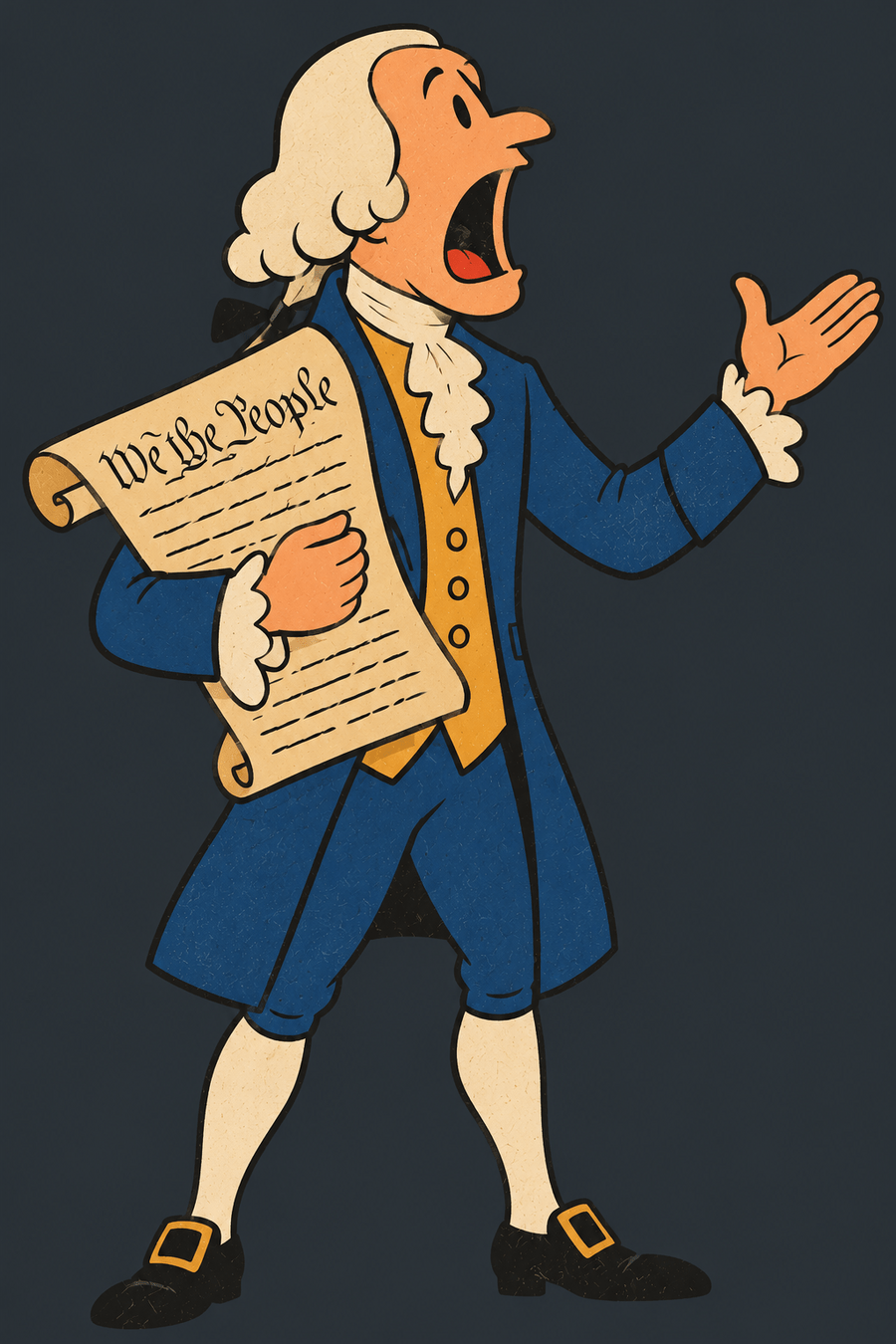
I'm James Madison, often called the Father of the Constitution. I helped write 29 of the Federalist Papers and served as America's fourth president.
Now, looking at this collection of complaints, I have to wonder. What if Congress outlawed every single one of your pet peeves? Would that even work?
Some things are just annoying. Does being annoyed mean Congress should make a law against them?
Think, Pair, Share: Which pet peeve, if any, is worth a law against it? Why?
[ADD SQUARE IMAGE]
“the General Welfare”
Wanting something changed is easy. Deciding what government should do about it is another matter.
Government decisions and actions addressing public problems become PUBLIC POLICY. This includes passing laws, creating programs, establishing regulations, and deciding how public money is spent.
Congress plays a central role in shaping national policy. It decides which proposals become federal laws, determines how public money is spent, and helps oversee government programs. But not every problem requires a new law or government action.
EQ: How does the structure of Congress shape the way national policy is made?

PUBLIC POLICY OR NOT?
Which of these established a public policy?
01 📱 TikTok gets an ultimatum!
Congress passes a sell-or-ban law.
✅ YES! A federal law.
02 👽 Aliens among us?
Congress holds hearings about UFOs and possible government cover-ups.
❌ NO! An investigation, not a new policy.
03 🍽️ Free lunch for everyone?
The federal government expands free school meals during COVID.
✅ YES! Expanding a government program.
04 🗓️ Four-day workweek?
Congress considers a bill to shorten the workweek to 32 hours.
❌ NO! A proposal, not an adopted policy.
05 🍓🚭 No more fruity vapes?
California bans the sale of flavored vapes.
✅ YES! A state law restricting sales.
A House Divided
The Constitution gives CONGRESS, the legislative branch, a central role in shaping PUBLIC POLICY. Congress considers competing ideas, decides which become federal laws, and determines how national priorities receive funding.
But these decisions aren't made by one group. The framers created a BICAMERAL legislature, dividing Congress into the House of Representatives and the Senate.
Each chamber represents Americans differently, follows different rules, and holds distinct powers. These differences influence which policies advance, face obstacles, or ultimately become law.
[ADD SQUARE IMAGE]
EQ: How does the structure of Congress shape the way national policy is made?

CONGRESS, BEFORE THE LESSON
Now that we've explored PUBLIC POLICY and how Congress is divided into two chambers, it's time to see how those chambers are organized, what powers they hold, and how they shape national policy.
Complete the Congress in Four Frames worksheets using the answer key in the Lesson 2.01 section of the AP Gov site. Shade all AP-marked areas in one color.
When finished, begin your Lesson 2.01 notes.
PT. 1: THE HOUSE RULES
HOUSE OF REPRESENTATIVES
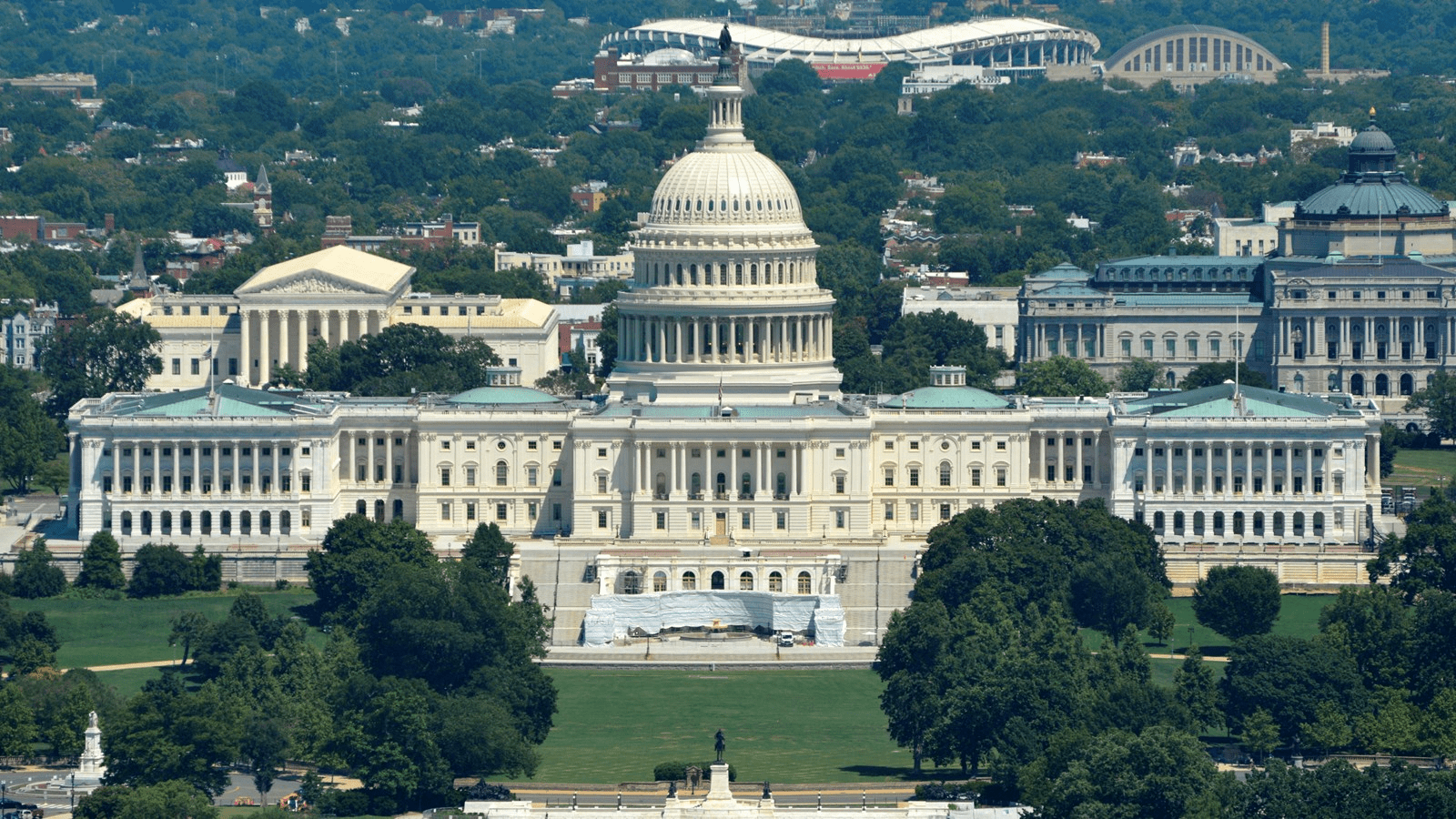
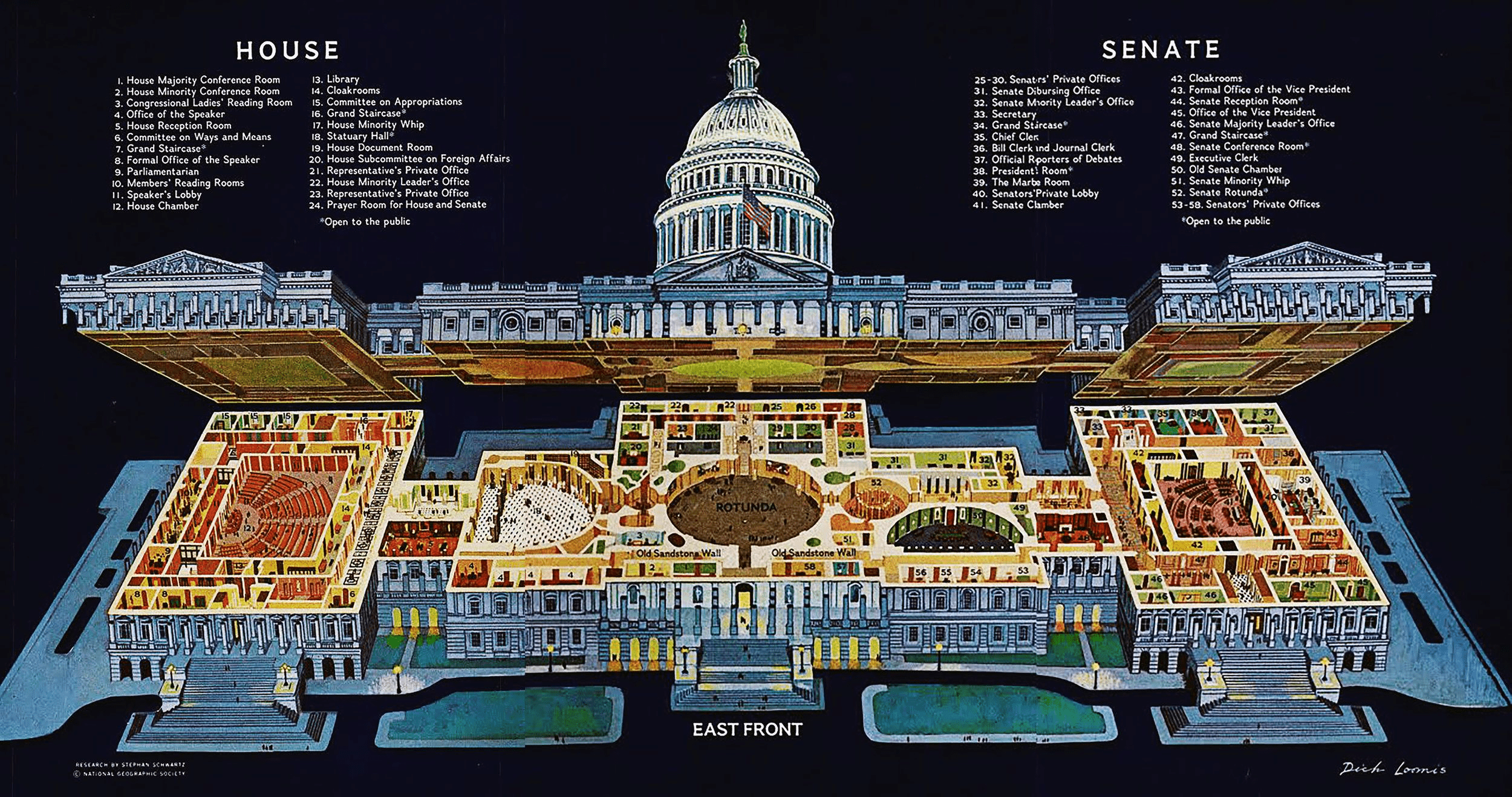
United States Capitol BUILDING
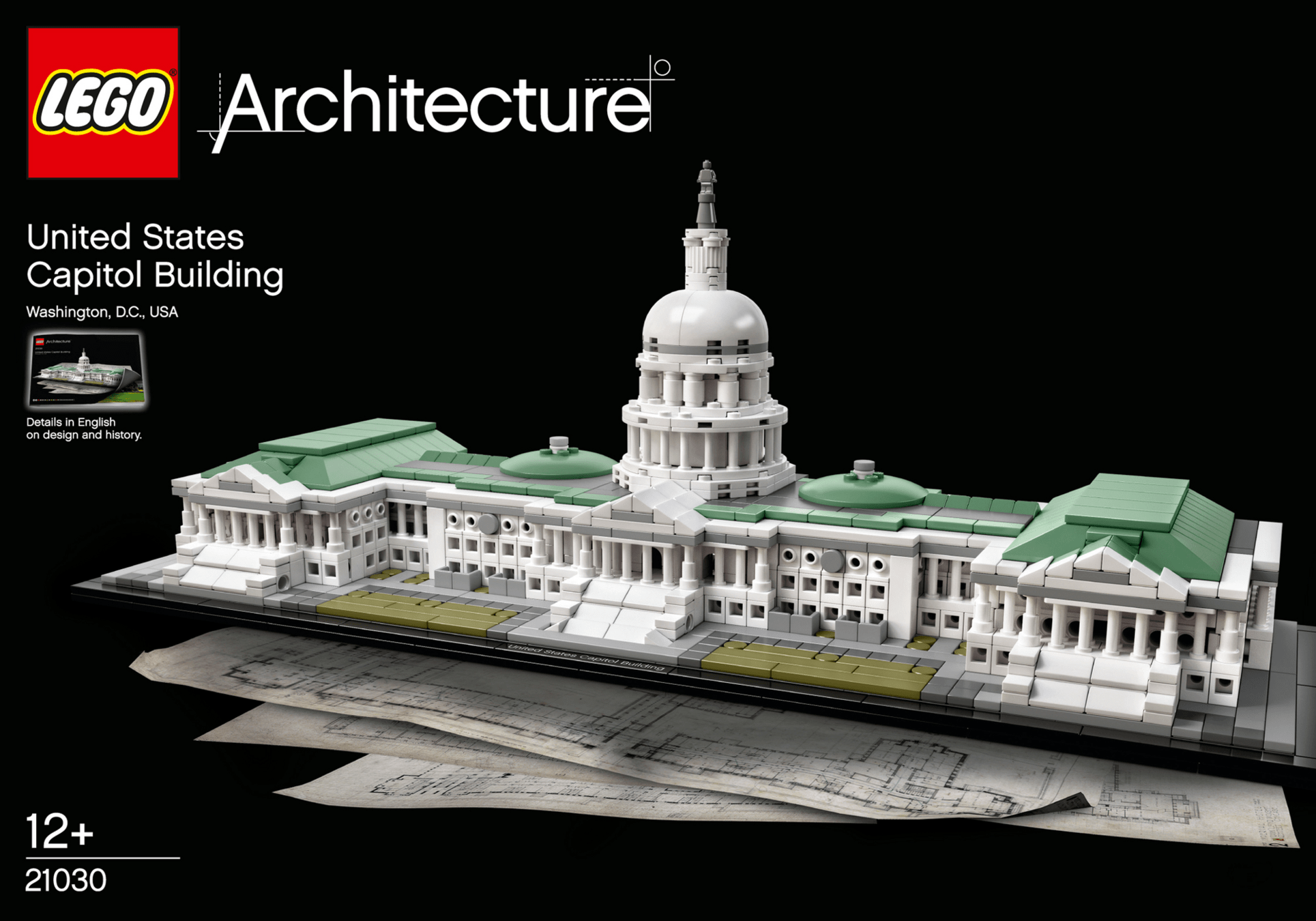
Original Price $99 and over 1,000 pieces!
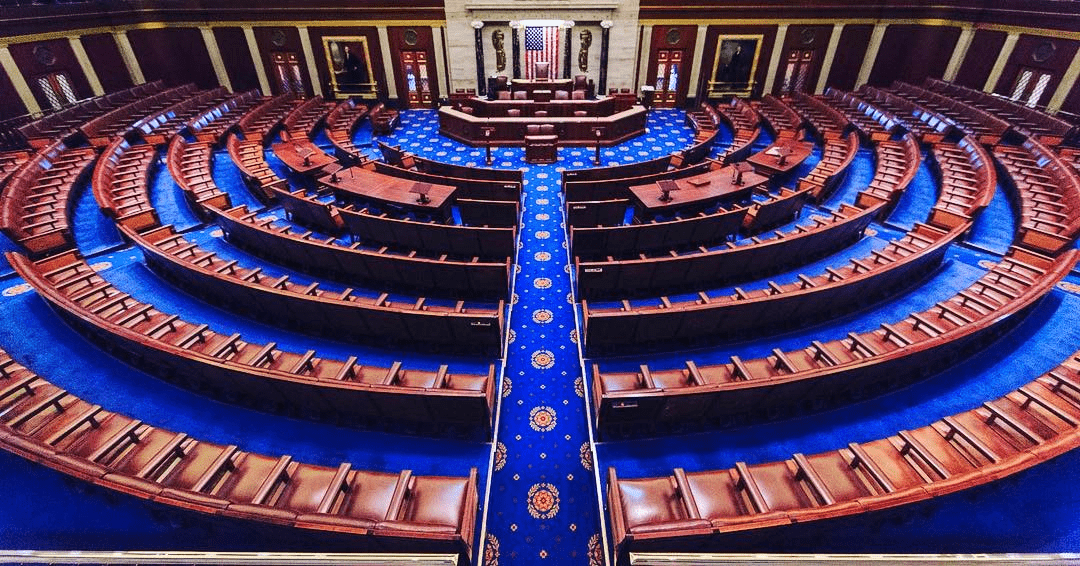
House of Representatives Chamber
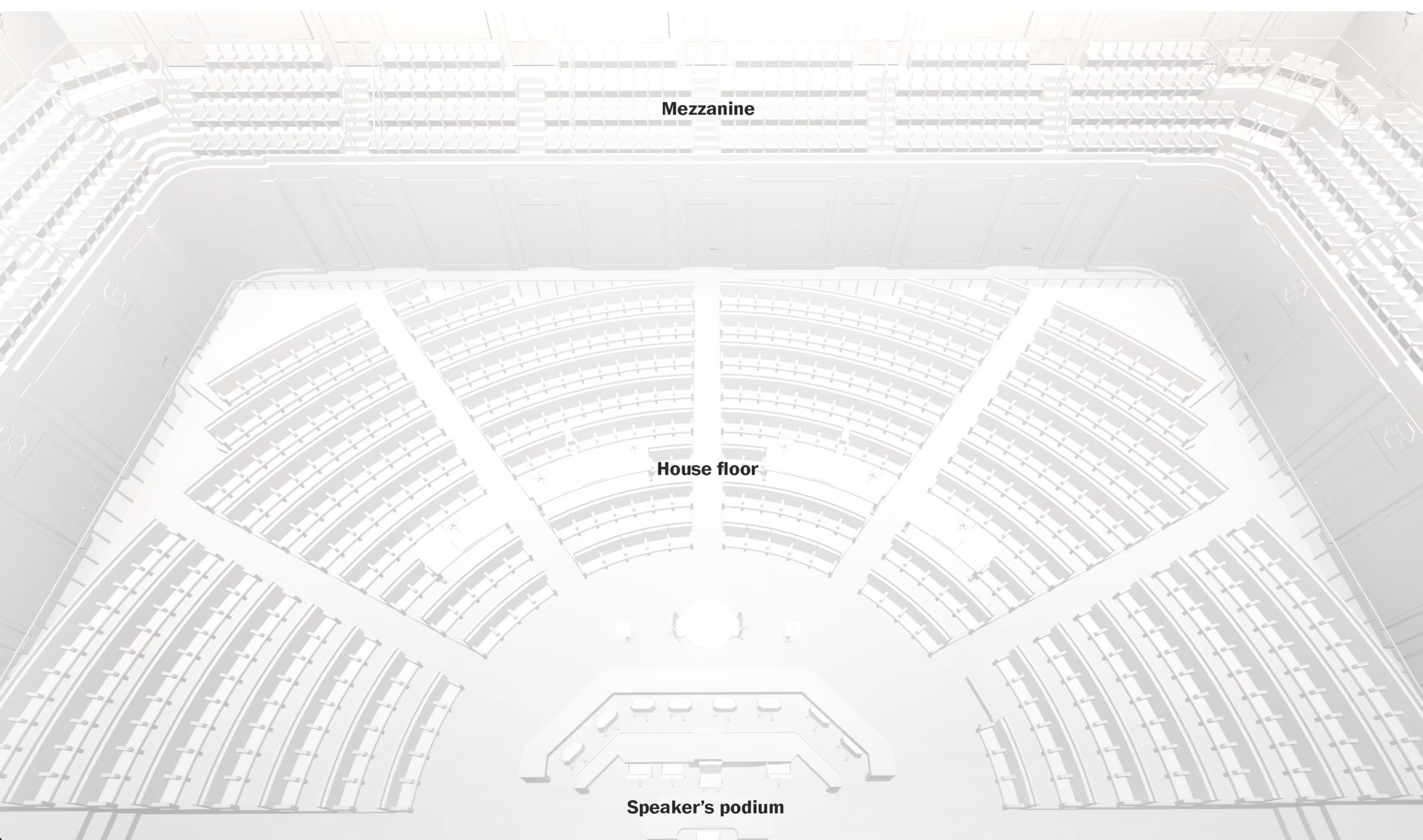
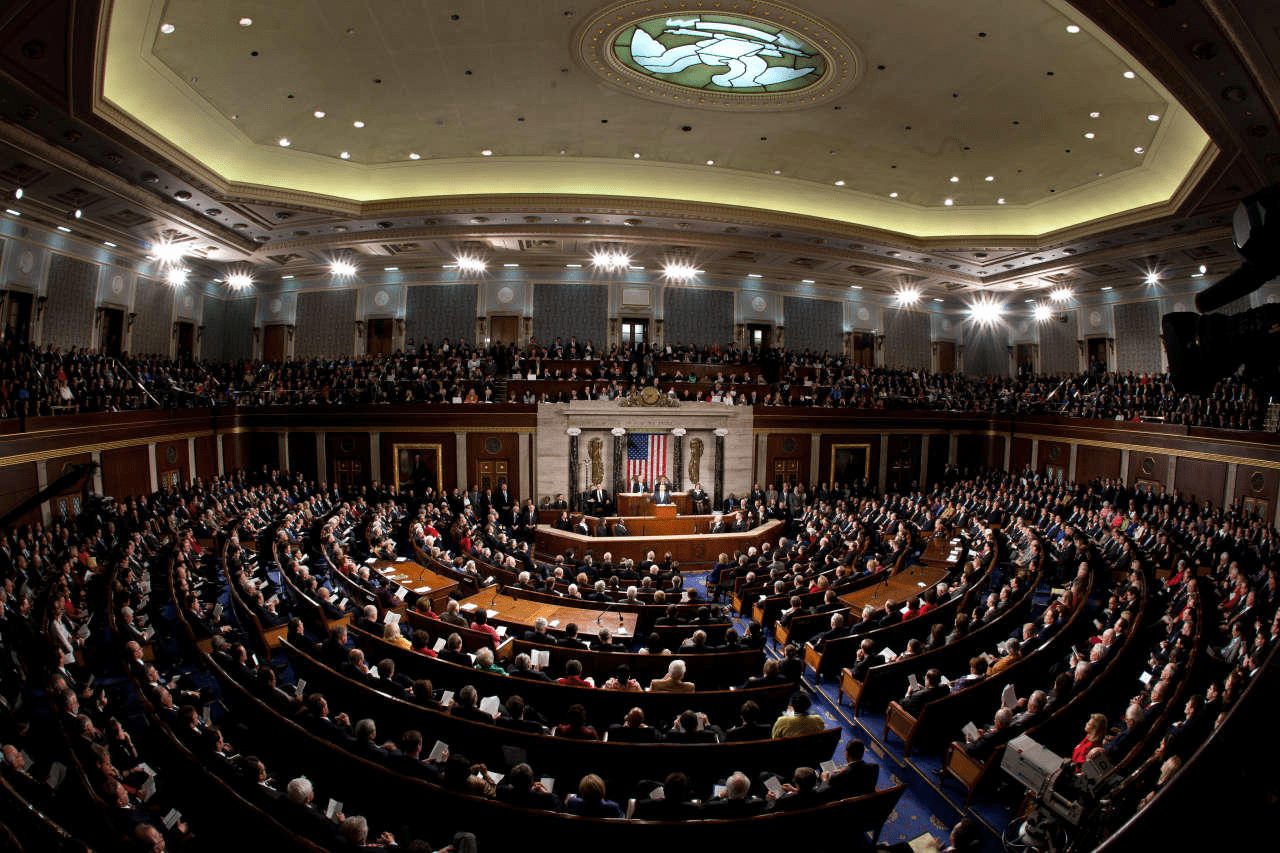
How many seats do you think are on the floor of this chamber?
Who Holds the House?
Each dot is one House seat

435
SEATS
214 Democrats
218 Republicans
1 Independent
2 Vacant
HOUSE SEATING DIAGRAM • SEPTEMBER 2, 2026
[ADD SQUARE IMAGE]
THe PeoplE's House
Congress shapes national policy by considering bills and deciding how public money is spent. The House is one of its two chambers, with 435 voting seats and two-year terms.
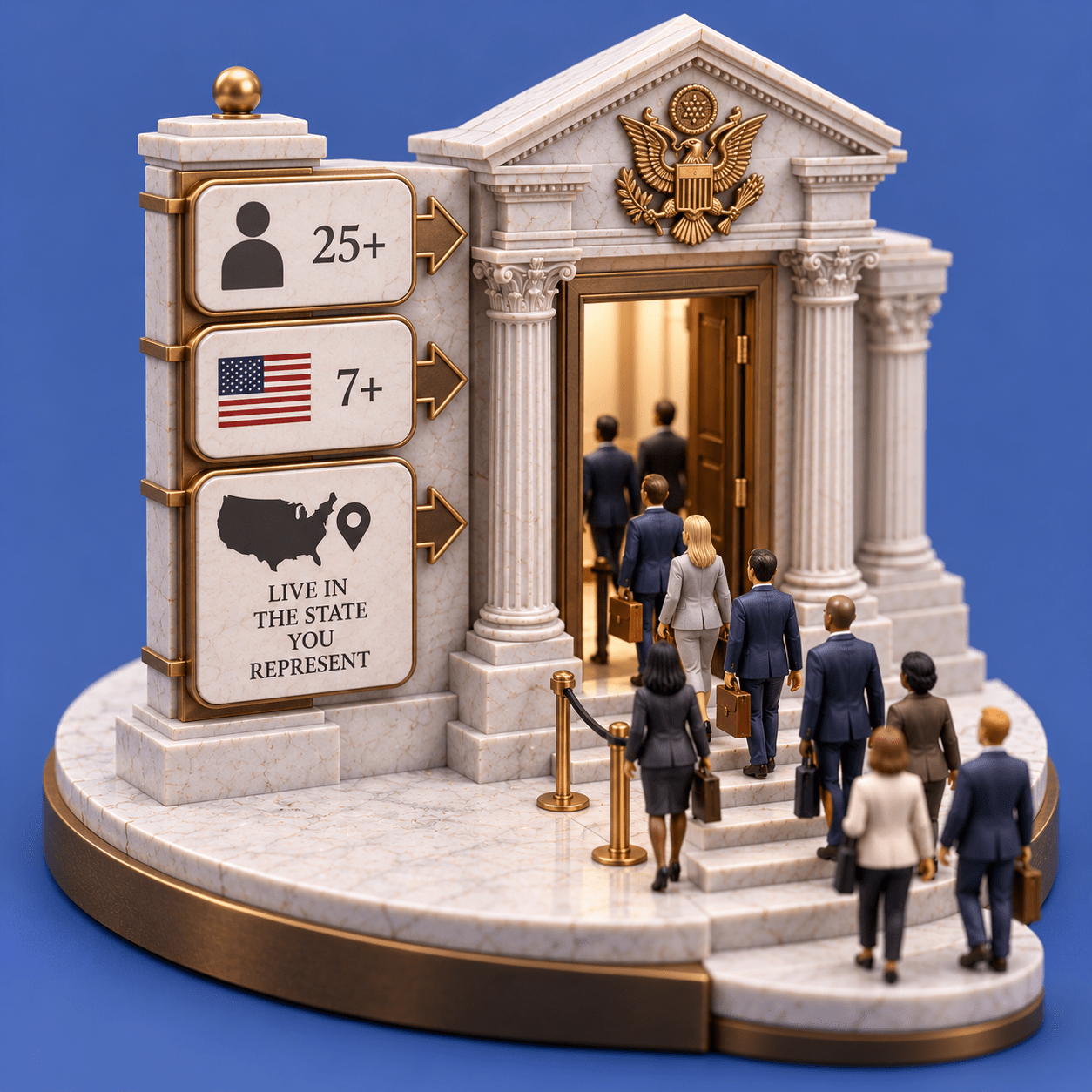
To serve, a representative must be at least 25 years old, have been a U.S. citizen for seven years, and live in the state they represent. Every two years, voters decide whether to keep or replace them.
In Federalist No. 57, Madison argued that frequent elections remind representatives of their dependence on the people. Reelection can influence which policies they support.
EQ: How does the structure of Congress shape the way national policy is made?
The District Map
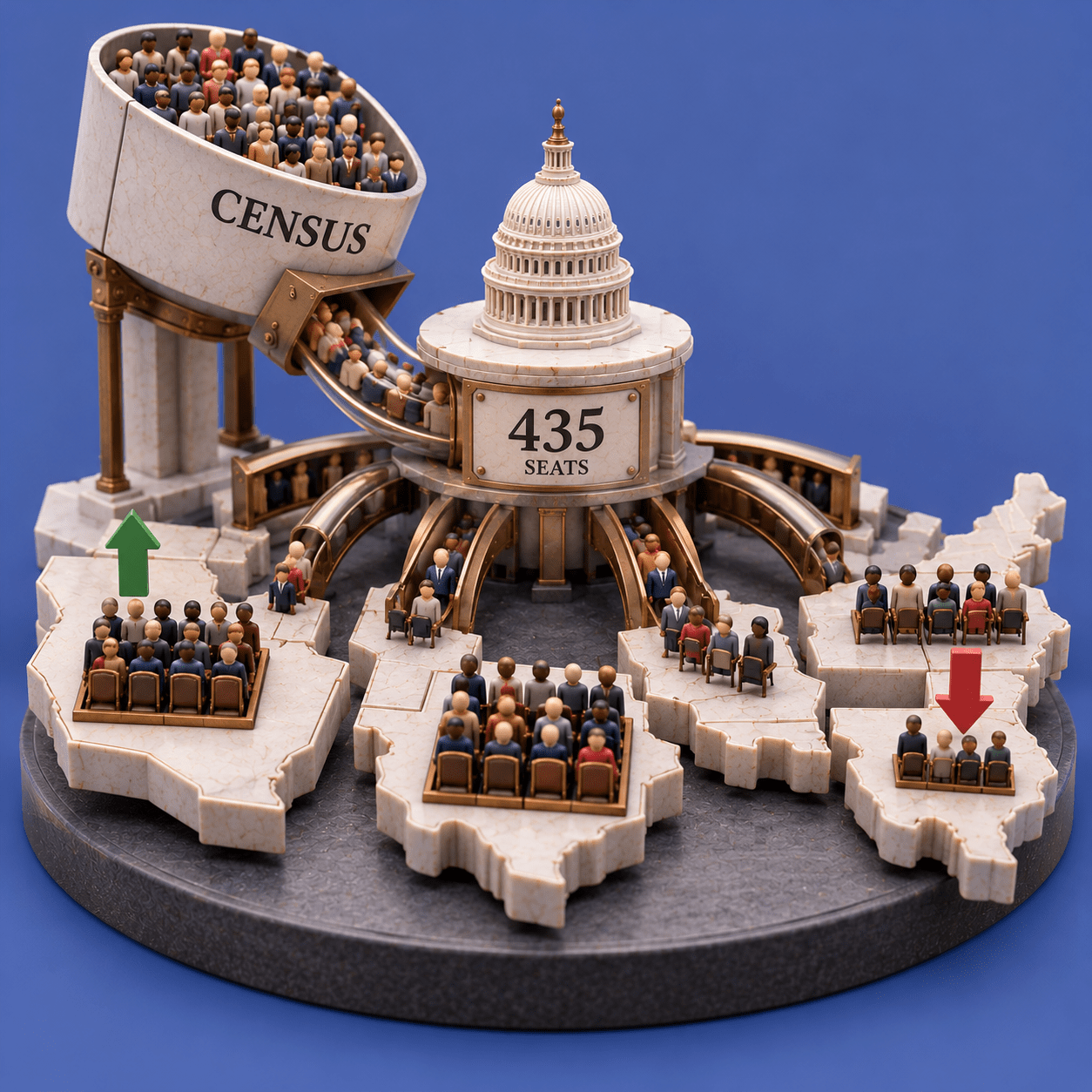
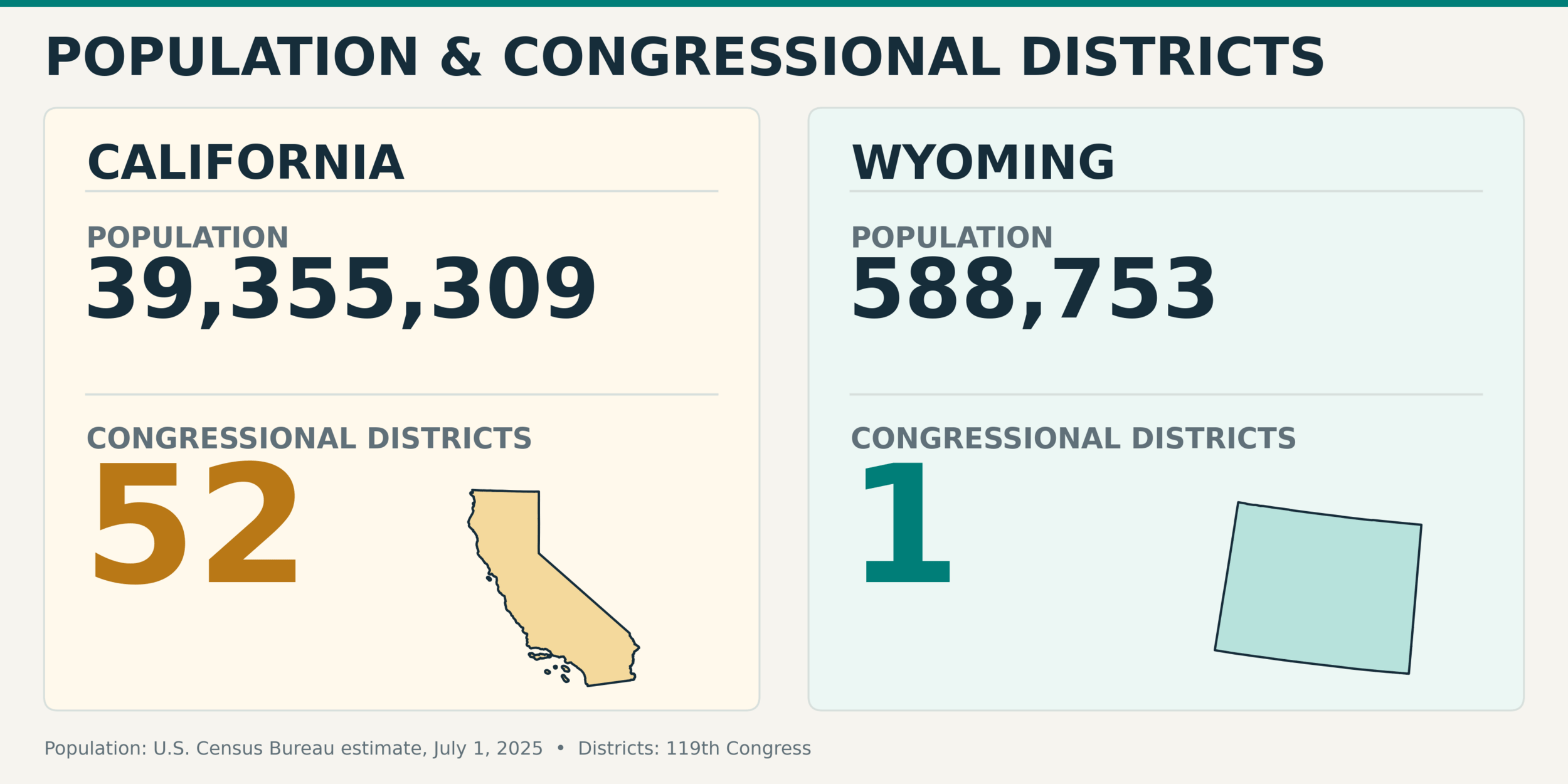
The House has 435 voting seats to share among the states. Every ten years, the CENSUS counts how many people live in each state. A formula set by Congress uses those counts to divide the seats.
As people move, a state’s share of the U.S. population can change. It may gain a seat at the next count. Because the House still has 435 seats, another state must lose one.
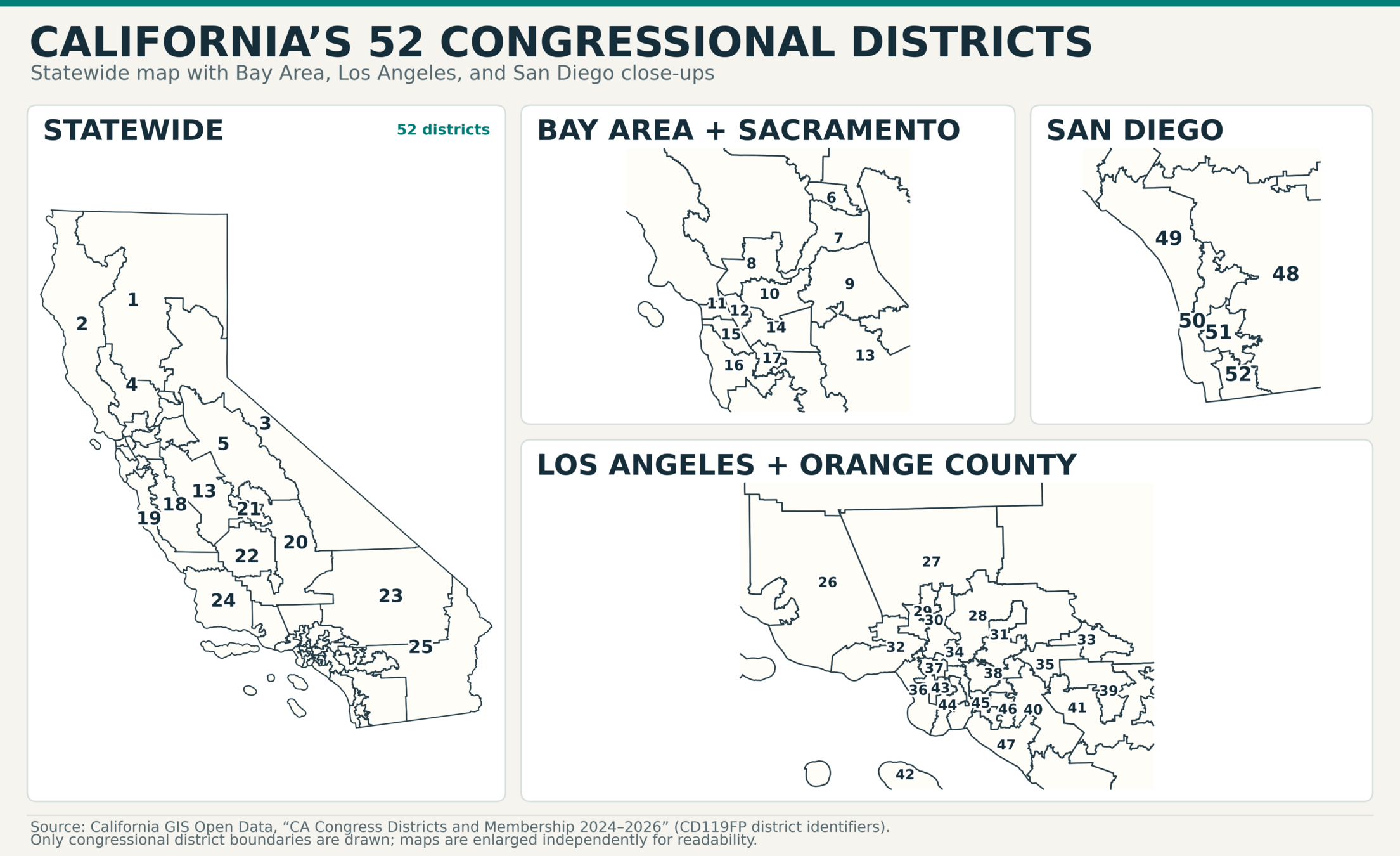
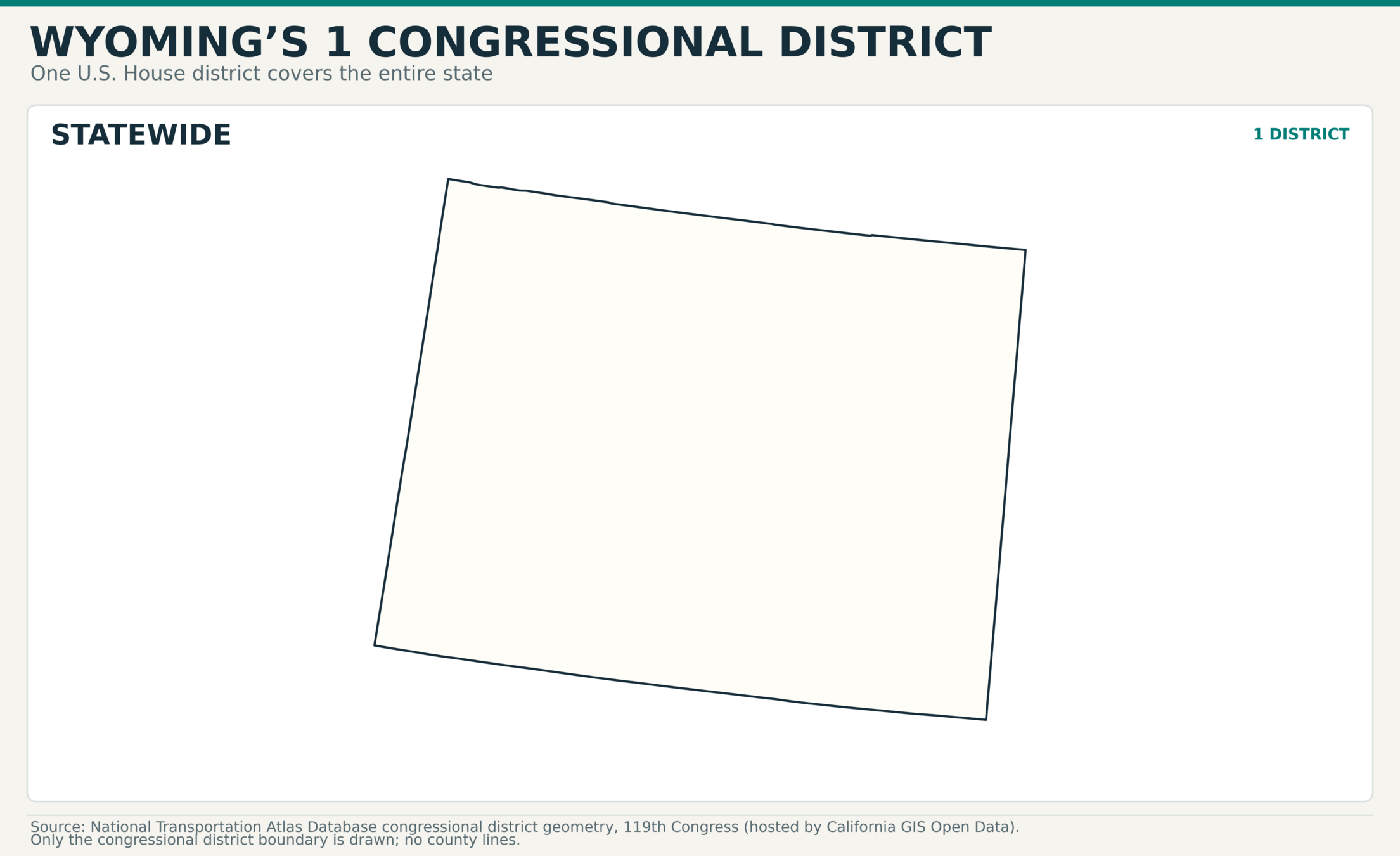
Each state then has one CONGRESSIONAL DISTRICT for each of its seats. Voters in each district elect one representative. We’ll study who draws district lines and the related Supreme Court cases later.
[ADD SQUARE IMAGE]
EQ: How does the structure of Congress shape the way national policy is made?
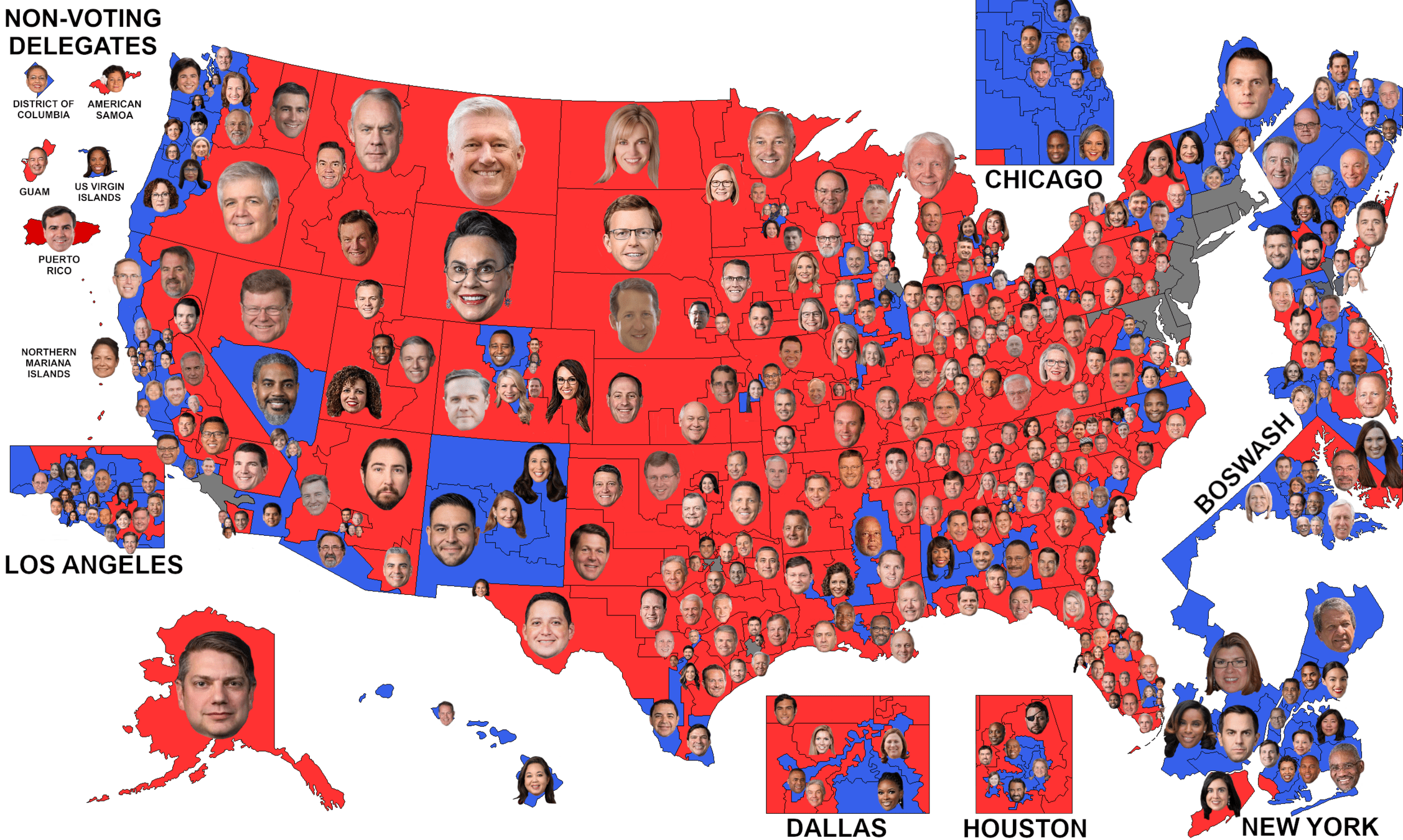
Review: Why do some states have lots of little faces while others have just a few huge ones?
[ADD SQUARE IMAGE]
Order in the House
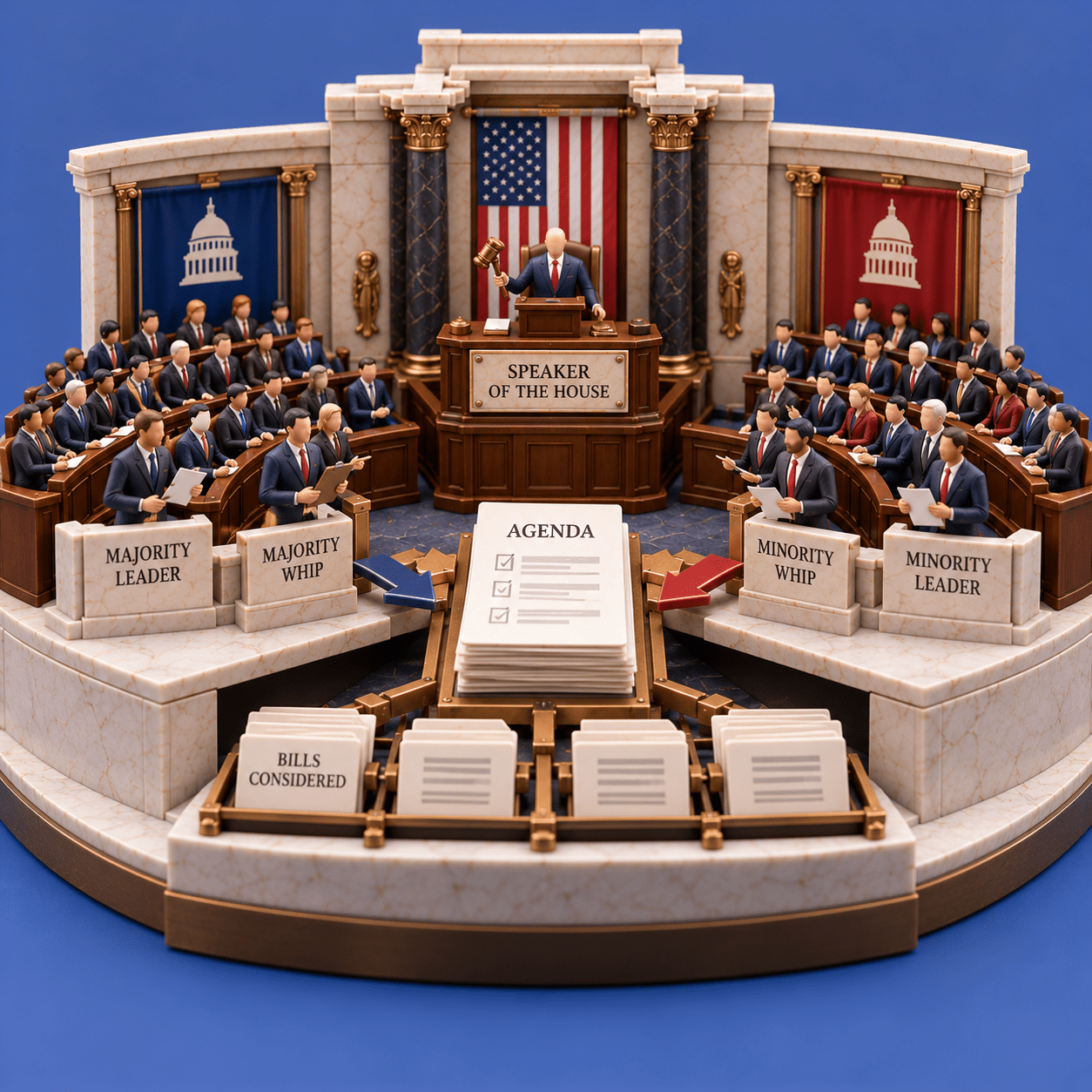
Each of the 435 representatives has one vote and brings priorities from back home. Each can argue that their proposals deserve the House’s attention. But they cannot all set the agenda. Who gets heard first?
The House elects a SPEAKER OF THE HOUSE to lead its work. The MAJORITY PARTY has the most seats, giving it the greatest influence over the LEGISLATIVE AGENDA and which proposals receive attention.
MAJORITY AND MINORITY LEADERS organize their parties’ priorities, while PARTY WHIPS count votes and build support. These roles help determine which ideas have a chance to become policy.
EQ: How does the structure of Congress shape the way national policy is made?
House Leadership

SPEAKER OF THE HOUSE
Mike Johnson
Republican • Elected by the full House
MAJORITY • REPUBLICANS
MINORITY • DEMOCRATS

MAJORITY LEADER
Steve Scalise
Plans floor business

MINORITY LEADER
Hakeem Jeffries
Sets minority party strategy

MAJORITY WHIP
Tom Emmer
Counts votes and builds support

MINORITY WHIP
Katherine Clark
Counts votes and builds support

CONFERENCE CHAIR
Lisa McClain
Leads Republican party meetings

CAUCUS CHAIR
Pete Aguilar
Leads Democratic party meetings
119TH CONGRESS • OCTOBER 2026
Divide THe work
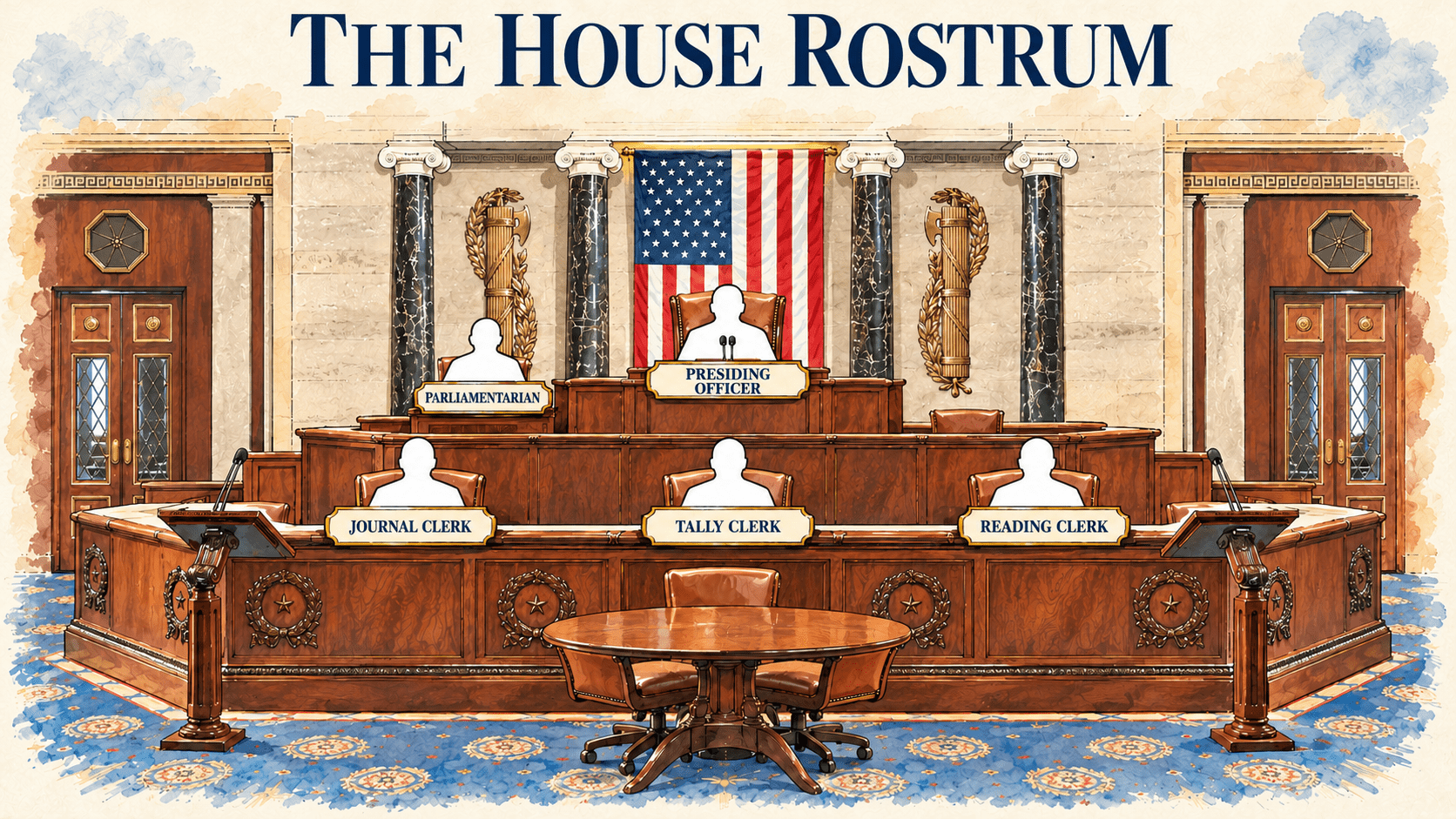
With 435 representatives and thousands of proposals, the full House cannot study every issue together. COMMITTEES give smaller groups time to do that work.
- STANDING COMMITTEES handle continuing policy areas, such as agriculture or education, and review most bills.
- SELECT COMMITTEES focus on a specific task or investigation.
- JOINT COMMITTEES bring House and Senate members together on shared work.
Sending a bill to a committee determines who examines it first.
[ADD SQUARE IMAGE]
EQ: How does the structure of Congress shape the way national policy is made?

The Committee System
Standing committees review bills and oversee government work.
THE HOUSE
01
Agriculture
02
Appropriations
03
Armed Services
04
Budget
05
Education and Workforce
06
Energy and Commerce
07
Ethics
08
Financial Services
09
Foreign Affairs
10
Homeland Security
11
House Administration
12
Judiciary
13
Natural Resources
14
Oversight and Government Reform
15
Rules
16
Science, Space, and Technology
17
Small Business
18
Transportation and Infrastructure
19
Veterans’ Affairs
20
Ways and Means
20 STANDING COMMITTEES • 119TH CONGRESS
[ADD SQUARE IMAGE]
The Committee Test
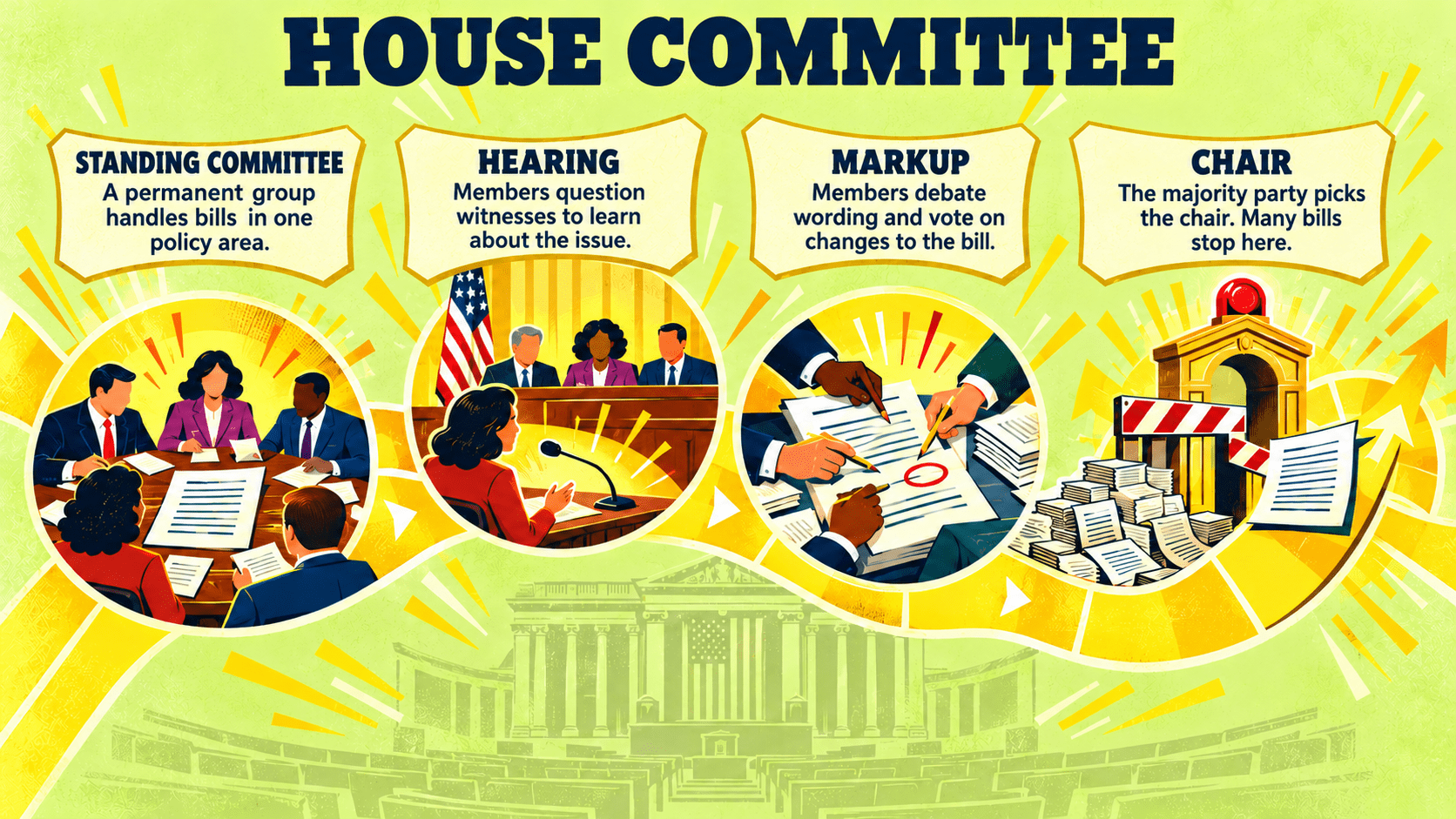
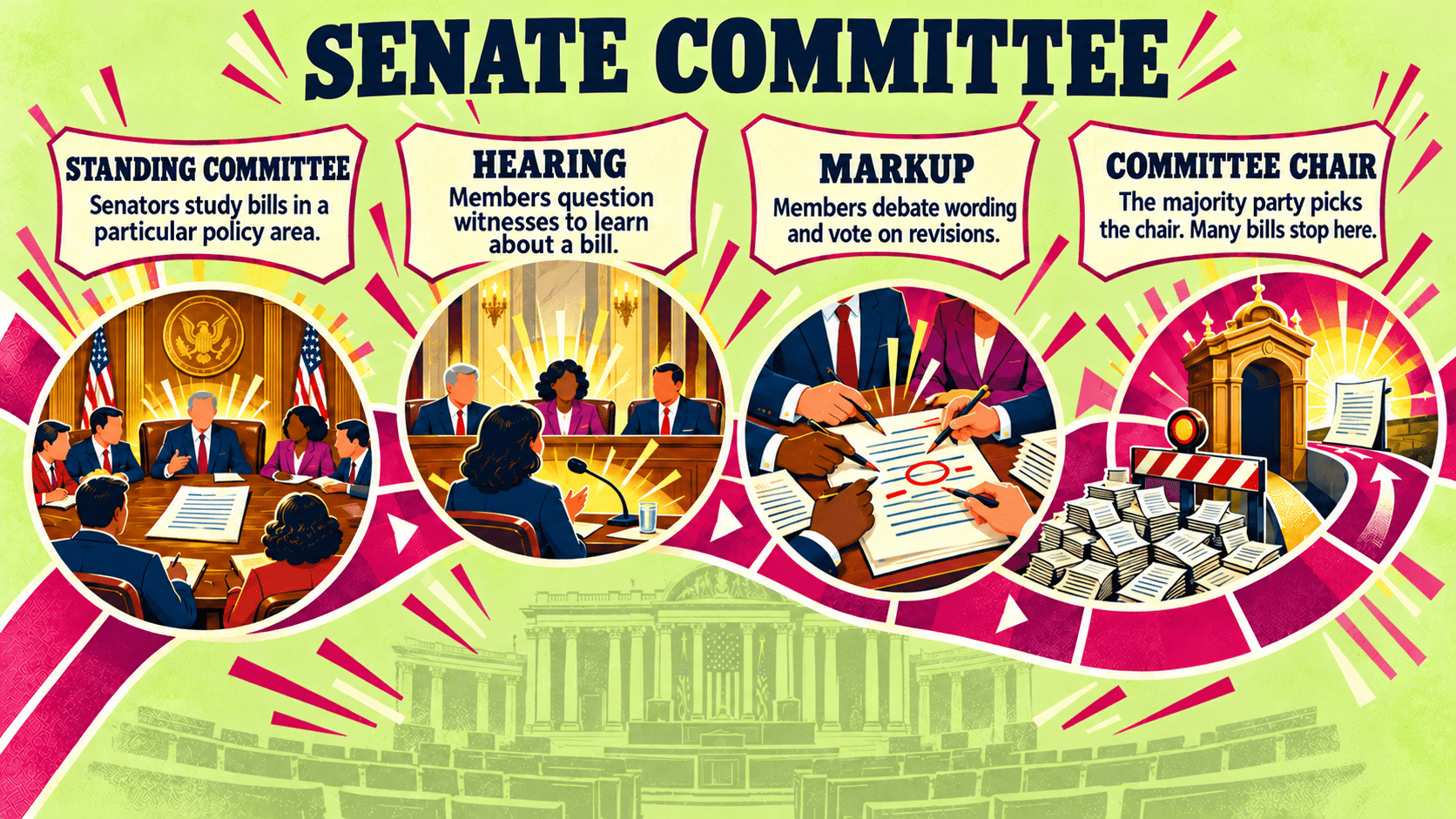
A bill can reach a committee and simply wait. The MAJORITY PARTY holds more seats and chooses the committee chair, who helps decide which bills get attention. Which policy ideas are worth the committee’s time?
For a bill the committee takes up, members may hold a HEARING. They invite experts and people affected by the issue to explain what the proposed law might do. At a MARKUP, members debate the details, change the bill’s wording, and vote on whether to move it forward.
So how many bills make it out of committee?
EQ: How does the structure of Congress shape the way national policy is made?

The Committee Bottleneck
House bills in the 118th Congress
Most bills go to committee. Few come back out.
Bills introduced
10,564
Bills sent to committee
10,533
Bills that left committee
831
7.9%
831 of 10,564 bills left committee
51.3%
426 of those 831 passed the House
SOURCE GOVINFO BILL STATUS • 118TH CONGRESS
Rules of the House
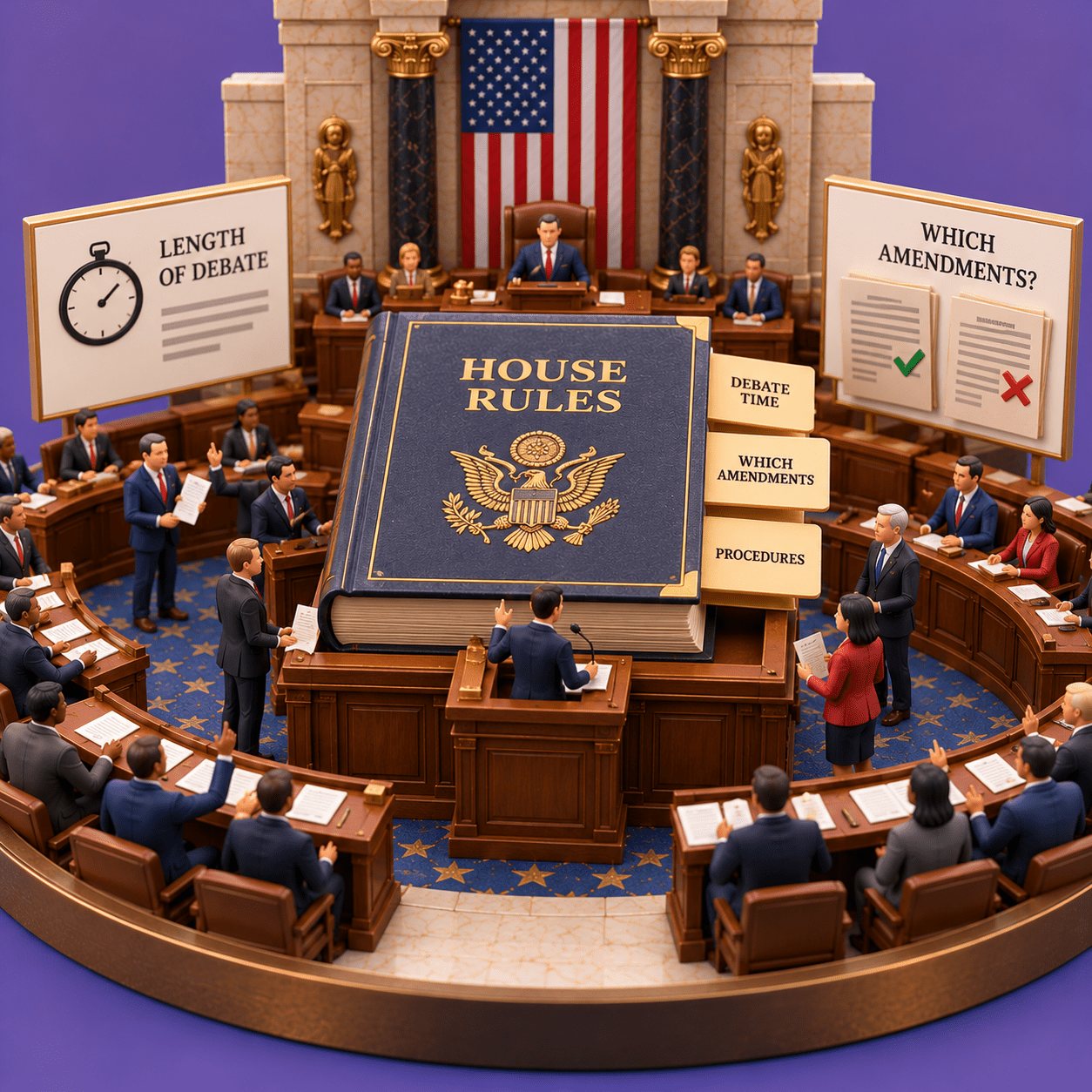
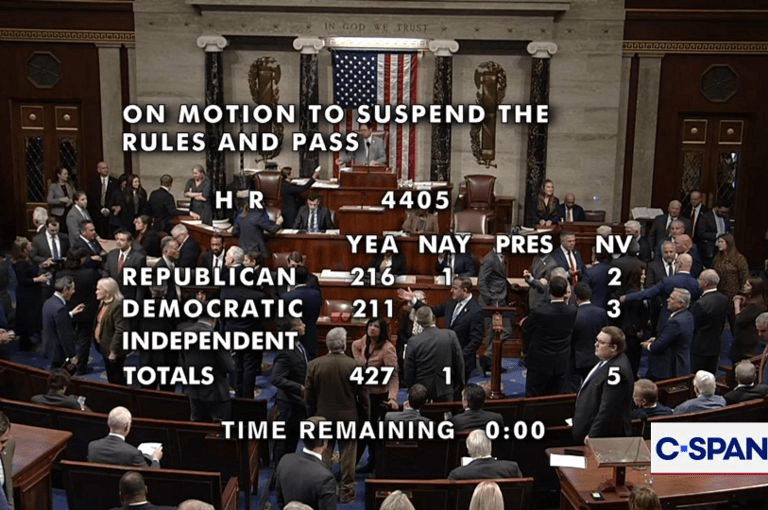
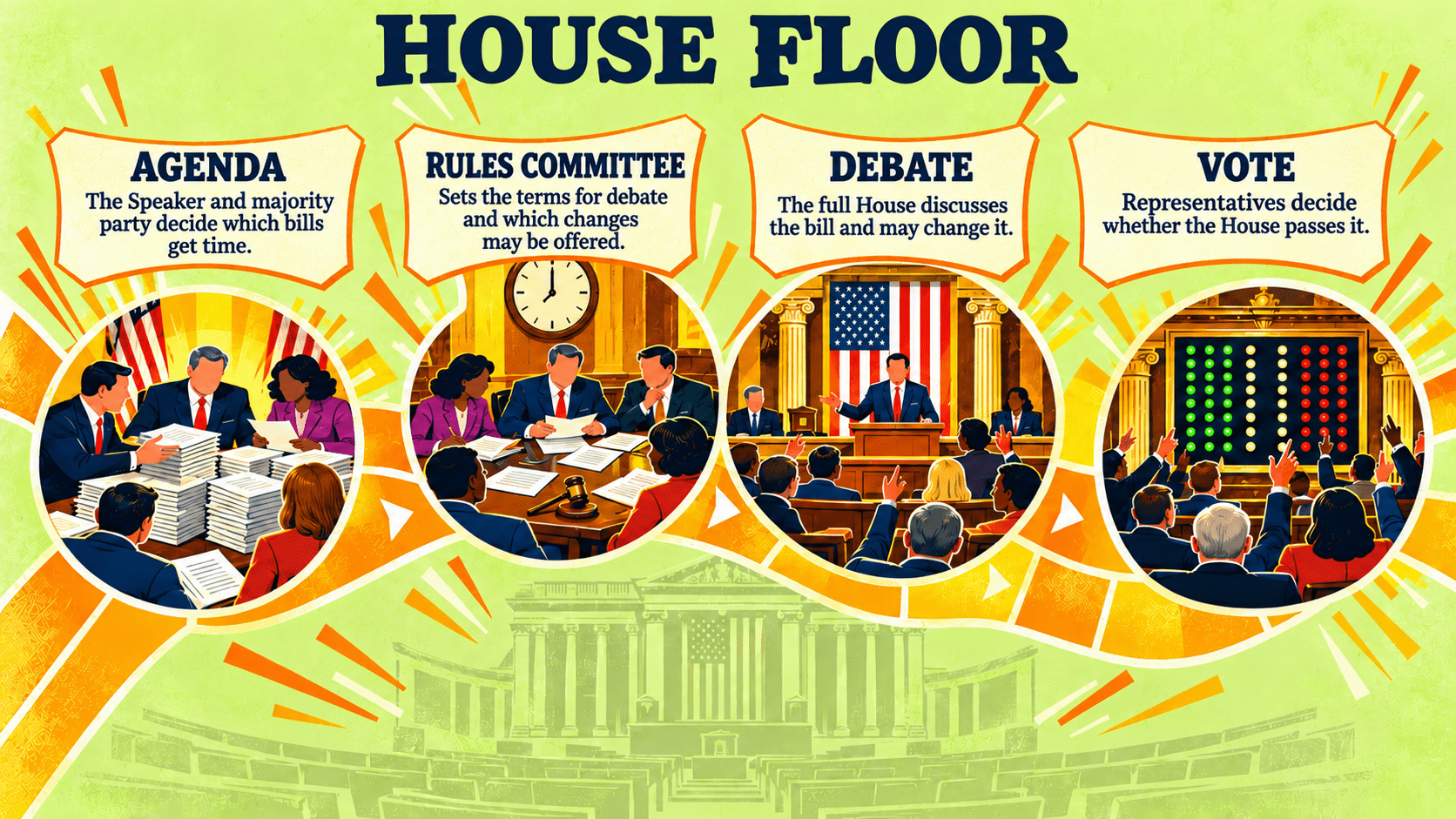
A committee has studied the bill. If the House takes it up, the bill reaches the HOUSE FLOOR, where all representatives can consider it. Before voting, members may speak for or against it and propose changes.
With 435 members, the House cannot give everyone unlimited time. For many major bills, the HOUSE RULES COMMITTEE proposes a rule that sets the length of debate and decides which AMENDMENTS, or proposed changes, members may offer. The full House votes on that rule.
The rule shapes the debate. Then the House votes on whether to pass the bill.
[ADD SQUARE IMAGE]
EQ: How does the structure of Congress shape the way national policy is made?
LASTLY
THE HOUSE GOES FIRST
TAXES
REVENUE
Bills to raise federal taxes must begin in the House.
CONSTITUTION
SPENDING
APPROPRIATIONS
By tradition, bills to fund the federal government begin in the House.
HOUSE TRADITION
IMPEACHMENT
FORMAL ACCUSATION
Only the House can formally accuse a federal official of misconduct.
CONSTITUTION
EQ CHECK
How can the House’s structure and rules shape national policy?
The House has 1____ seats divided among states by 2__________. Elections every 3____ years keep representatives attentive to their districts.
Still, not every proposal gets a vote. The 4________ party usually supplies the 5_______ and leads committees. Its leaders use committee decisions and floor rules to decide which bills get attention and reach a 6____. This gives the majority more power over which ideas can become national policy.
CHOICES
A
vote
B
two
C
Speaker
D
population
E
435
F
majority
EQ CHECK
How can the House’s structure and rules shape national policy?
The House has 435 seats divided among states by population. Elections every two years keep representatives attentive to their districts.
Still, not every proposal gets a vote. The majority party usually supplies the Speaker and leads committees. Its leaders use committee decisions and floor rules to decide which bills get attention and reach a vote. This gives the majority more power over which ideas can become national policy.
PT. 2: THE FLOOR IS YOURS
UNITED STATES SENATE
THINK, PAIR, SHARE
Think back to the House rules we studied last week. What stands out about what Senator Smith is doing here?
[ADD SQUARE IMAGE]
A Second Branch
In the clip, Senator Smith refuses to yield the floor, keeping the Senate’s attention on his argument. A speech like his would be harder to imagine in the House.
Senators can spend more time in DEBATE over proposals. Through DELIBERATION, they hear objections, test arguments, and consider changes before deciding. This slower pace helps explain the Senate’s nickname, “the world’s greatest deliberative body.”
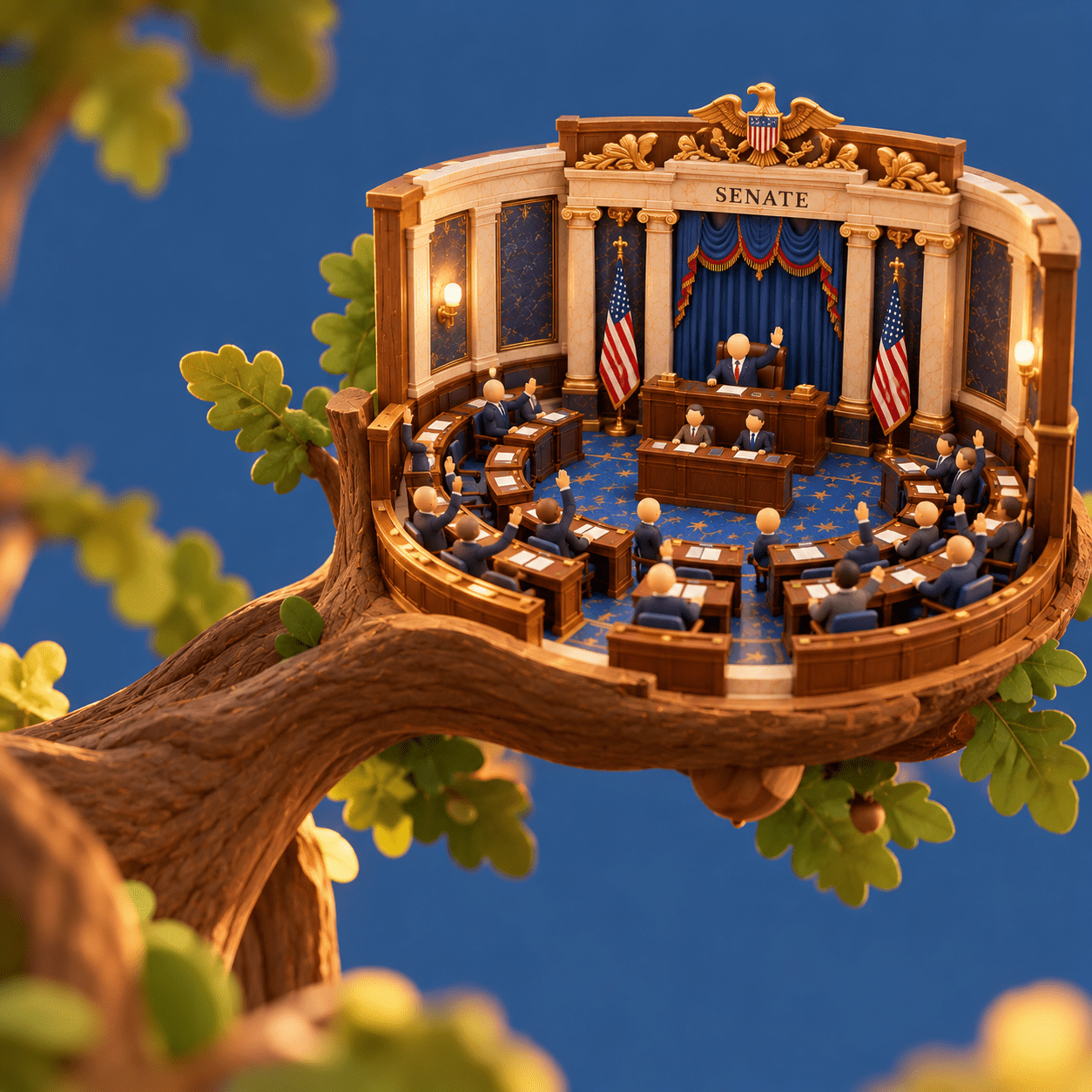
The Senate is also called the upper chamber of our BICAMERAL Congress. That traditional label was once literally true. In Congress’s first meeting place, senators met upstairs from the House.
EQ: How does the structure of Congress shape the way national policy is made?
FEDERAL HALL
WALL STREET · NEW YORK CITY


U.S. SENATE CHAMBER

U.S. SENATE
DESK LAYOUT


THE CANDY
DESK
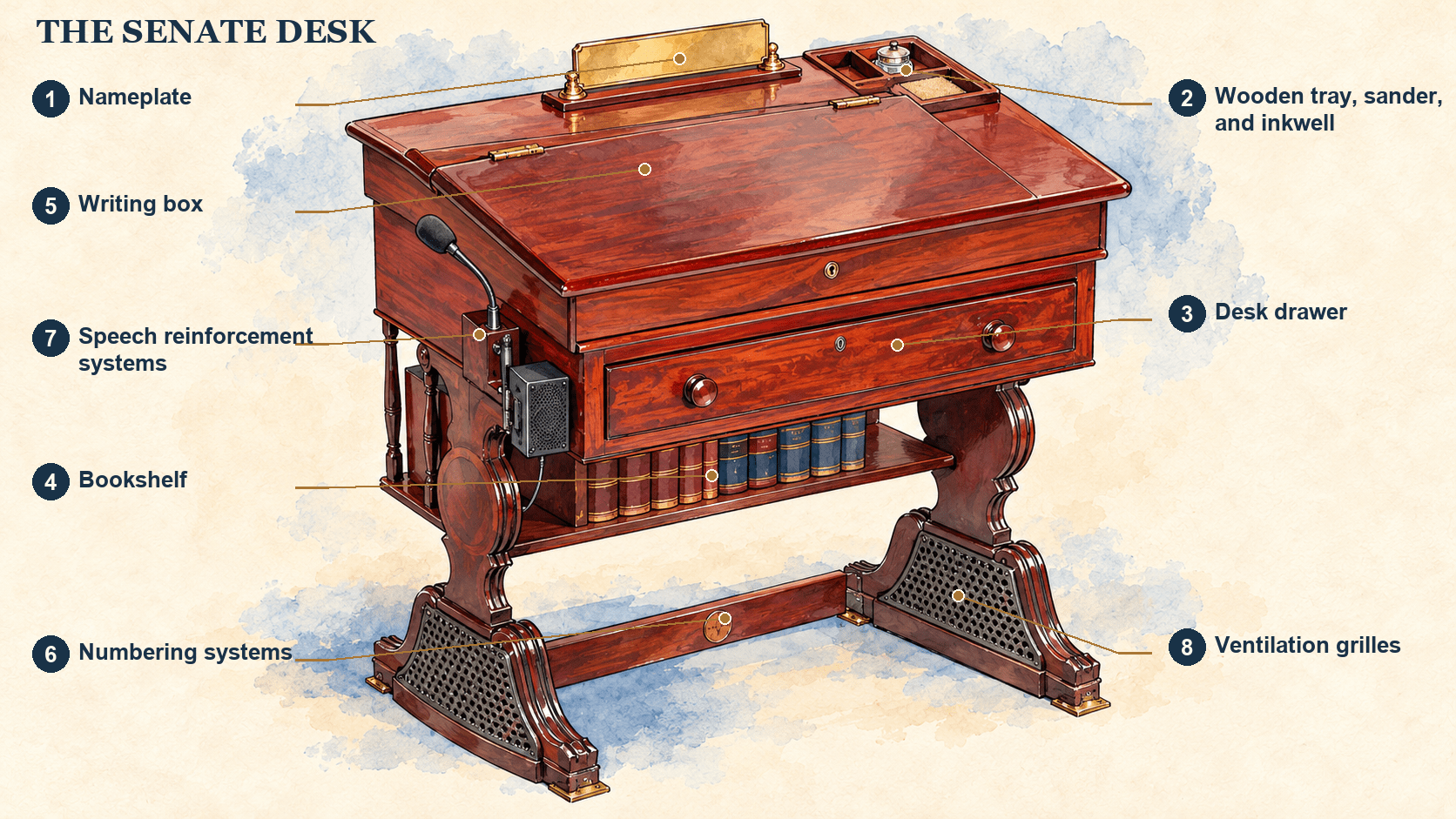
One senator keeps this
back-row desk stocked
with candy for colleagues.


DESK GRAFFITI
Names inside Senate desk drawers
show who once used them. The
tradition began around 1900.

From Here to Congress
If you went to Congress to represent this district, what would you ask the federal government to do you and your constituents?

SOUTHEASTERN SAN DIEGO

MANHATTAN, NEW YORK

ORANGE CITY, IOWA

MOLOKAʻI, HAWAIʻI
PHOTO SOURCES KPBS • APPLE MAPS • DEAR JANE PHOTO • MARINAS.COM
ALL OF CALIFORNIA
You represent all of California. Which concerns would you take to Congress first? What if they conflict?

SAN DIEGO
BORDER CITY

FRESNO AREA
FARMS AND AGRICULTURE

SAN FRANCISCO
DENSE COASTAL CITY

HUMBOLDT COUNTY
RURAL NORTH COAST
PHOTO SOURCES KPBS • WIKIMEDIA COMMONS
TWo senators per...
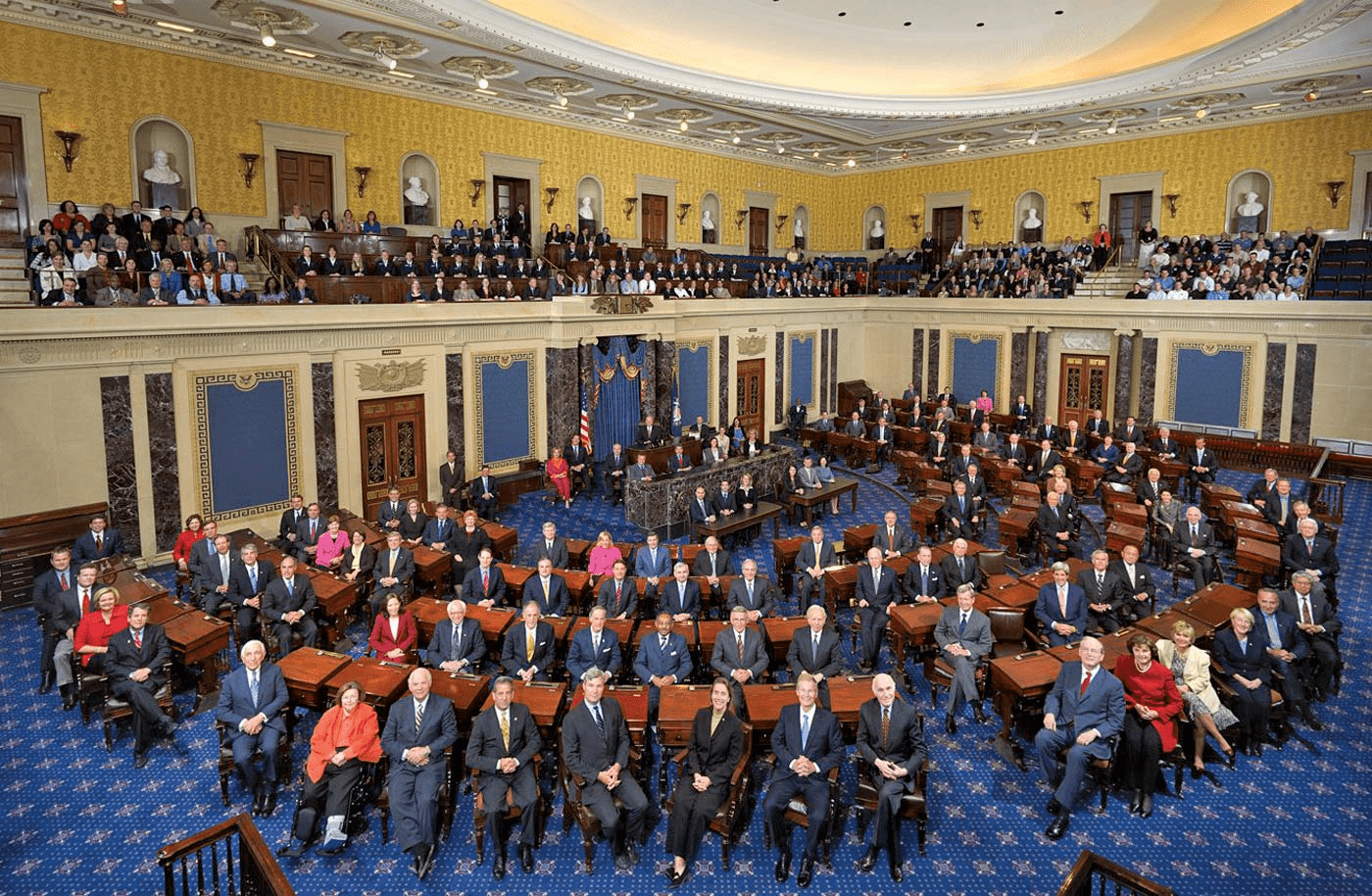
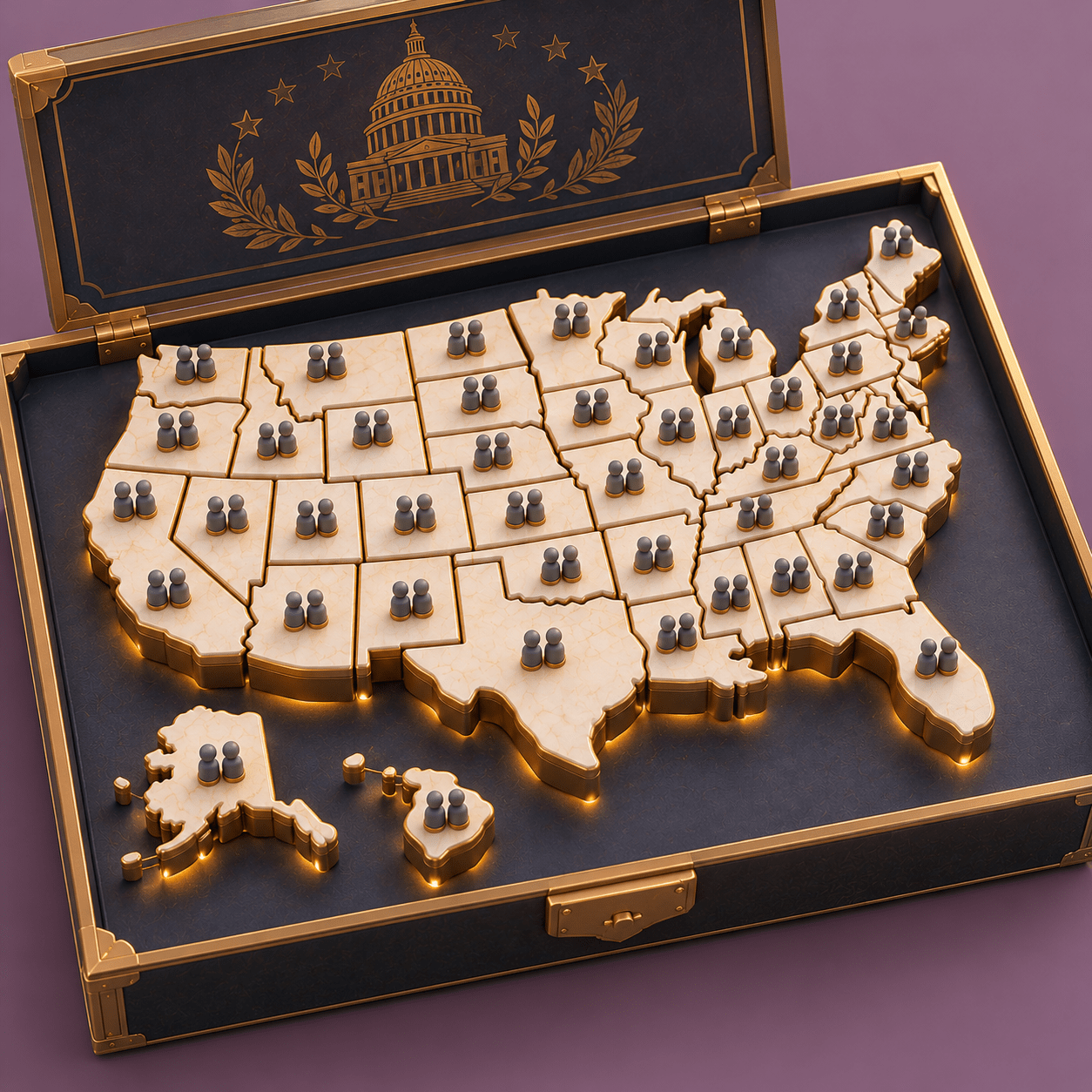
Those desks belong to the Senate’s 100 members. Unlike the House, where states receive seats according to population, every state has EQUAL REPRESENTATION in the Senate with two senators. Each senator represents an entire state.
To serve, a senator must be at least 30 years old, have been a U.S. citizen for nine years, and live in the state they represent.
Senators serve six-year terms. Their elections are staggered, so about one-third face voters every two years. In Federalist No. 62, Madison argued that longer terms would help senators weigh issues without following every shift in public opinion.
[ADD SQUARE IMAGE]
EQ: How does the structure of Congress shape the way national policy is made?
[ADD SQUARE IMAGE]
No Speaker HEre
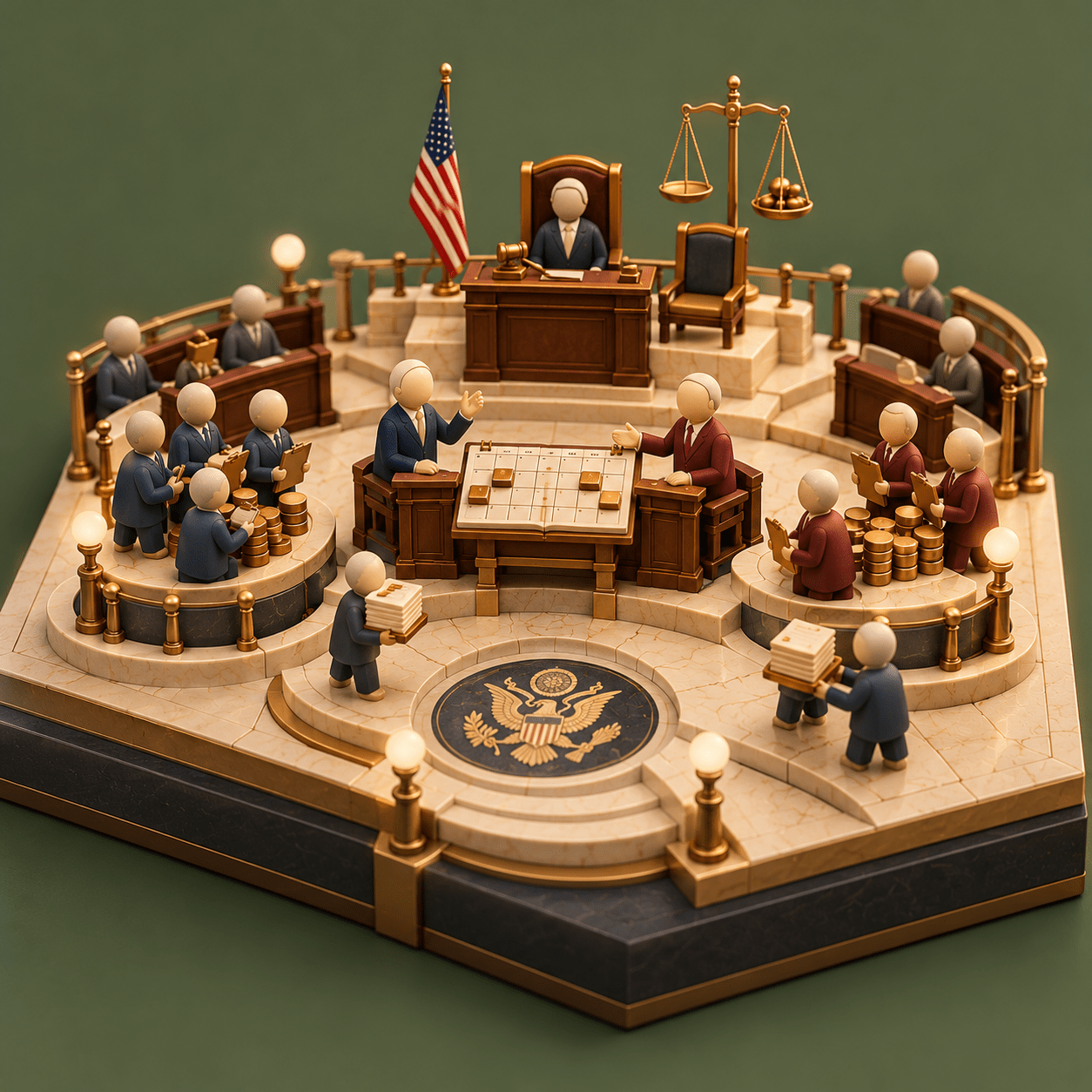
The House has detailed rules to manage debate. Senate leaders cannot limit debate as tightly. Individual senators have more room to speak, object, and delay.
The MAJORITY LEADER schedules floor business and works with the MINORITY LEADER to arrange debate. PARTY WHIPS count votes and build support. Leading the Senate often means getting senators to agree.
The VICE PRESIDENT presides over the Senate and can break a tie vote. Senators elect a PRESIDENT PRO TEMPORE to preside when the vice president is absent. Party leaders guide most daily legislative work.
EQ: How does the structure of Congress shape the way national policy is made?
SENATE LEADERSHIP
PRESIDING OFFICERS

VICE PRESIDENT
J.D. Vance
Presides and breaks tie votes

PRESIDENT PRO TEMPORE
Chuck Grassley
Presides when the VP is absent
MAJORITY • REPUBLICANS
MINORITY • DEMOCRATS

MAJORITY LEADER
John Thune
Schedules floor business

MINORITY LEADER
Chuck Schumer
Negotiates debate and strategy

MAJORITY WHIP
John Barrasso
Counts votes and builds support

MINORITY WHIP
Dick Durbin
Counts votes and builds support

CONFERENCE CHAIR
Tom Cotton
Leads Republican conference

STEERING & POLICY CHAIR
Amy Klobuchar
Helps shape Democratic policy
119TH CONGRESS • OCTOBER 2026
The Committee System
Like the House, the Senate has standing committees covering many of the same policy areas.
THE SENATE
01
Agriculture, Nutrition, and Forestry
02
Appropriations
03
Armed Services
04
Banking, Housing, and Urban Affairs
05
Budget
06
Commerce, Science, and Transportation
07
Energy and Natural Resources
08
Environment and Public Works
09
Finance
10
Foreign Relations
11
Health, Education, Labor, and Pensions
12
Homeland Security and Governmental Affairs
13
Judiciary
14
Rules and Administration
15
Small Business and Entrepreneurship
16
Veterans’ Affairs
16 STANDING COMMITTEES • 119TH CONGRESS
Getting to the floor
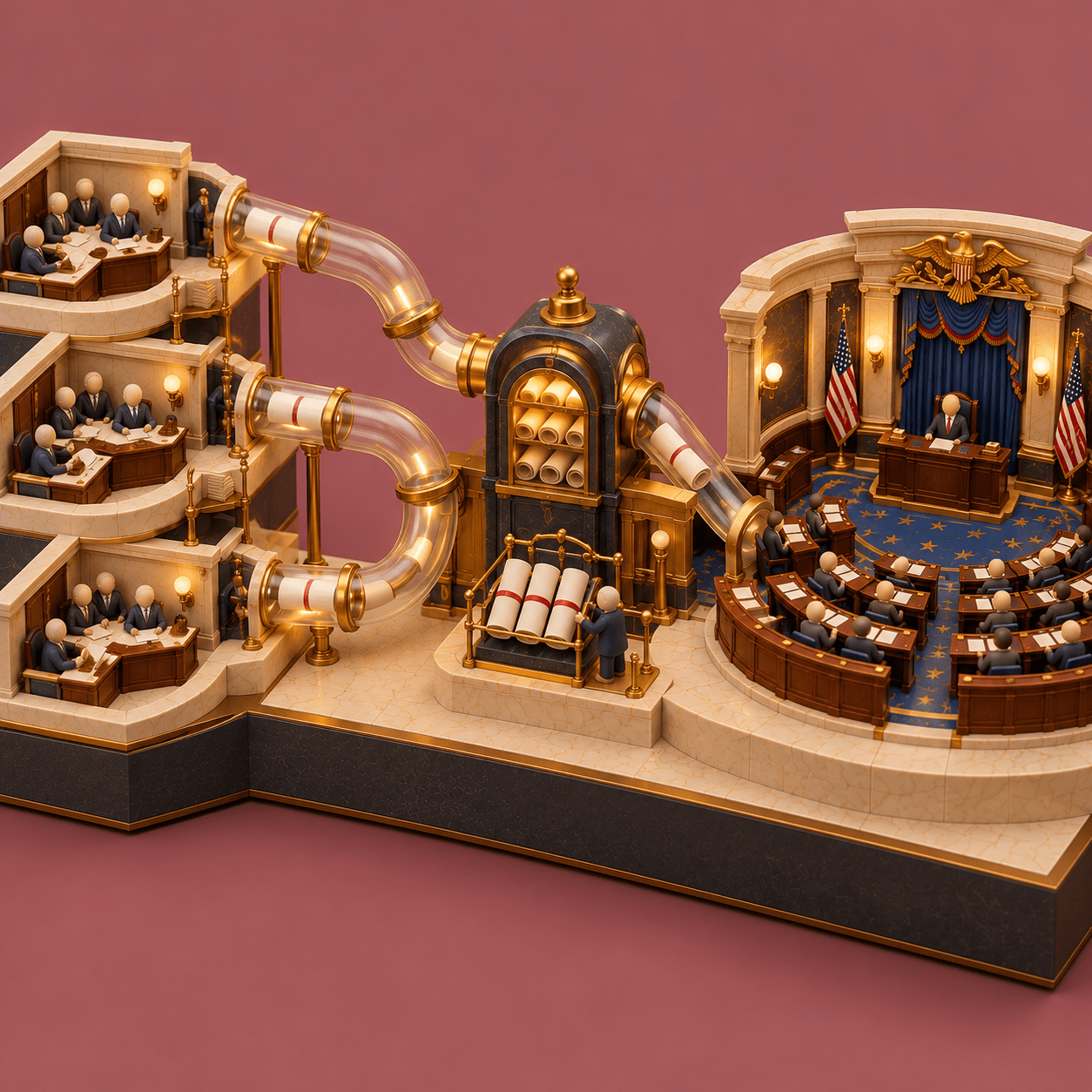
Senate COMMITTEES work much like House committees. Senators study bills, hear from people affected by them, consider changes, and decide whether to send a bill to the full chamber.
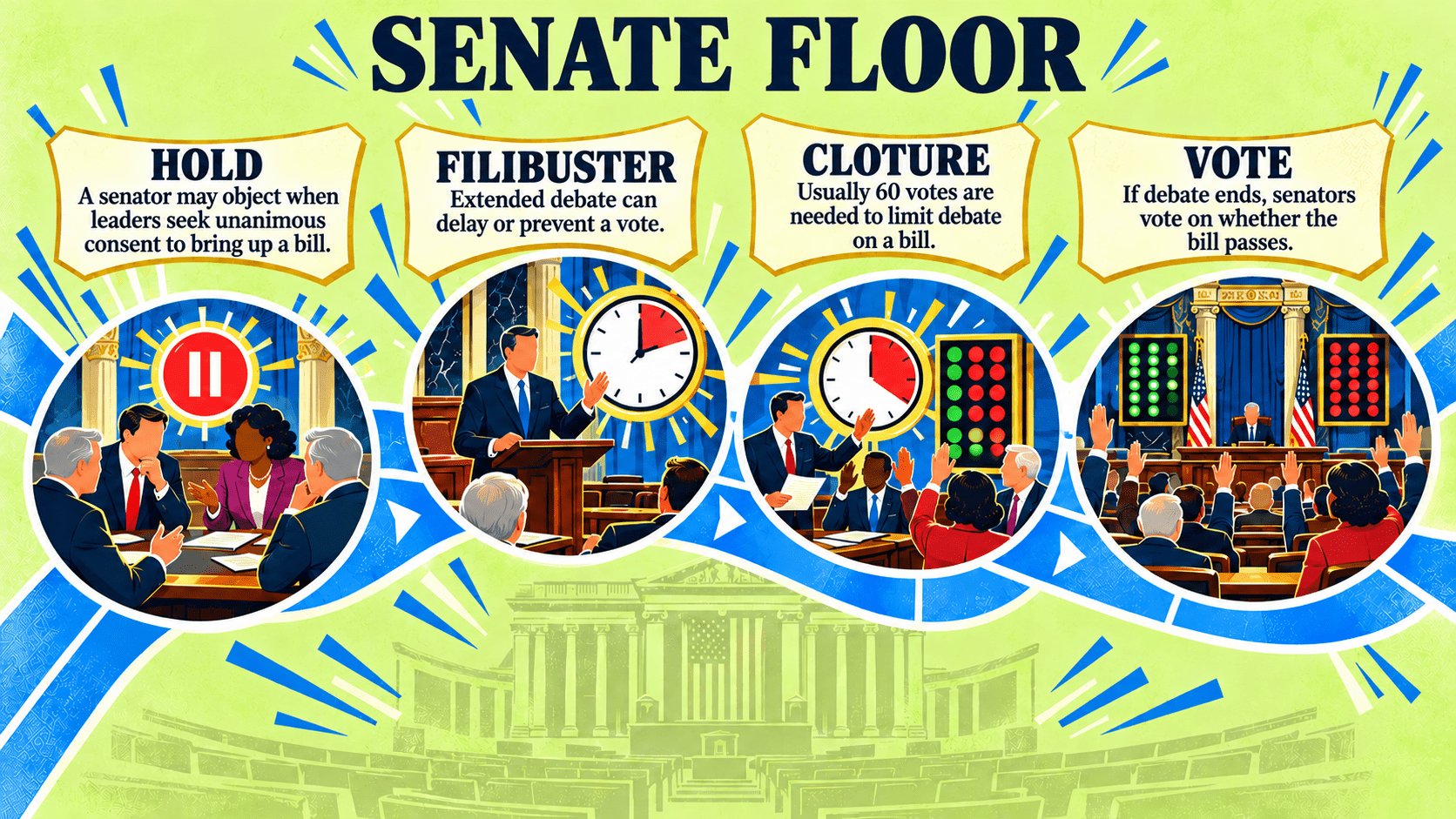
Getting the bill to the SENATE FLOOR works differently. Leaders may ask for UNANIMOUS CONSENT. They are asking every senator, “Does anyone object to moving ahead?” If no one objects, the Senate can begin considering the bill.
A senator who objects can ask leaders to place a HOLD on the bill. A hold warns that moving ahead may take extra time, so leaders may delay bringing it to the floor.
[ADD SQUARE IMAGE]
EQ: How does the structure of Congress shape the way national policy is made?
[ADD SQUARE IMAGE]
Can we vote yet?
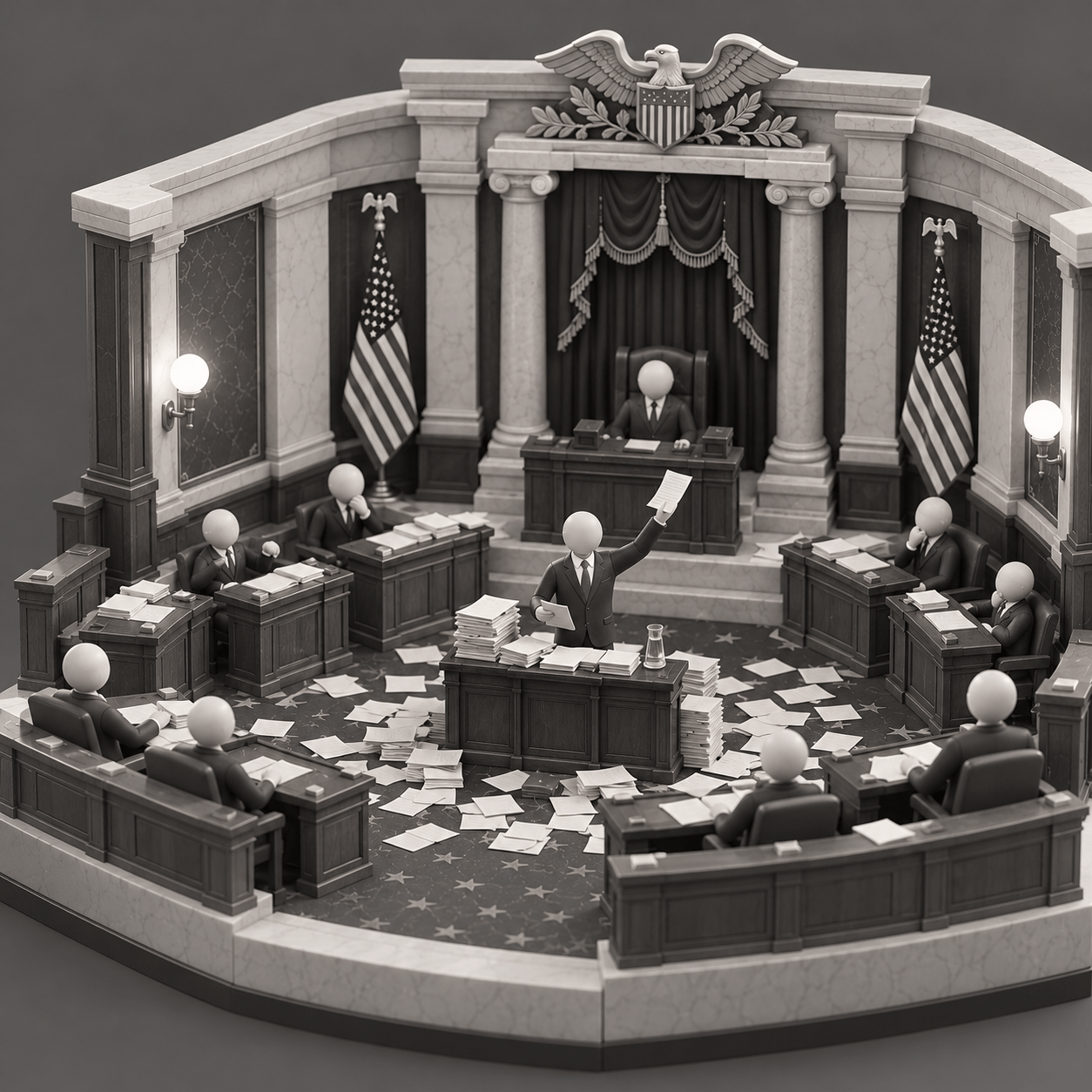
The House sets debate limits. In the Senate, senators can keep DEBATE open and delay a vote, even when most senators favor the bill.
A FILIBUSTER is a political tactic that delays or prevents a vote through extended debate. Smith does it with a long speech. Today, senators can threaten one without speaking for hours.
Senators use CLOTURE to end debate. For most bills, it needs 60 votes, though passing a bill usually takes a majority. If cloture fails, the Senate may never vote. Without Senate approval, the bill cannot become law.
EQ: How does the structure of Congress shape the way national policy is made?
BEYOND BILLS
THE SENATE DECIDES
APPOINTMENTS
CONFIRMATION
The Senate approves or rejects many presidential picks for top officials and federal judges.
CONSTITUTION
AGREEMENTS
TREATIES
Treaties are agreements between nations. Two-thirds of senators present must approve them.
CONSTITUTION
IMPEACHMENT
SENATE TRIAL
After the House accuses an official, the Senate holds a trial. Two-thirds must vote to remove.
CONSTITUTION
WATCH THIS
How does a filibuster affect whether a bill gets a vote in the Senate?
EQ CHECK
How can the Senate’s structure and rules shape national policy?
Unlike the House, each state has 1____ senators and 2_____ representation. Senators serve 3____-year terms and represent entire states.
Senate rules give individual members more room for 4______. A 5__________ can delay or block a vote. Ending one through 6_______ usually requires 60 votes. This means a smaller group can press for changes or keep a bill from advancing, even when it has enough support to pass.
CHOICES
A
filibuster
B
equal
C
cloture
D
two
E
six
F
debate
EQ CHECK
How can the Senate’s structure and rules shape national policy?
Unlike the House, each state has two senators and equal representation. Senators serve six-year terms and represent entire states.
Senate rules give individual members more room for debate. A filibuster can delay or block a vote. Ending one through cloture usually requires 60 votes. This means a smaller group can press for changes or keep a bill from advancing, even when it has enough support to pass.
PT. 3: EASIER SAID THAN DONE
LEGISLATIVE PROCESS
PART 3 • THE LEGISLATIVE PROCESS
FROM BILL TO LAW
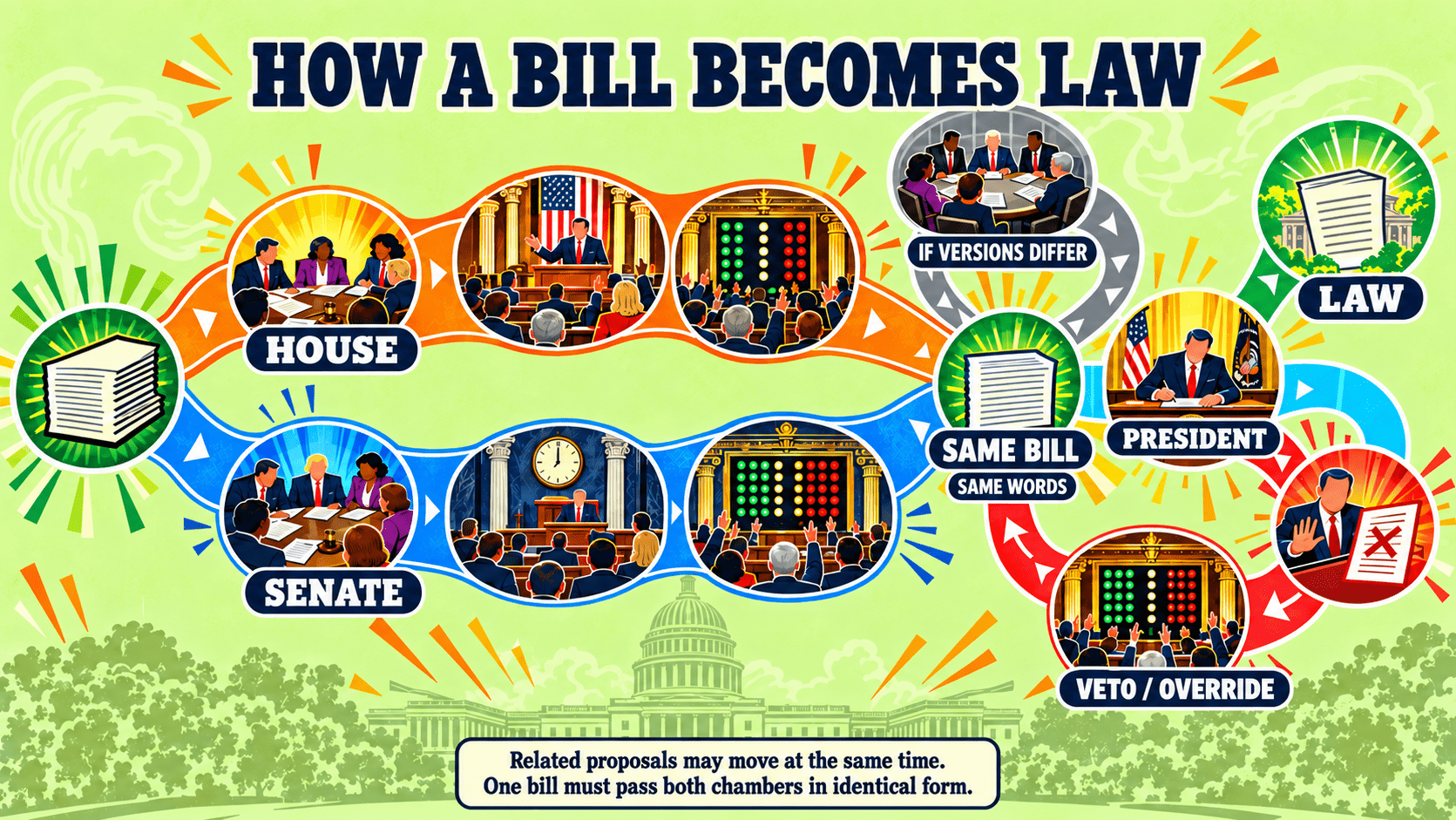
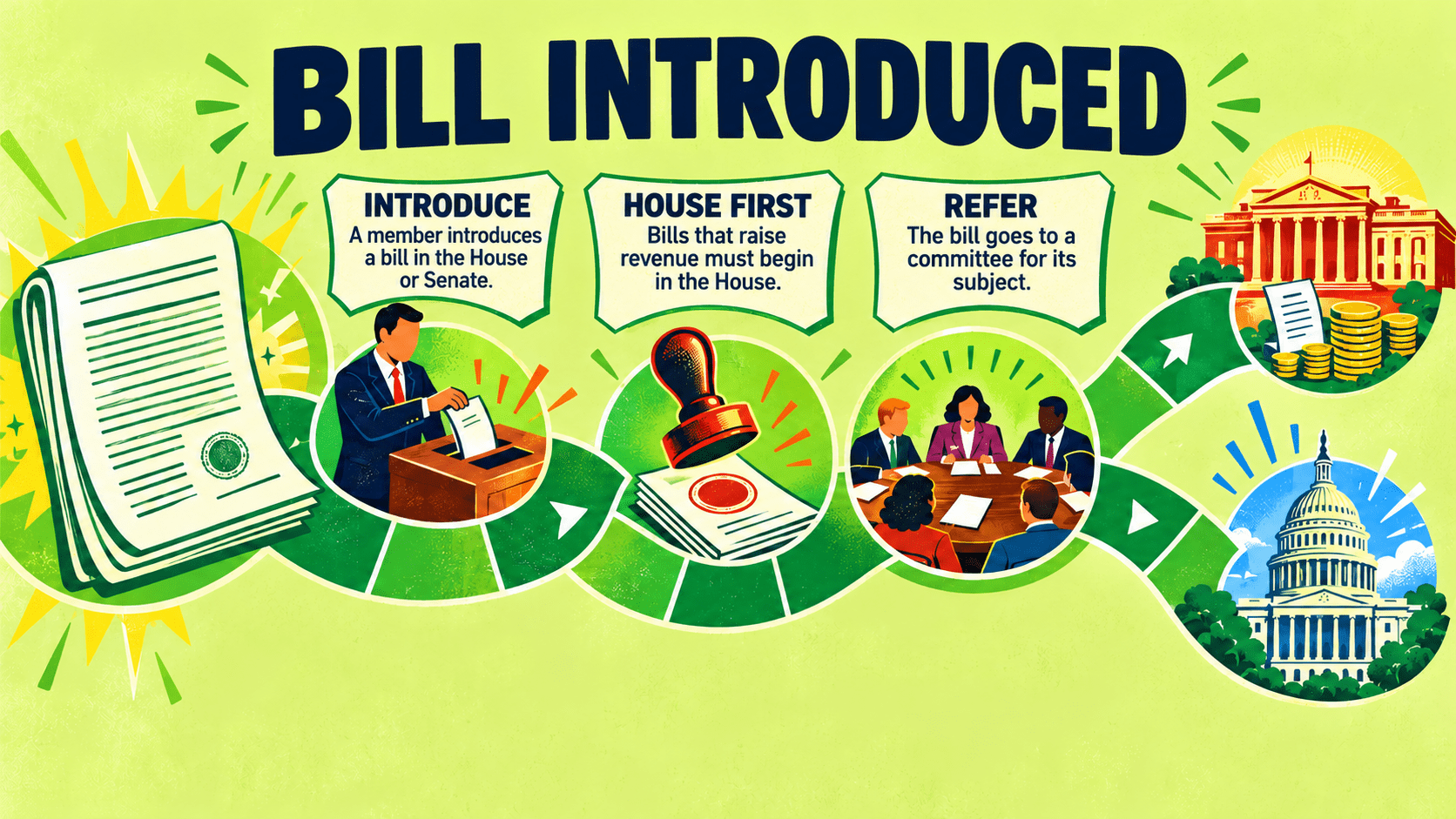
A bill is a proposal for a law. Follow the decisions that can turn it into national policy.
01
COMMITTEES
Hearings and markup can change a bill. Many bills stop here.
02
HOUSE AND SENATE
House rules limit debate. A Senate FILIBUSTER can delay a vote.
03
SAME TEXT
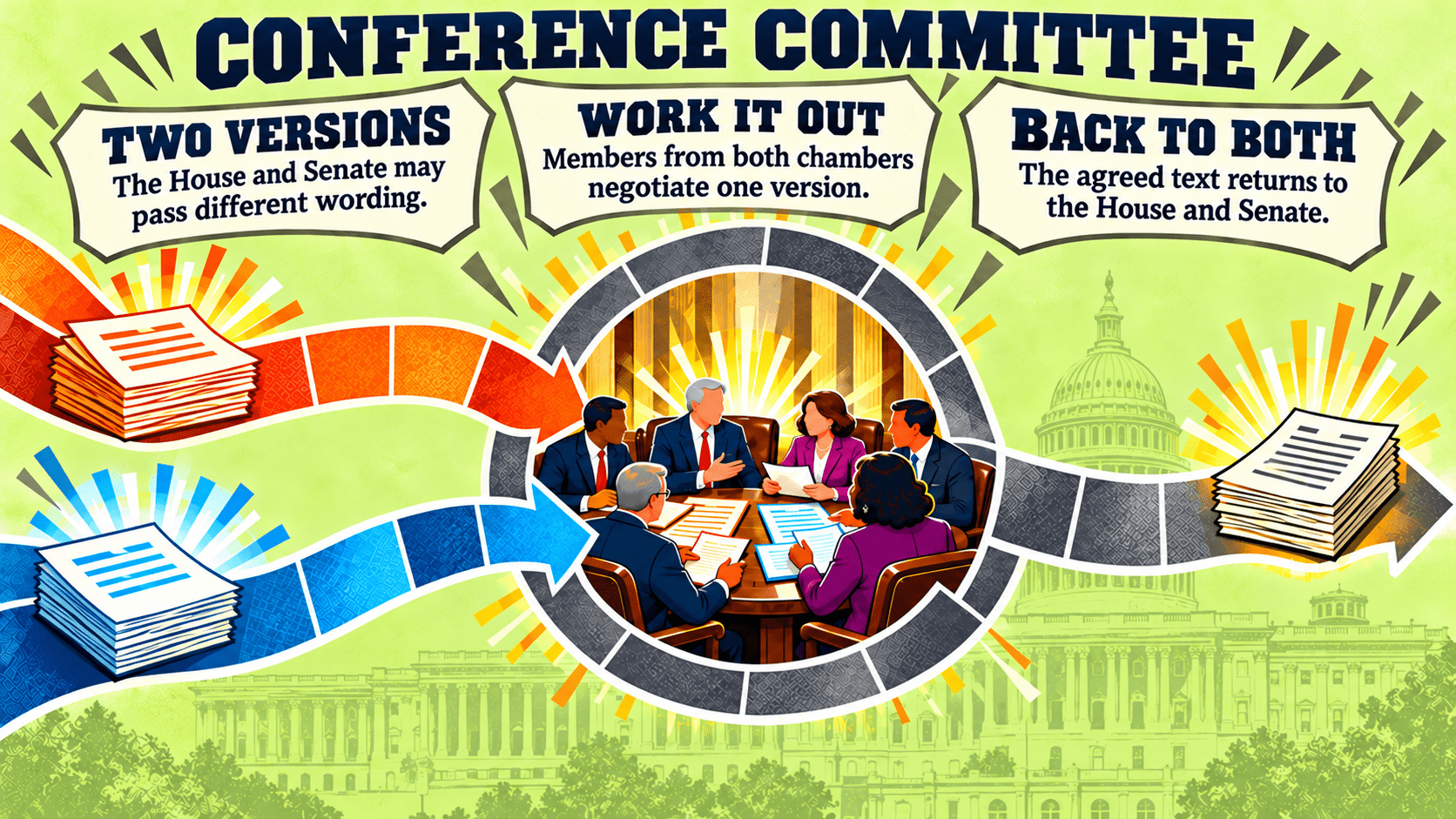
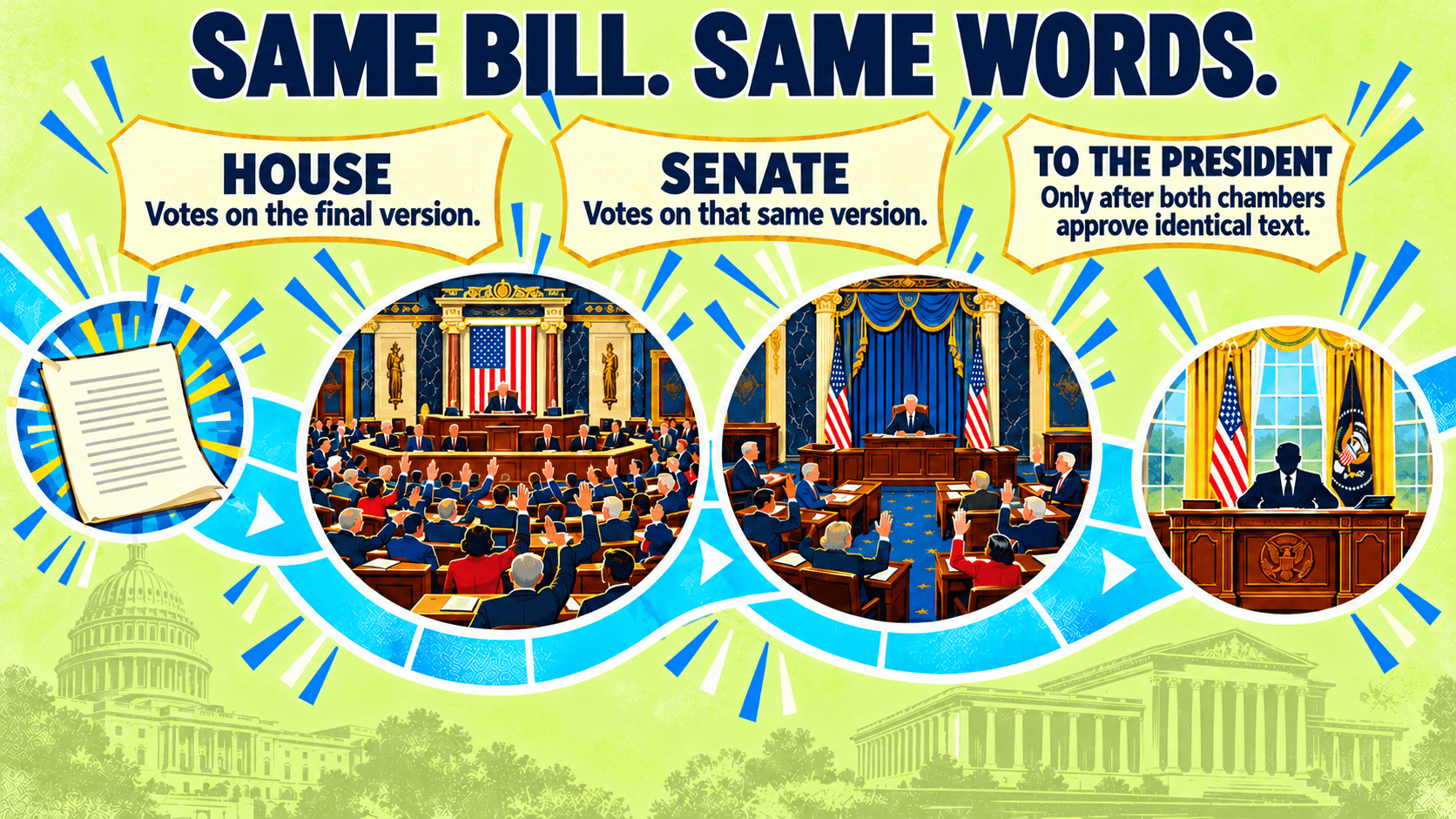
Both chambers must pass the same bill in identical form.
04
PRESIDENT
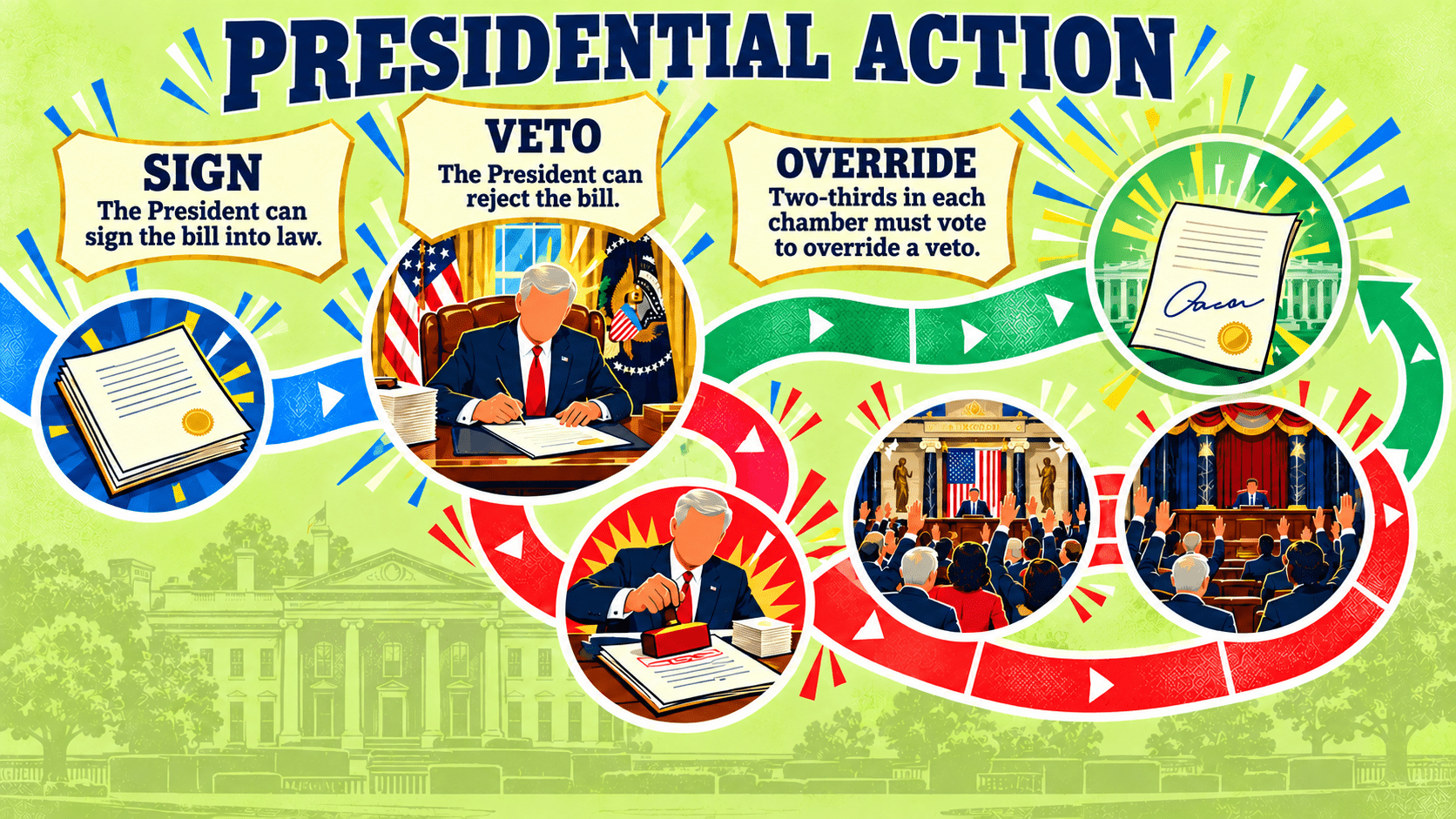
The President signs or vetoes. Congress can override a veto.
Where could this proposal be delayed, changed, or stopped?
PT. 4: LET'S MAKE A DEAL
BUDGETING & COMPROMISE

LESSON RECAP
Congress’s two chambers shape national policy by deciding which ideas receive attention, how bills are debated and changed, and what the federal government funds.
- The House represents people by population, while the Senate represents states equally.
- Leaders, committees, and chamber rules affect which bills reach a vote.
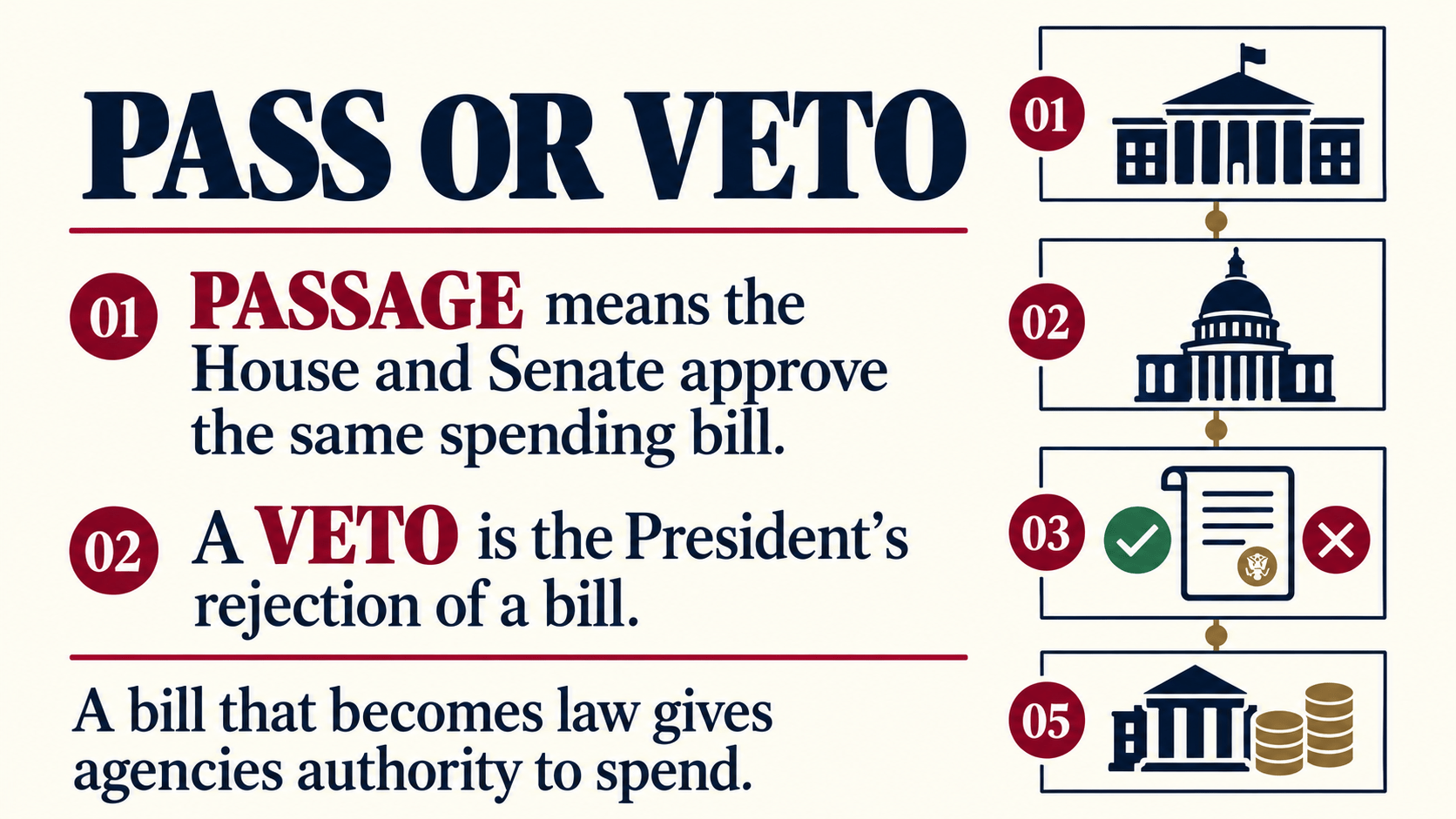
- A proposal becomes law only when both chambers pass the same bill and it clears the presidential step.
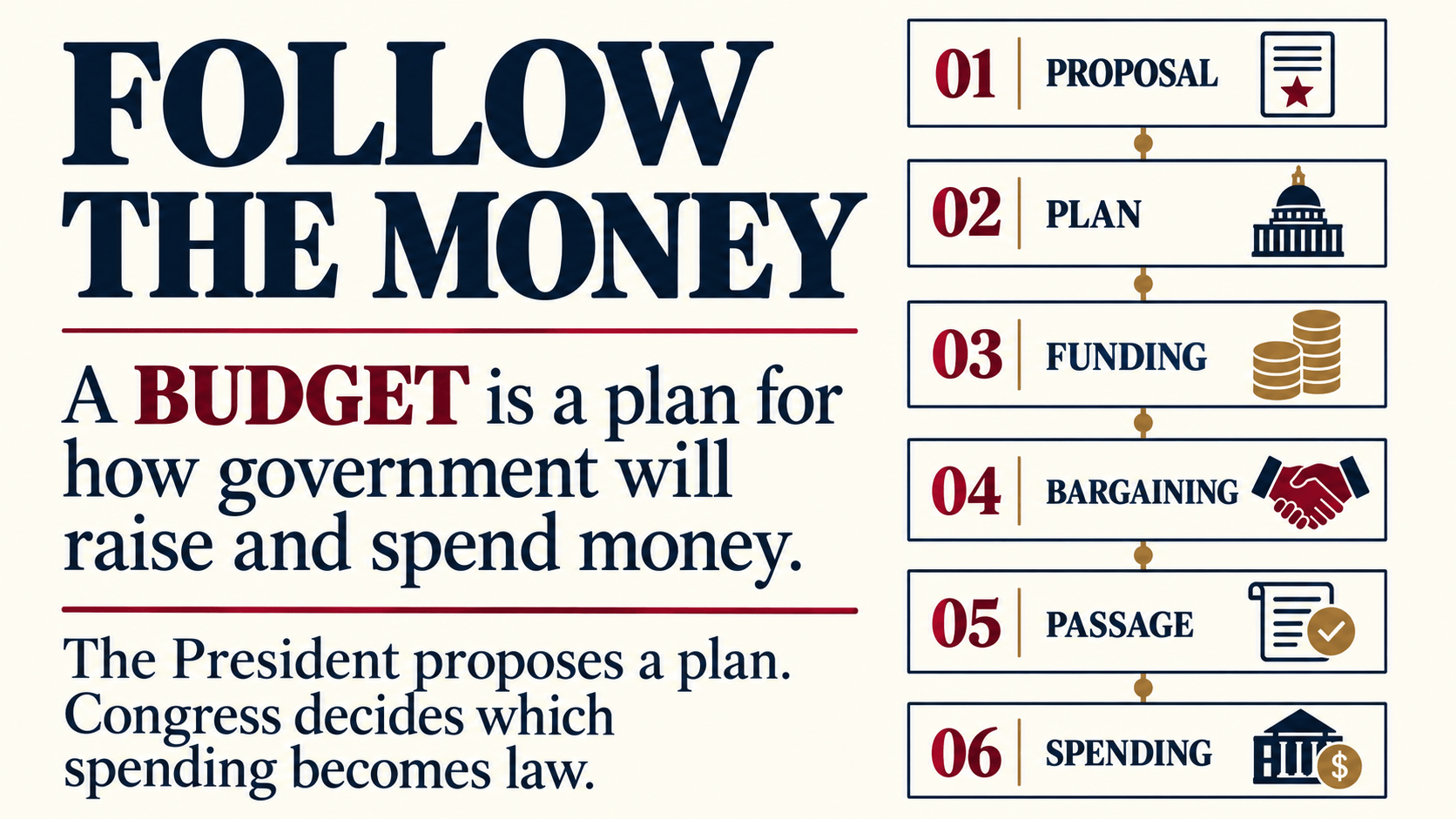
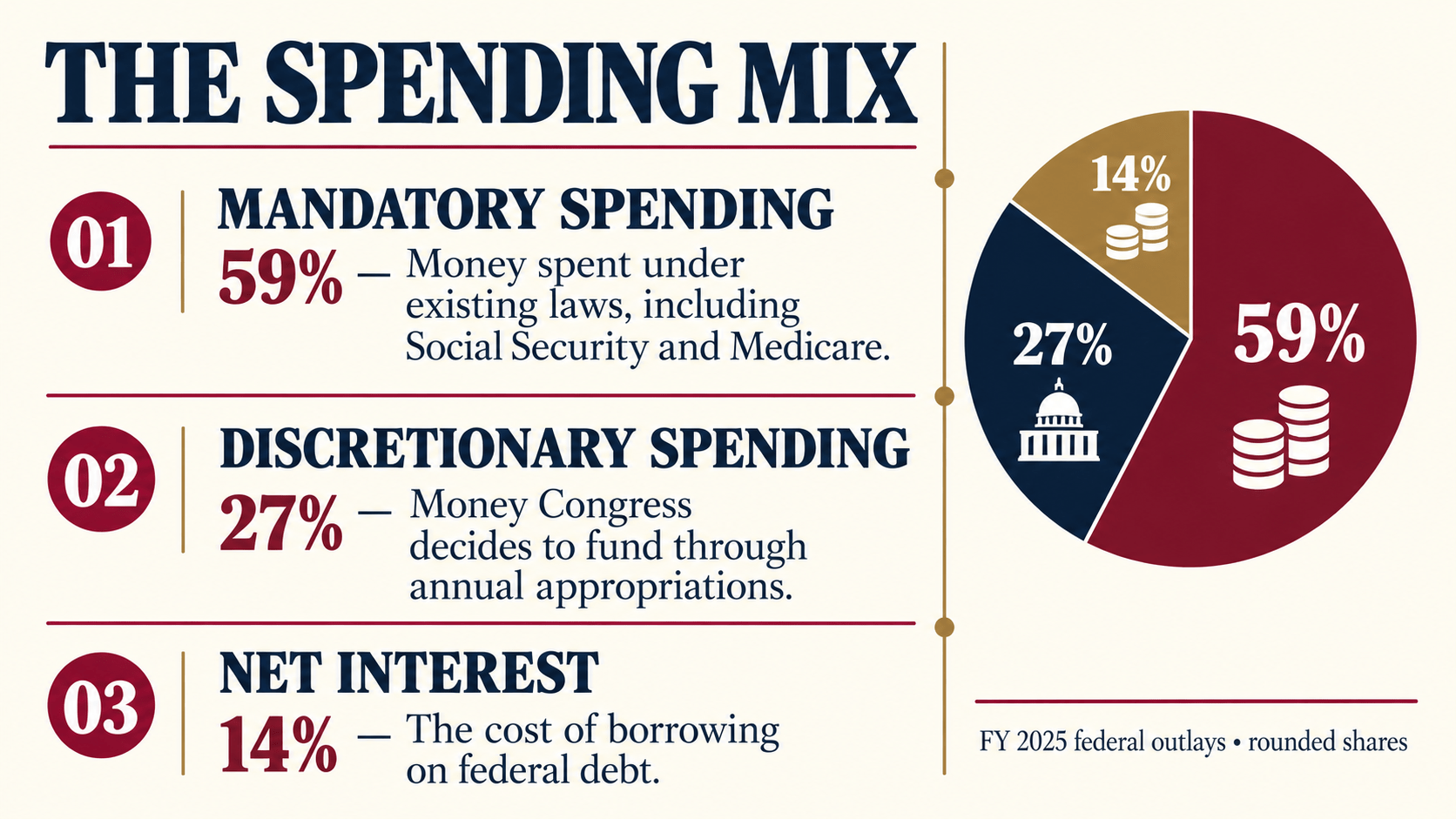
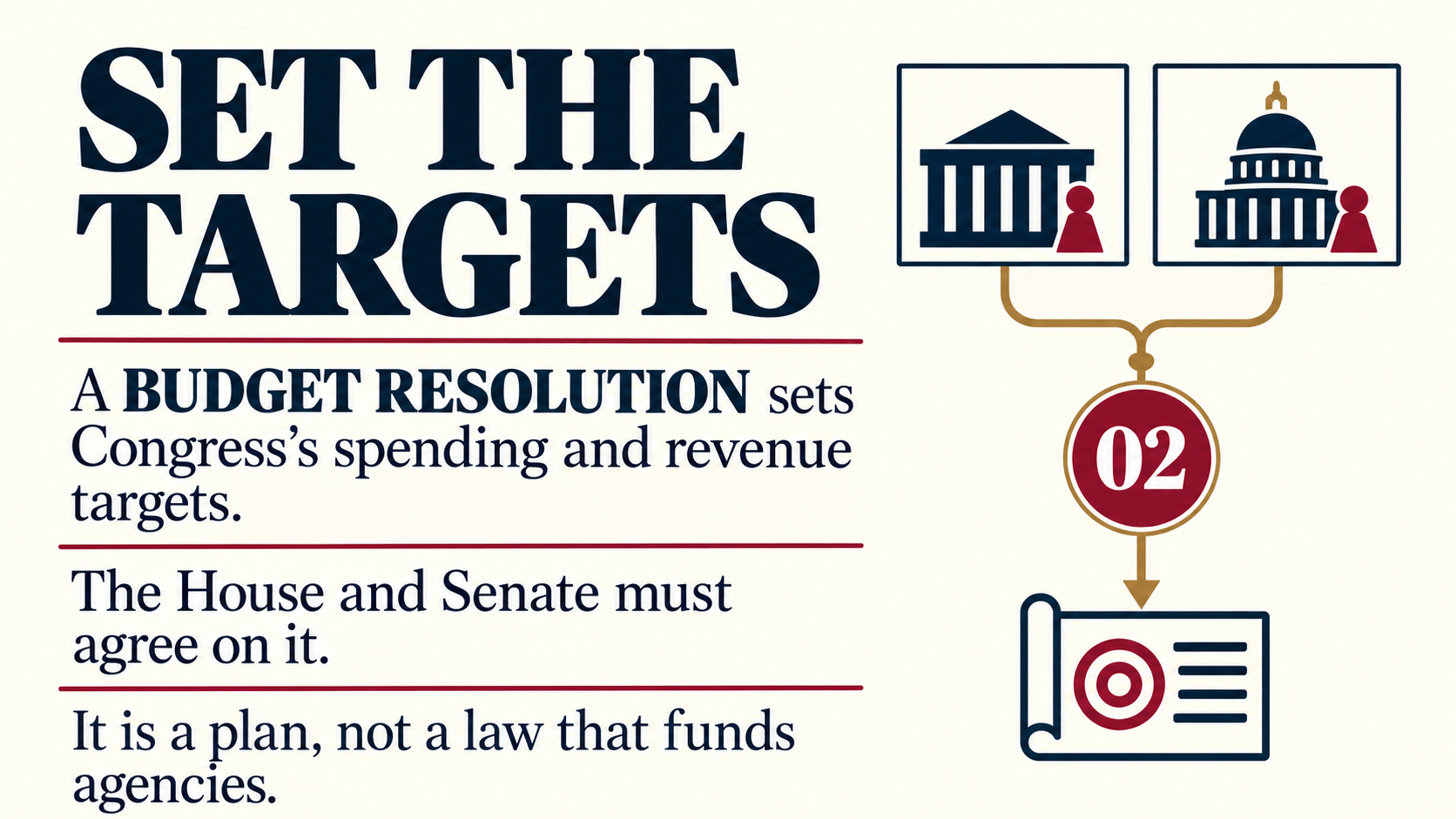
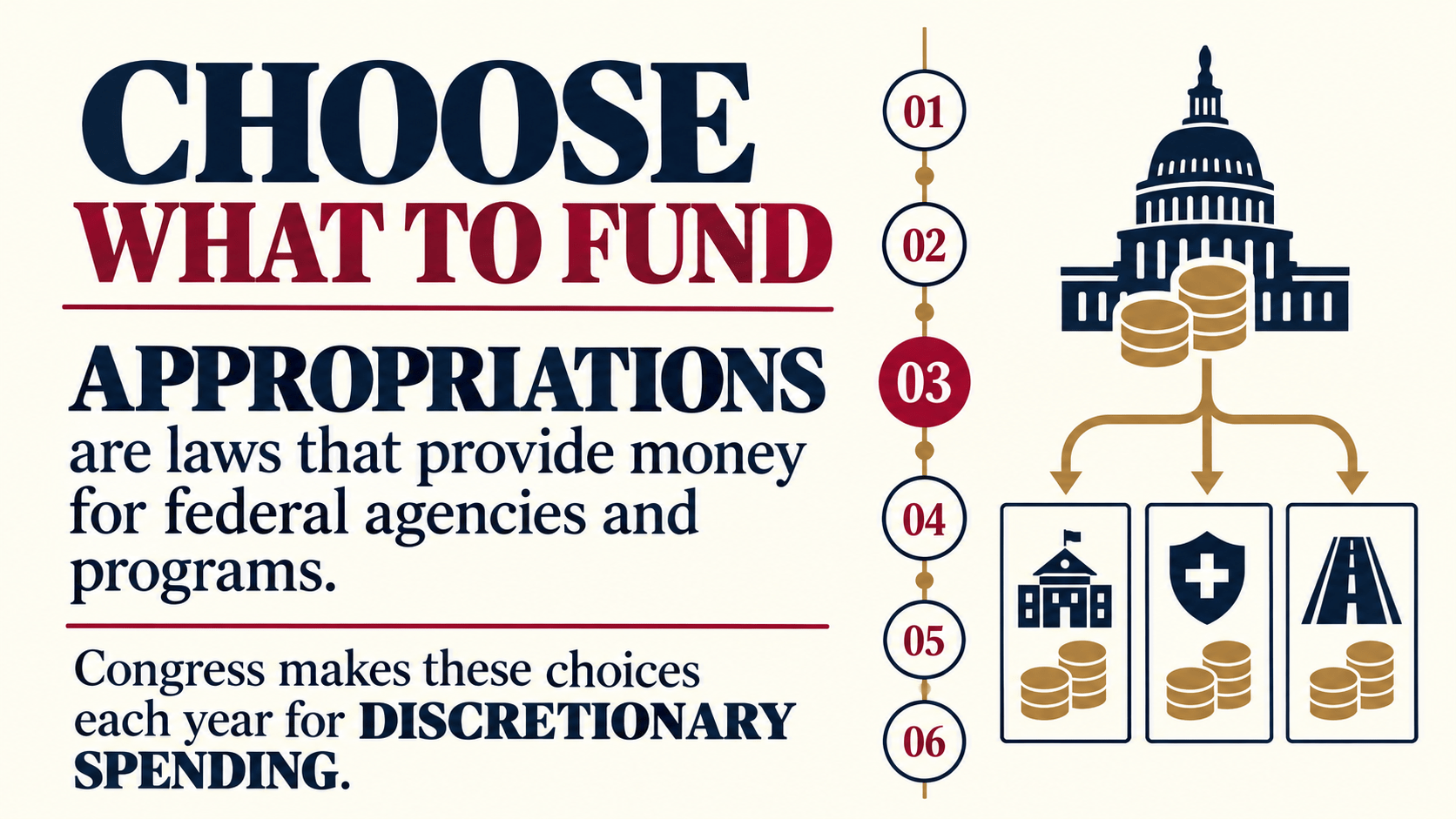
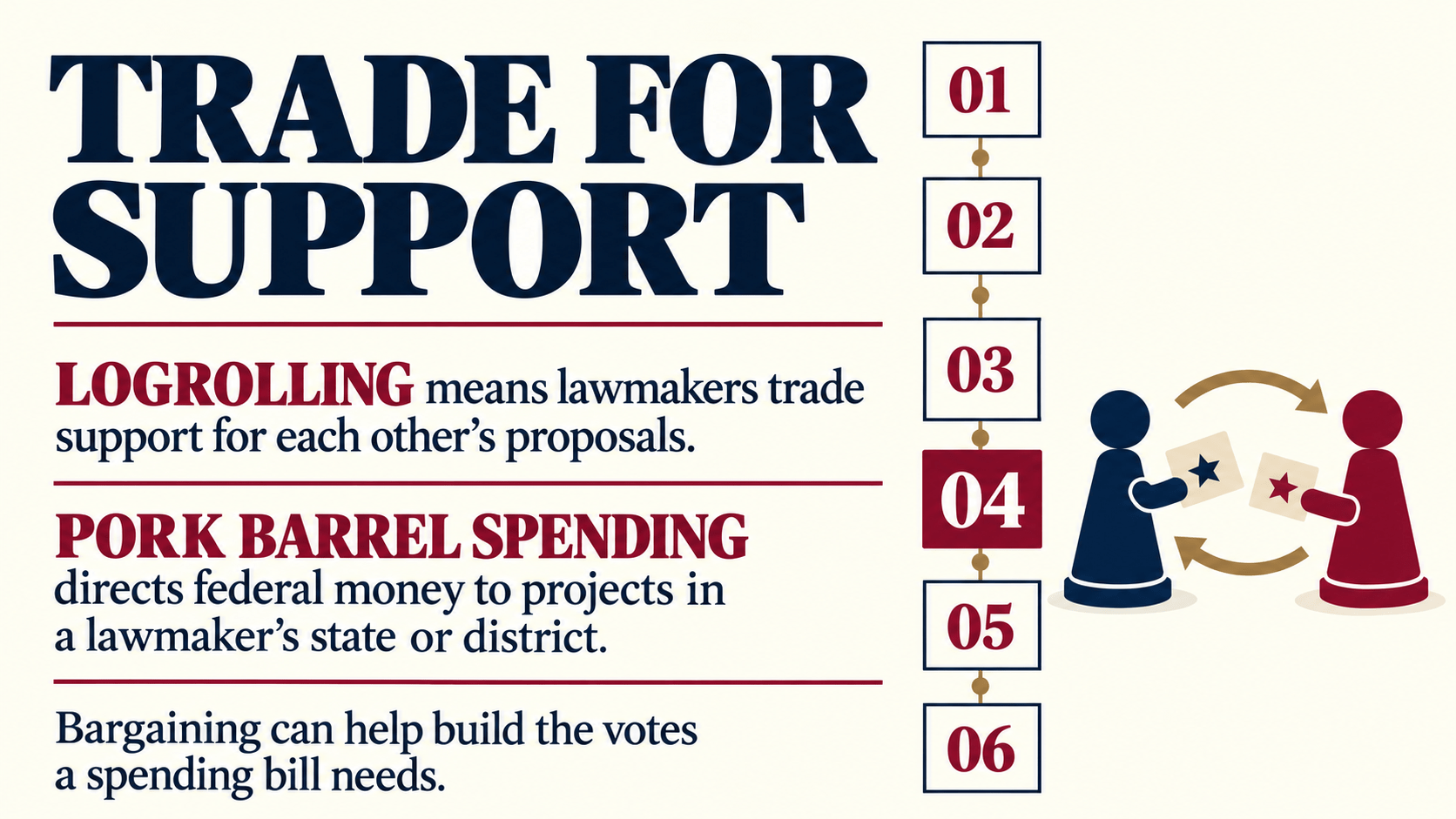
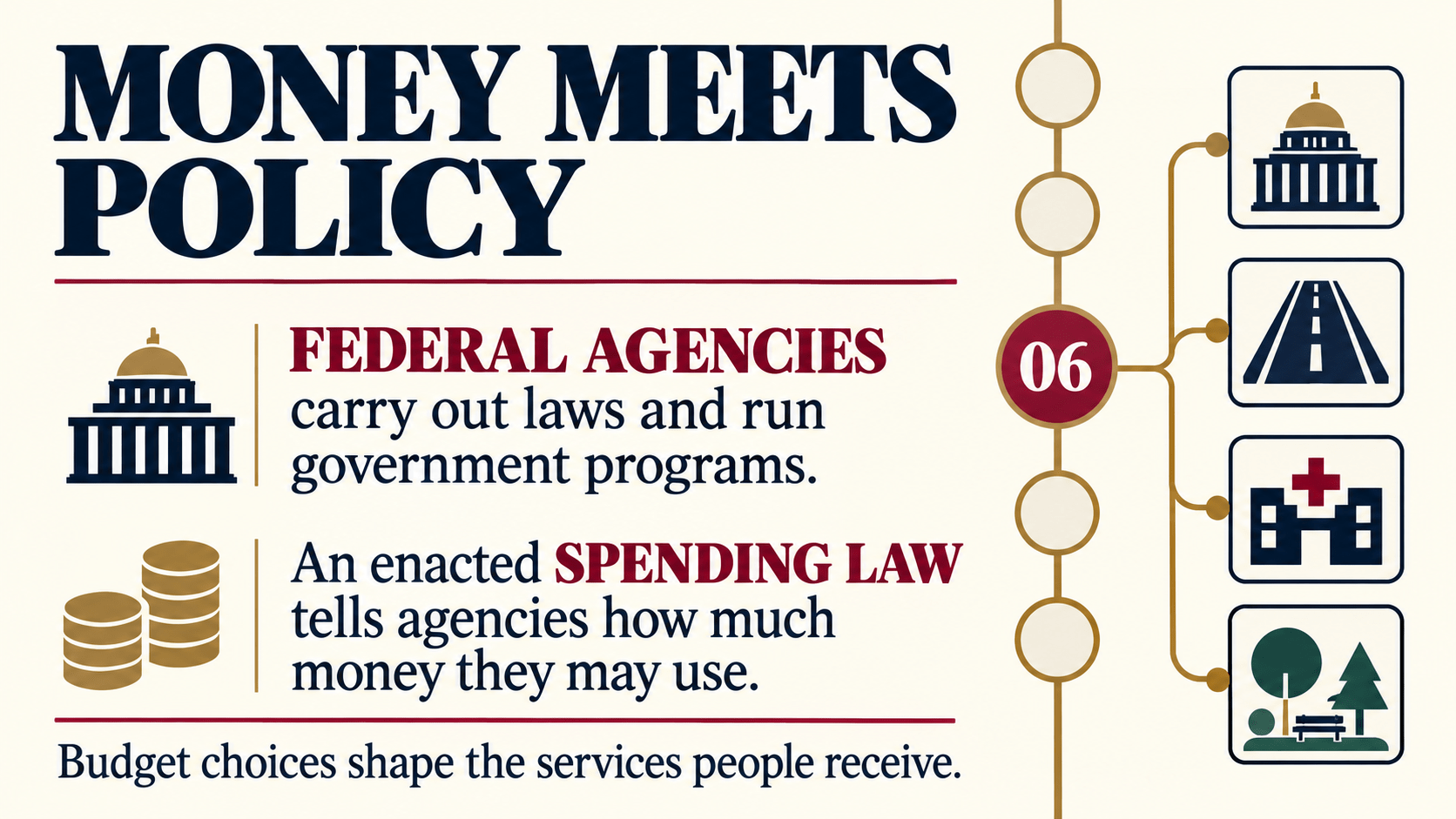
- Budget choices and bargaining determine which priorities receive federal funding.