PART ONE
Justice on Trial
How does the Constitution protect a fair legal process?
AP GOV 3.8 | CA HSS-PoAD 12.1.6, 12.5.1, 12.10
AVID 4 CORNERS
You have been convicted of murder. Your sentence is death. Which option would you choose?
TOP LEFT
💉 LETHAL INJECTION
(World map)
TOP RIGHT
🌫️ GAS CHAMBER
(Ms. Stark's desk)
BOTTOM LEFT
⚡ ELECTRIC CHAIR
(Mr. Rogers' desk)
BOTTOM RIGHT
🎯 FIRING SQUAD
(Room door)
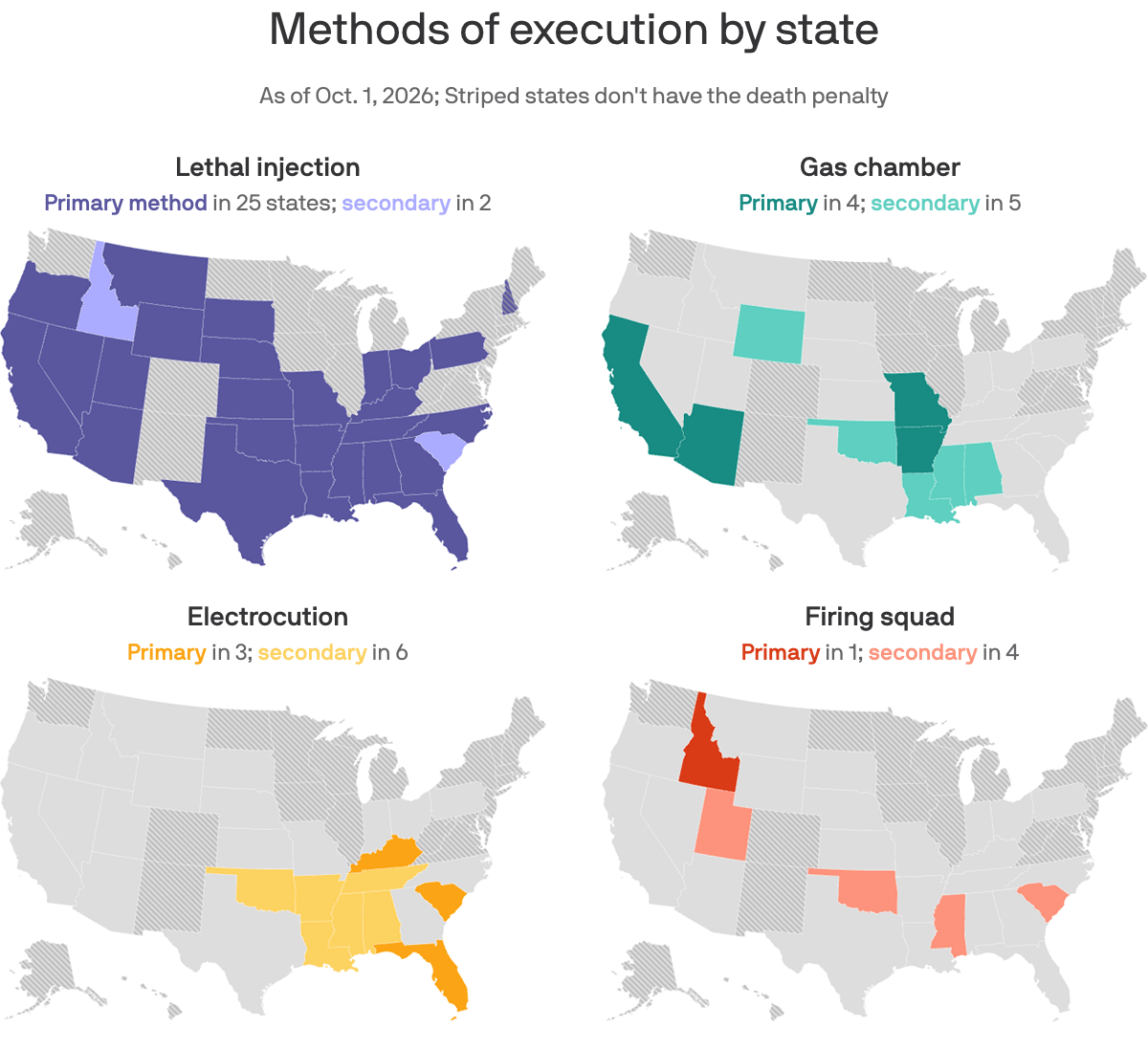
EXECUTION METHODS BY STATE

WHAT EACH METHOD MEANS
💉 LETHAL INJECTION
Medical drugs are injected through an IV to stop the person’s breathing and heart.
🌫️ GAS CHAMBER
The person is restrained in a sealed chamber and inhales a lethal gas.
⚡ ELECTROCUTION
The person is strapped into an electric chair, and repeated electrical currents are sent through the body until the person dies.
🎯 FIRING SQUAD
A group of armed officers fires rifles at the person, typically aiming at the chest.
WHERE EXECUTIONS OCCURRED
MODERN EXECUTION ERA · 1977–OCT. 7, 2026
1,668
state executions · 16 additional federal executions · 1,684 total nationwide
Source: Death Penalty Information Center · DPIC database begins in 1976; the modern era’s first execution was in 1977.
Most chose lethal injection. Did the story change your mind? Raise your hand high if it did.
Should the government ever execute someone? Raise your hand high if yes. Why or why not?
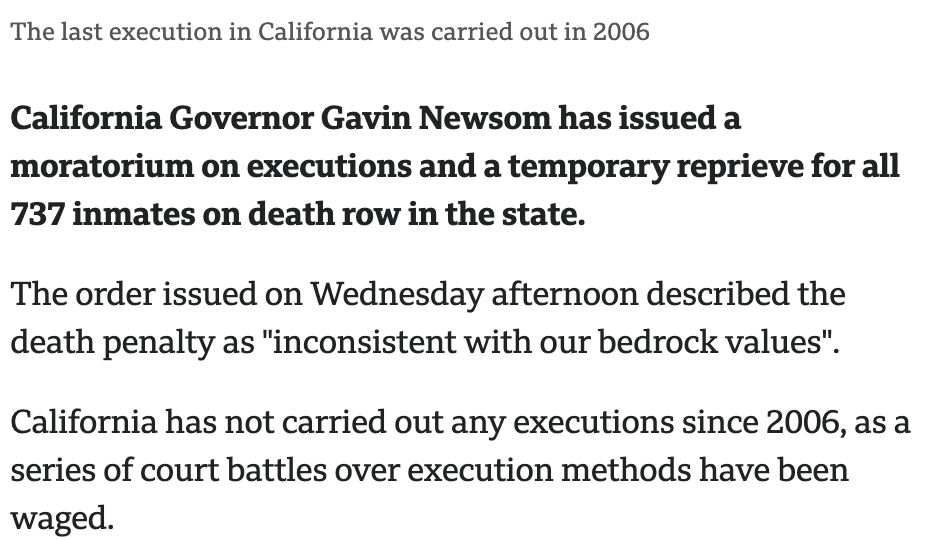
California in 2009:
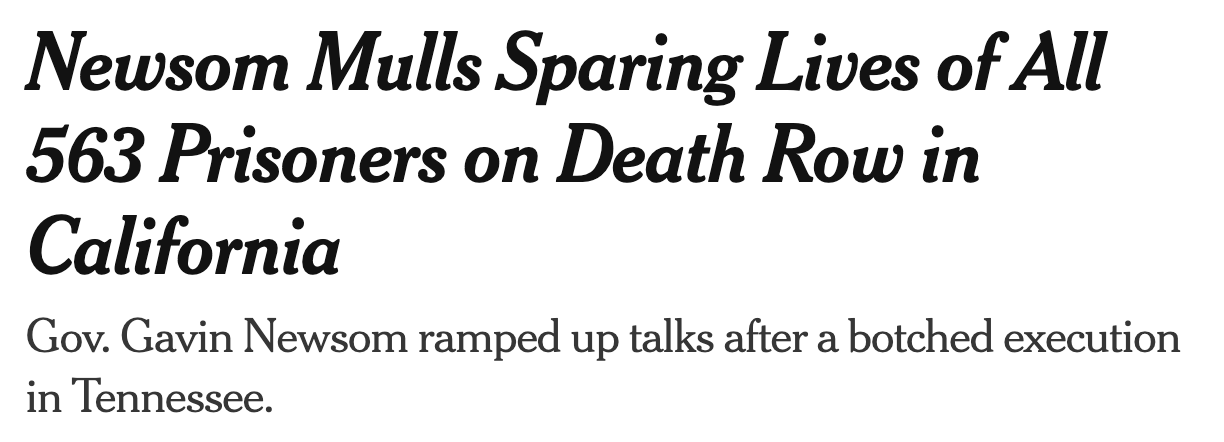
California Today:
I am Lady Justice. You just chose how your death sentence would be carried out. The jury found you guilty, and the state is preparing to end your life.
Look at my blindfold. It means I judge without favor. But a blindfold cannot tell us whether the right person was convicted—or whether the trial was fair.
You may know you have CONSTITUTIONAL RIGHTS if you’re accused of a crime. But do those rights guarantee that every trial is fair? Why or why not?
Think, Pair, Share: What CONSTITUTIONAL RIGHTS protect someone accused of a crime? What would make you trust that the trial was fair?

[ADD SQUARE IMAGE]
"Nor be Deprived"
What requires the government to follow fair steps when someone is accused of a crime? But what requires the government to follow fair steps before it takes away someone’s freedom—or even their life?
The FIFTH AMENDMENT answers with its DUE PROCESS CLAUSE: “No person shall be deprived of life, liberty, or property, without due process of law.” LIFE means life itself. LIBERTY includes freedom from imprisonment. PROPERTY includes belongings or money.
DUE PROCESS means the government must follow fair legal steps before taking away someone’s life, liberty, or property. Think of it as the PROCESS a person is DUE.
EQ: How does the Constitution protect a fair legal process?

“The right … to be secure”
Before anyone reaches the courtroom, the search for evidence can shape a case.
The FOURTH AMENDMENT protects people from “unreasonable searches and seizures.” Police generally need a lawful basis to search, such as a WARRANT or a recognized exception.
A WARRANT is a court order authorizing a search or arrest. For a search, it must describe the place and the items or people sought. During a CRIMINAL PROSECUTION, a court may decide whether police followed the rules and whether evidence can be used. But the government still has to prove the charge.
[ADD SQUARE IMAGE]
EQ: How does the Constitution protect a fair legal process?

[ADD SQUARE IMAGE]
“Nor Shall Be Compelled”
When police question someone in custody, the FIFTH AMENDMENT limits what the government can demand.
It says no person can be “compelled in any criminal case to be a witness against himself.” The government cannot force someone to answer questions that could help convict them.
During CUSTODIAL INTERROGATION—police questioning while a person is in custody—officers must explain the MIRANDA RIGHT to remain silent.
The accused does not have to build the government’s case for it.
EQ: How does the Constitution protect a fair legal process?

“The Assistance of Counsel”
At trial, the SIXTH AMENDMENT gives the accused ways to challenge the government’s case.
It guarantees a speedy, public trial before an impartial jury, the right to know the charges and question witnesses, and “the Assistance of Counsel for his defence.”
A DEFENSE ATTORNEY helps the accused understand the charges, test the government’s evidence, and present a response. If someone cannot afford an attorney in a serious criminal case, the court must provide one.
The government must prove its case in a fair contest.
[ADD SQUARE IMAGE]
EQ: How does the Constitution protect a fair legal process?

[ADD SQUARE IMAGE]
“Until Proved Guilty”
The burden of proof stays with the government from start to finish.
The PRESUMPTION OF INNOCENCE is often summed up as “innocent until proven guilty.” The government must prove the accused’s guilt; the accused does not have to prove their innocence.
To convict, the jury must find the person guilty BEYOND A REASONABLE DOUBT. That does not mean ruling out every far-fetched possibility. It means the evidence leaves no reasonable doubt that the accused committed the crime. If a reasonable doubt remains, the jury must find the accused not guilty.
EQ: How does the Constitution protect a fair legal process?

“Nor Cruel and Unusual”
Even after DUE PROCESS, the government still has limits on what it can do.
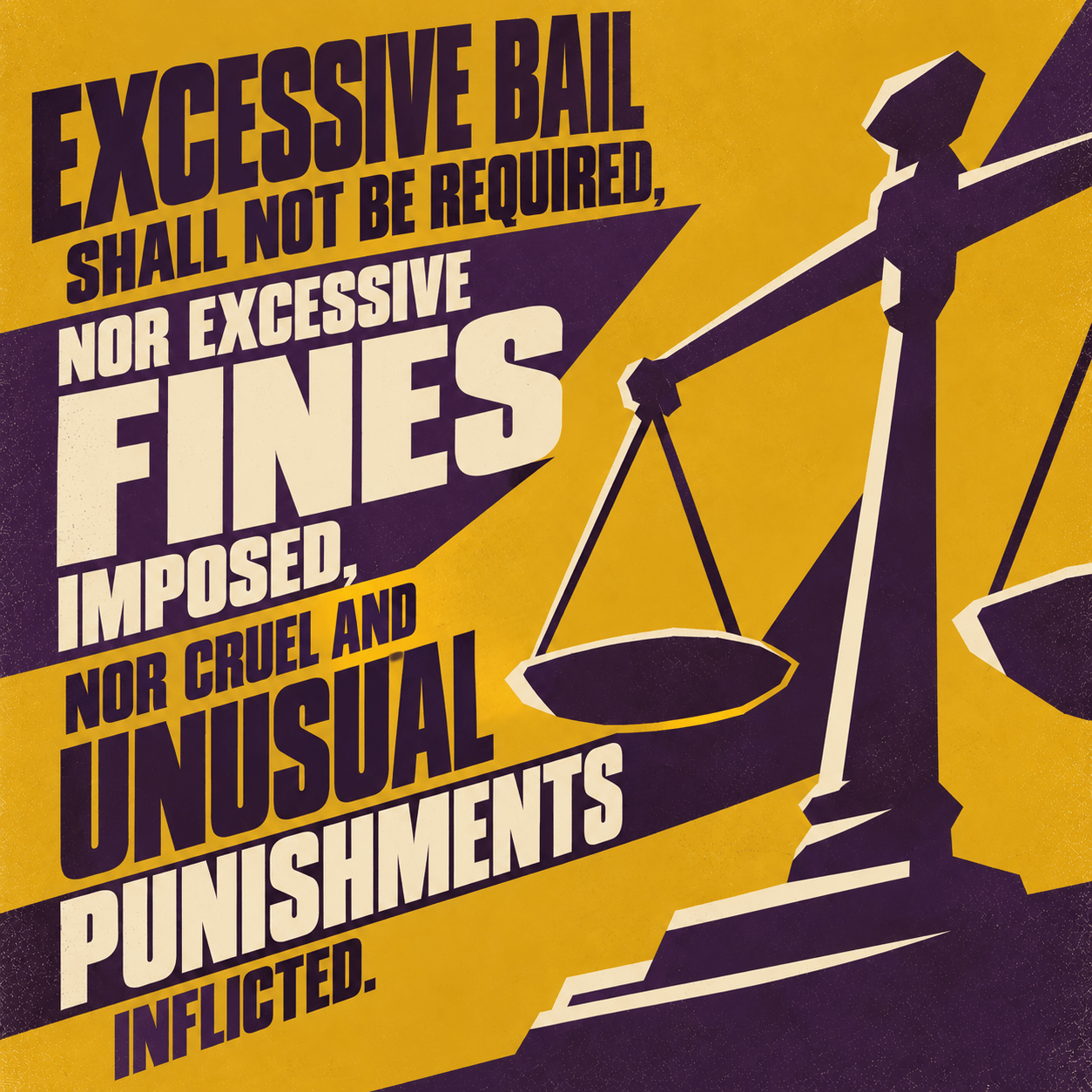
The EIGHTH AMENDMENT says, “Excessive bail shall not be required, nor excessive fines imposed, nor cruel and unusual punishments inflicted.” BAIL is money a court may require someone to pay to be released while awaiting trial. The amount cannot be excessive.
After a conviction, punishment also has limits. CRUEL AND UNUSUAL PUNISHMENT is punishment the Constitution forbids because it is excessively harsh or outside accepted standards of justice. In some cases, that punishment is the death penalty.
[ADD SQUARE IMAGE]
EQ: How does the Constitution protect a fair legal process?
LESSON RECAP
The Constitution makes the government prove its case and follow fair rules—from investigation through punishment.
- The FOURTH AMENDMENT limits unreasonable searches and seizures.
- The FIFTH AND SIXTH AMENDMENTS protect the accused during questioning and trial.
- The PRESUMPTION OF INNOCENCE means an accusation is not proof of guilt.
- The EIGHTH AMENDMENT limits bail, fines, and punishment.
NOW PLAYING:
MY COUSIN VINNY (1992)
ABOUT THIS FILM
In My Cousin Vinny, two young men are accused of murder after a stop in rural Alabama. One man’s cousin, a newly licensed lawyer from New York, arrives to defend them in court.
[ADD 2:3 POSTER]

VIEWING EXPECTATIONS
🤫 Please keep the room quiet.
🎧 No headphones or gaming.
🎬 Focus on the movie. Other classwork is okay if you can still passively listen.
WHAT TO WATCH FOR
The accused have rights during the criminal process.
The government must prove its case in court.
The jury must decide whether the evidence proves guilt beyond a reasonable doubt.
WORD WALL
DUE PROCESS
Fair legal steps the government must follow before taking life, liberty, or property.
WARRANT
A court order authorizing a search or arrest.
MIRANDA RIGHTS
Warnings about the right to remain silent and have an attorney during custodial questioning.
DEFENSE ATTORNEY
A lawyer who represents the accused and challenges the government’s case.
PRESUMPTION OF INNOCENCE
The accused is treated as innocent unless the government proves guilt.
BEYOND A REASONABLE DOUBT
The high standard of proof the government must meet for a criminal conviction.
EXIT TICKET
[EXIT TICKET THOUGHT OR QUESTION]
COMPLETE ON THE CLASS SITE