
























Content ITV PRO
This is Itvedant Content department
Learning Outcome
5
Understand the purpose of AWS CDK
4
Recognize Resources and Outputs in templates
3
Understand how Stacks manage infrastructure
2
Identify CloudFormation template components
1
Understand the role of AWS CloudFormation in Infrastructure as Code
Let’s recall what we already learned
Terraform can create and manage AWS infrastructure resources like EC2, S3, and VPC
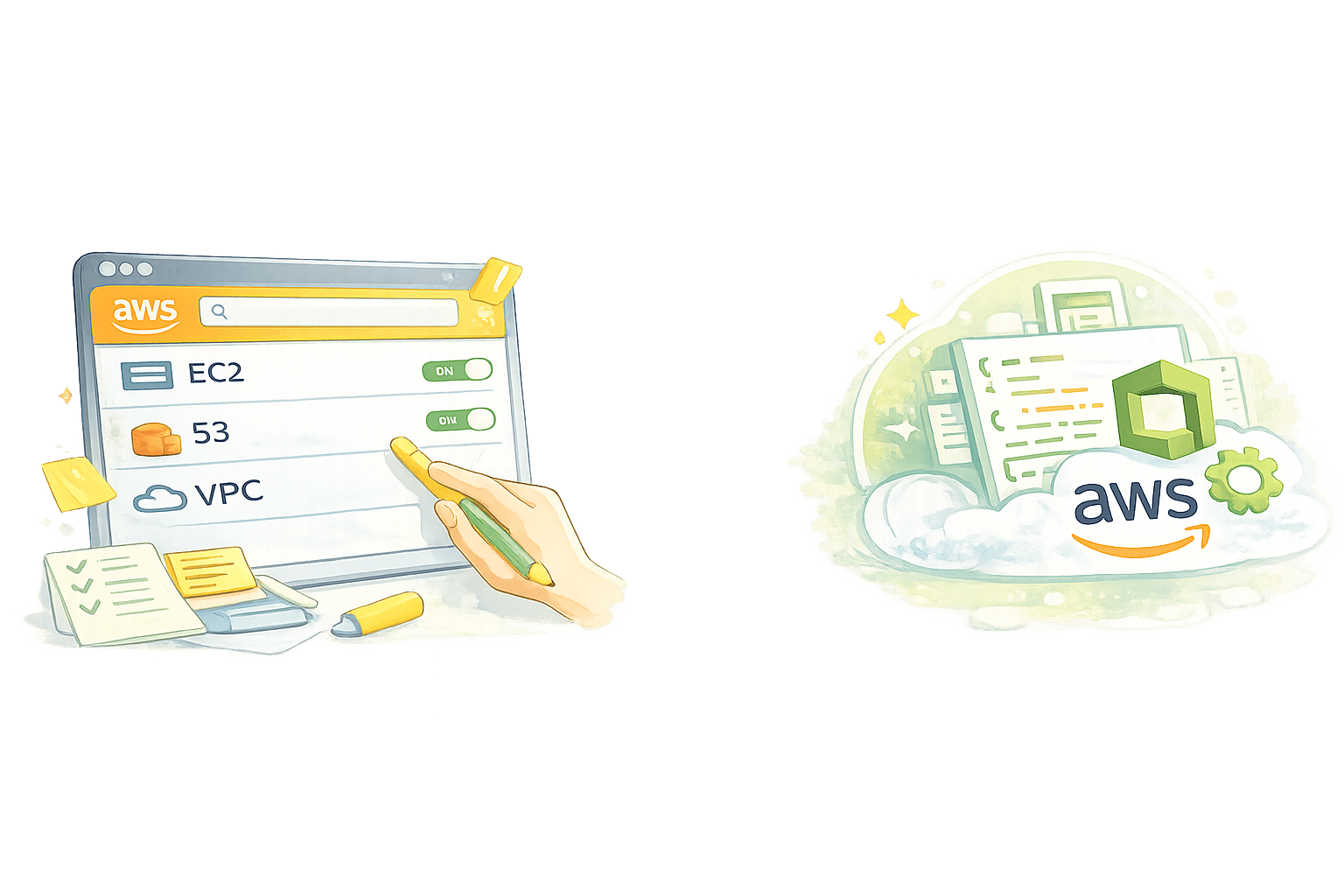
Infrastructure as Code tools help automate infrastructure deployment instead of manual configuration
Infrastructure as Code: The Blueprint Analogy”
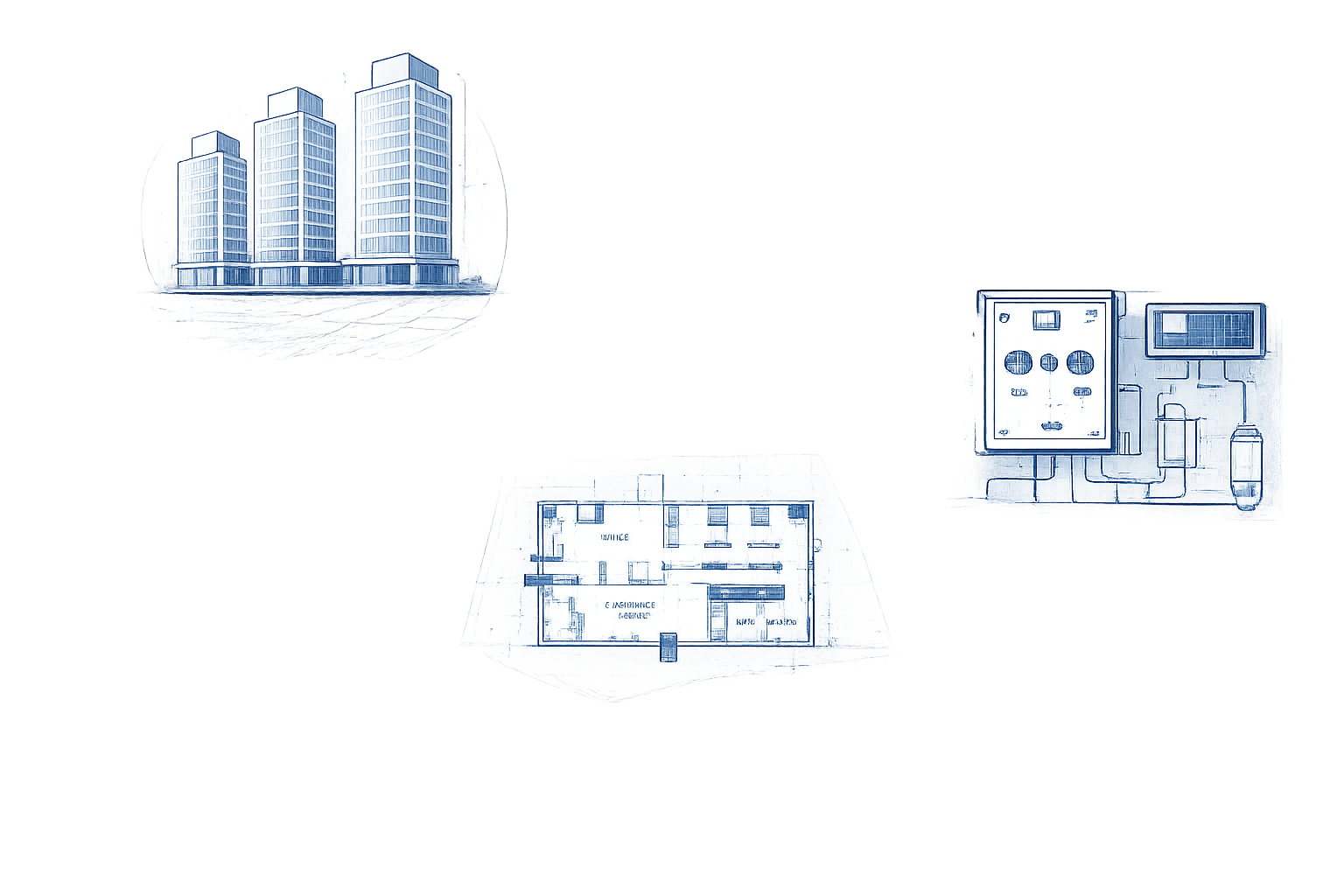
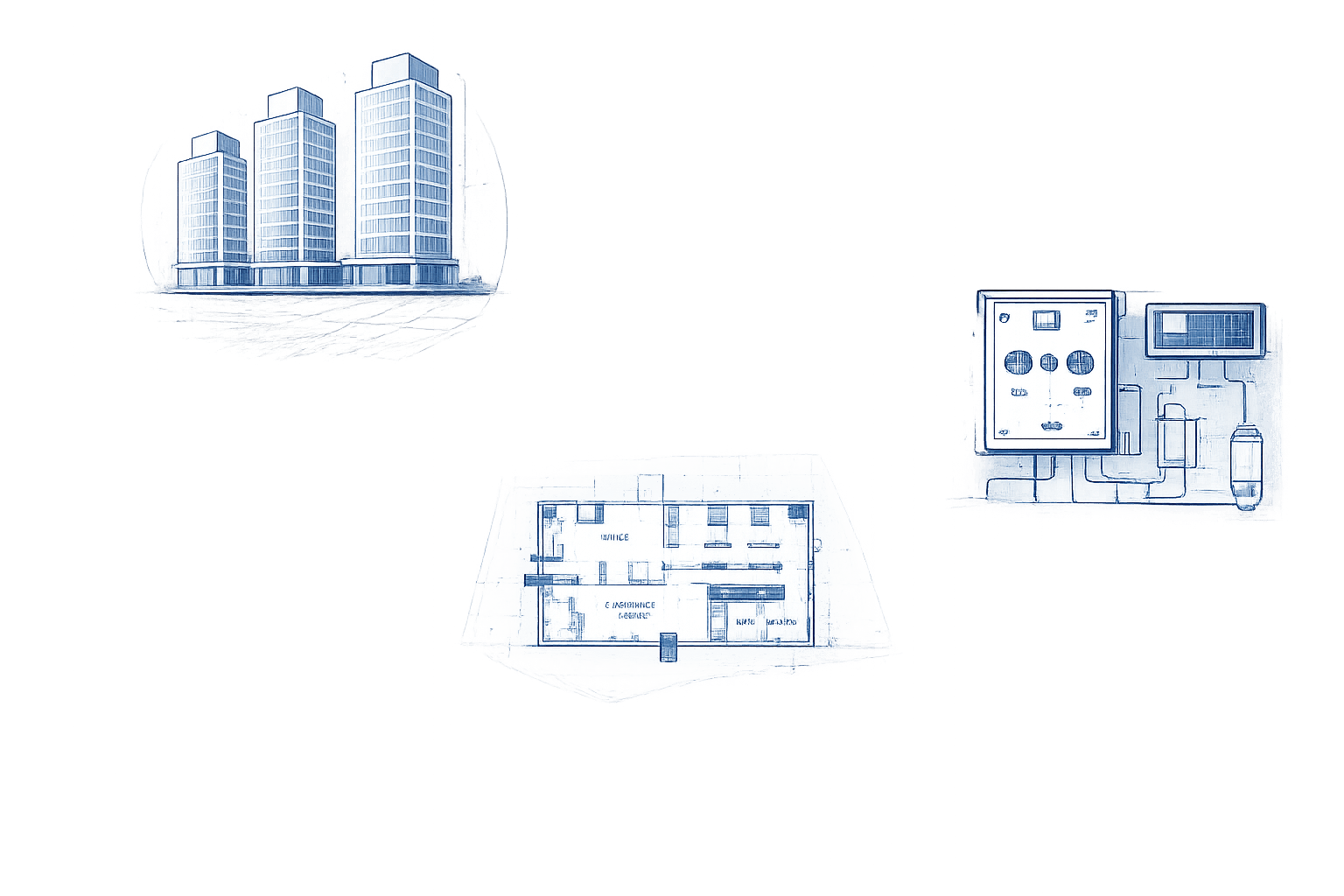
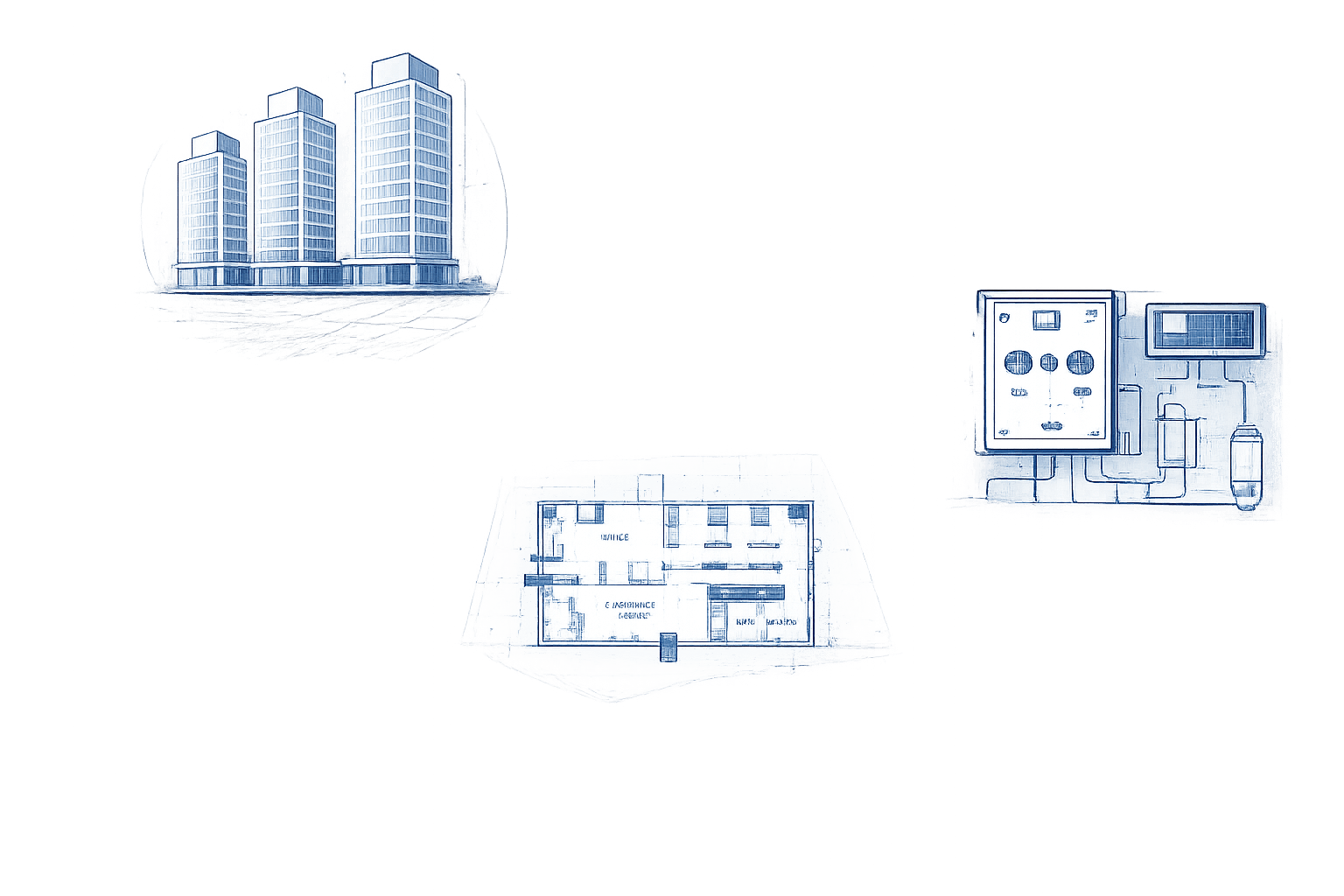
Imagine a construction company building multiple office buildings
Infrastructure as Code: The Blueprint Analogy”
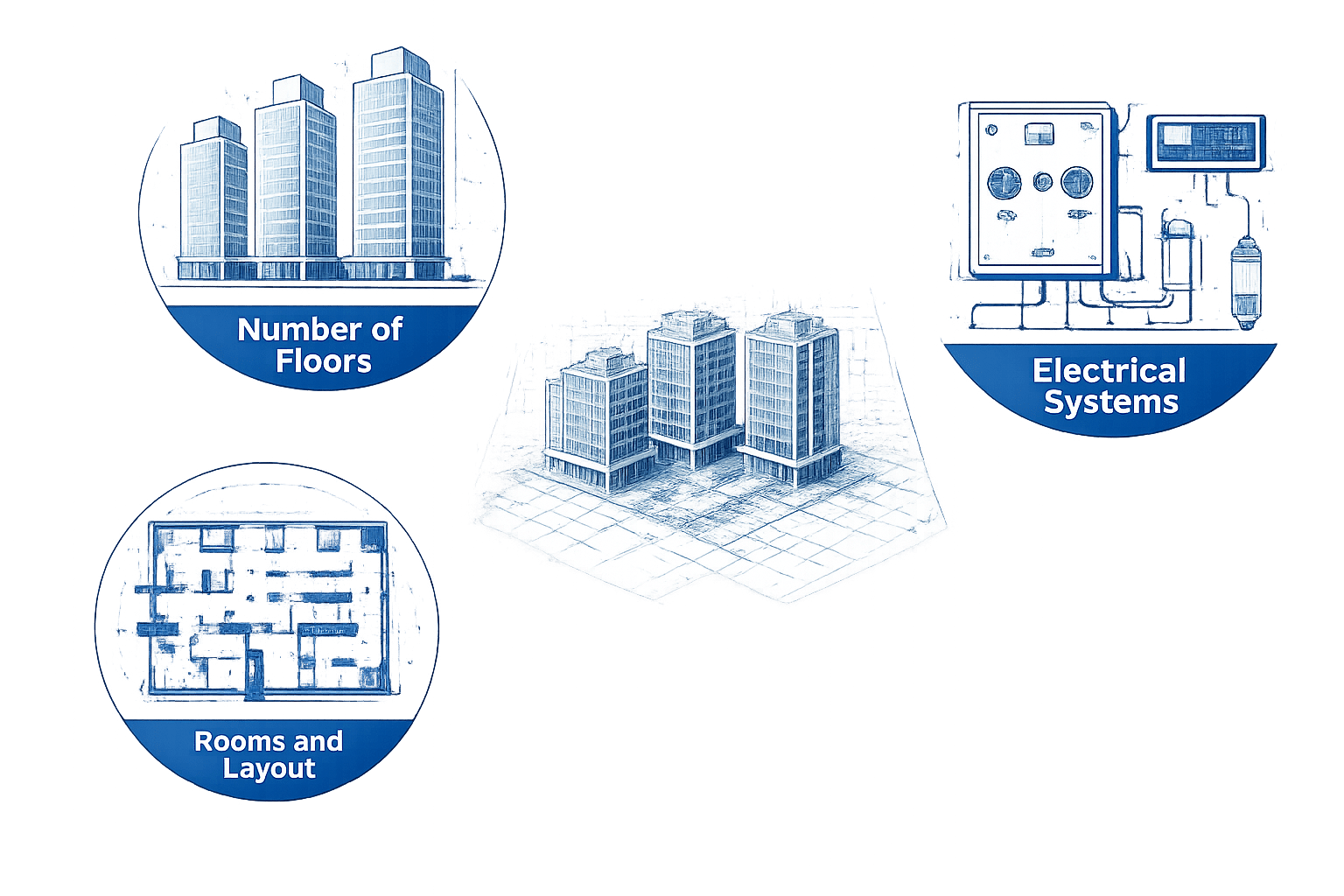
Instead of designing every building manually, they use a standard blueprint that defines:
Number of floors
Rooms and layout
Electrical systems
Once the blueprint is ready, it can be reused to build multiple buildings consistently
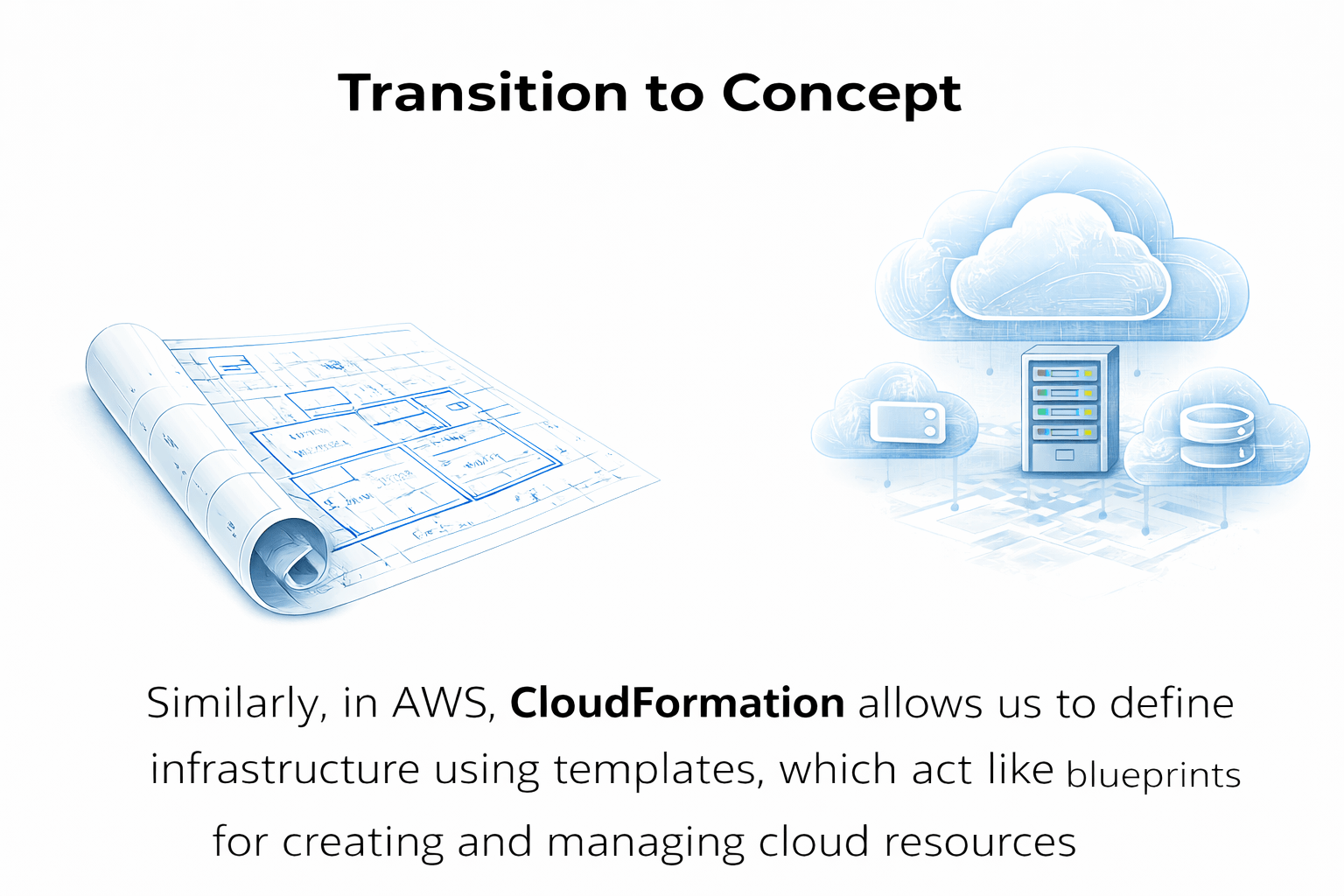
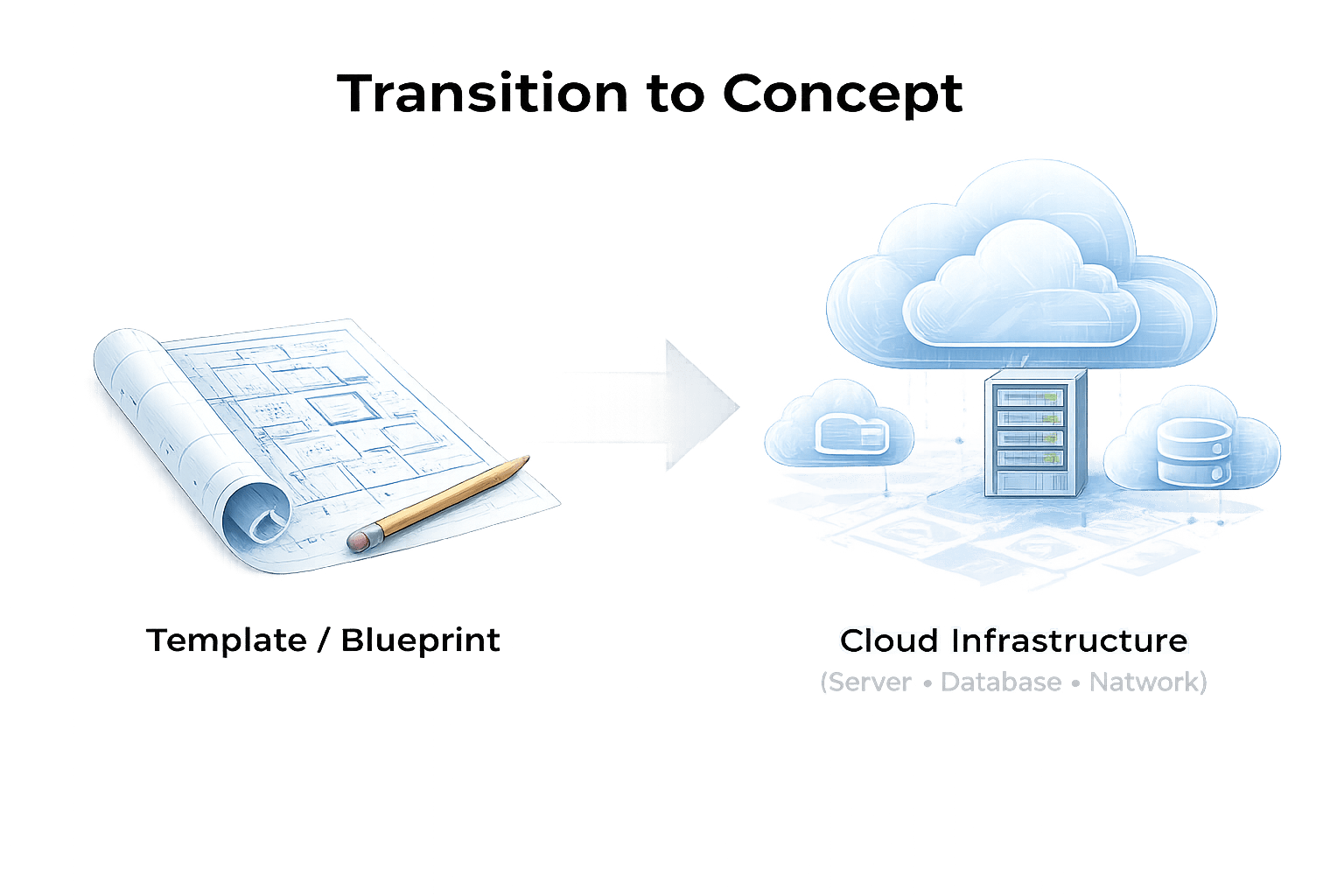
From Blueprint to Cloud Infrastructure
Template BluePrint
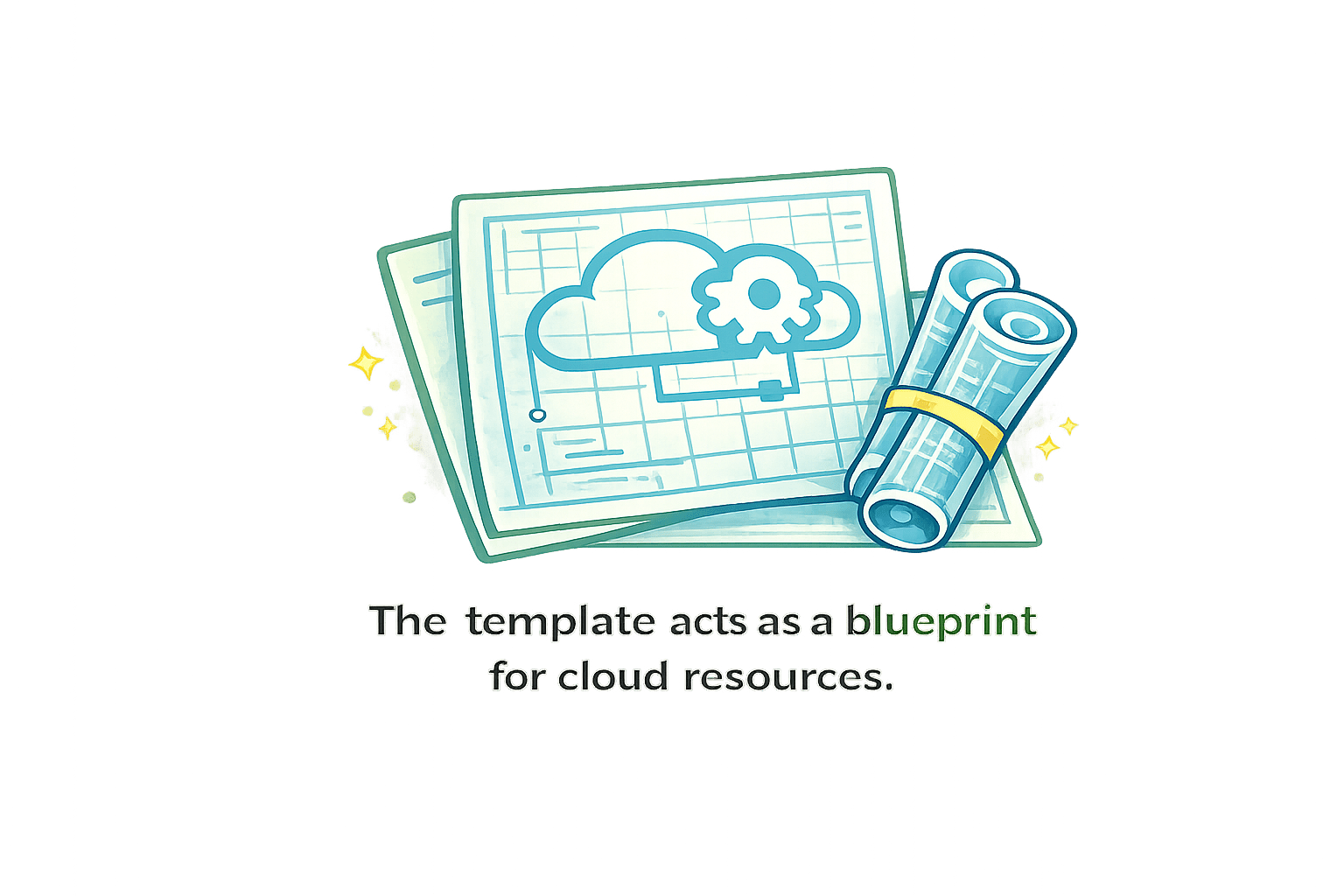
Similarly, in AWS, CloudFormation allows us to define infrastructure using templates, which act like blueprints for creating and managing cloud resources
Cloud Infrastructure
What is AWS CloudFormation?
AWS CloudFormation is a service that allows users to define and manage AWS infrastructure using code templates.
Instead of creating resources manually in the AWS console,
CloudFormation lets you describe infrastructure in a template file
AWS then automatically provisions the required resources
Why CloudFormation is Used
CloudFormation helps organizations:
Automate infrastructure creation
Maintain consistent environments
Track infrastructure changes
Deploy complex architectures easily
It is widely used for managing repeatable and scalable AWS infrastructure deployments
What is a Template?
A CloudFormation Template is a JSON or YAML file that describes the AWS infrastructure you want to create
The template acts as a
blueprint for cloud resources
What Templates Contain
Templates usually include sections such as:
Mappings
The most important section is Resources,
where infrastructure components are defined
Resources
Parameters
Outputs
Conditions
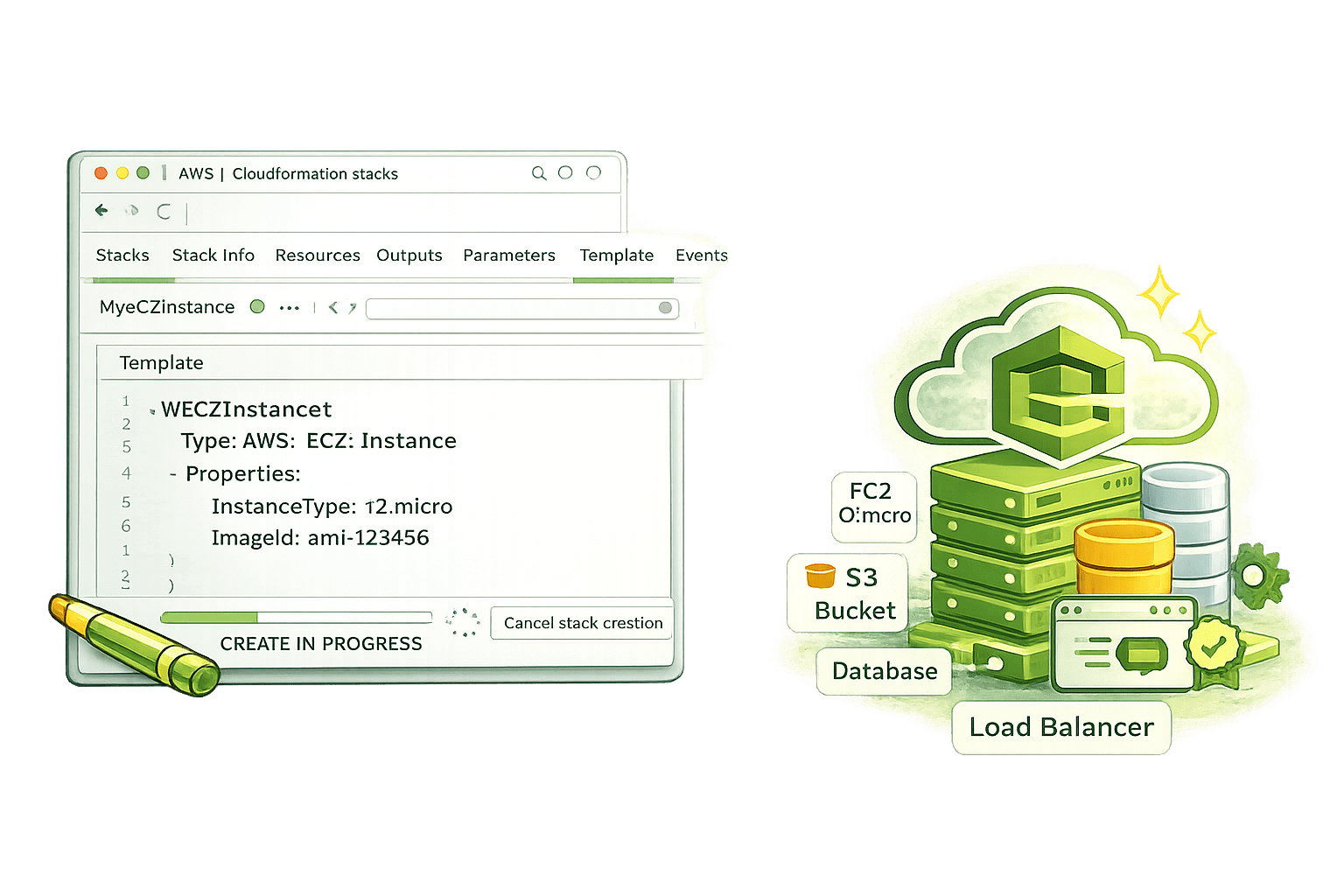
Example Template
Resources:
MyEC2Instance:
Type: AWS::EC2::Instance
Properties:
InstanceType: t2.micro
ImageId: ami-123456
This template tells AWS to create an EC2 instance
What is a Stack?
A Stack is a collection of AWS resources created and managed together using a CloudFormation template
When a template is executed, AWS creates a stack that contains all the resources defined in that template.
Stack Operations
CloudFormation stacks support several operations:
Create stack
Update stack
When a stack is deleted, all associated resources are removed automatically
Delete stack
What are Resources?
Resources are the actual AWS infrastructure components defined in a template
Each resource is declared inside the
Resources section of the template.
Examples of resources include:
What are Resources?
Example Resource :
Resources:
MyBucket:
Type: AWS::S3::Bucket
This creates an S3 bucket resource in AWS
What are Outputs?
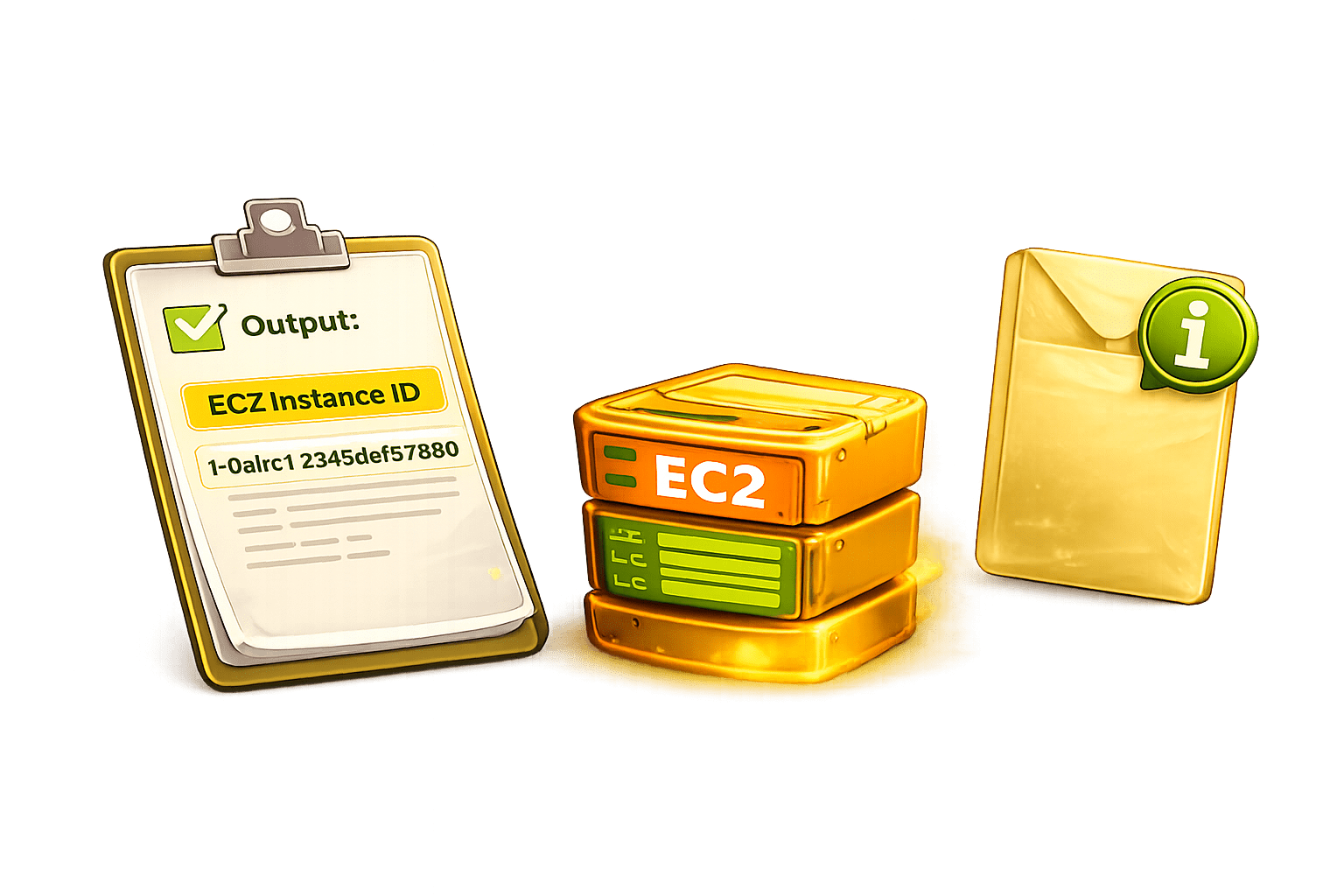
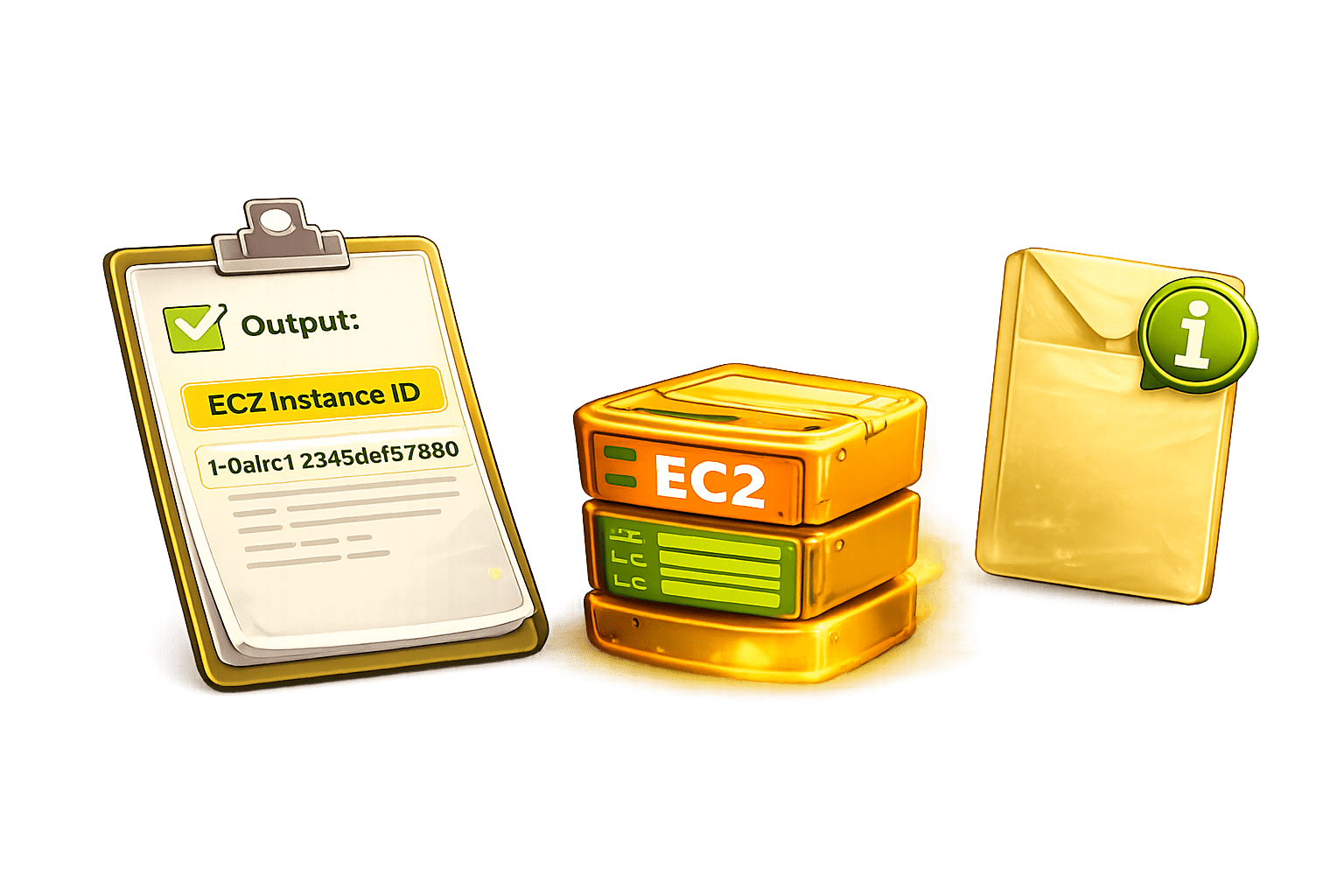
Outputs allow you to display important information after stack creation
Outputs are useful for retrieving values such as:
Instance public IP address
Load balancer DNS name
Resource IDs
These values can also be used by other stacks or applications
What are Outputs?
Example Output
This output displays the
ID of the created EC2 instance.
Outputs:
InstanceId:
Value: !Ref MyEC2Instance
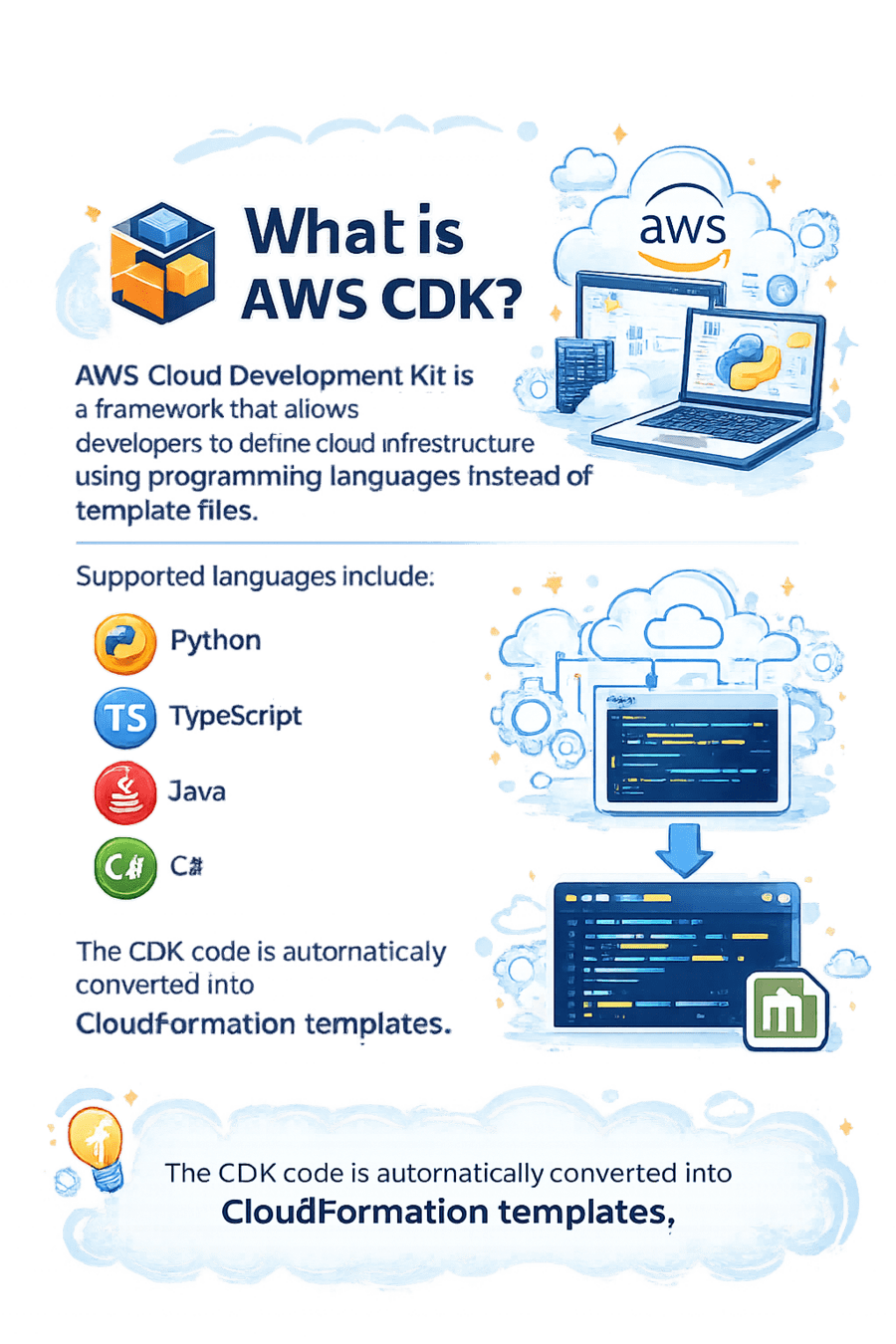
What is AWS CDK?
Python
TypeScript
Java
C#
AWS Cloud Development Kit is a framework that allows developers to define cloud infrastructure using programming languages instead of template files
Supported languages include:
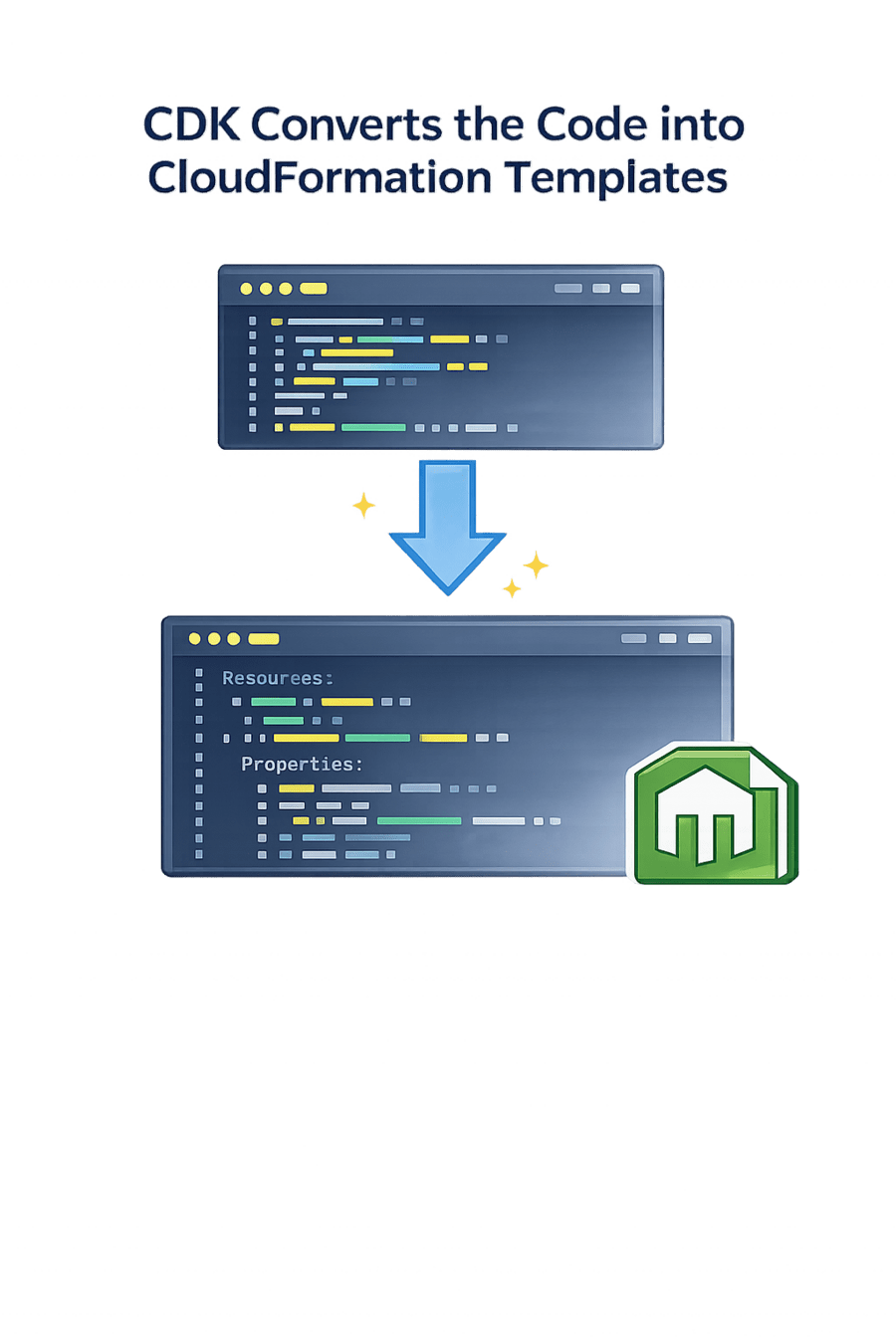
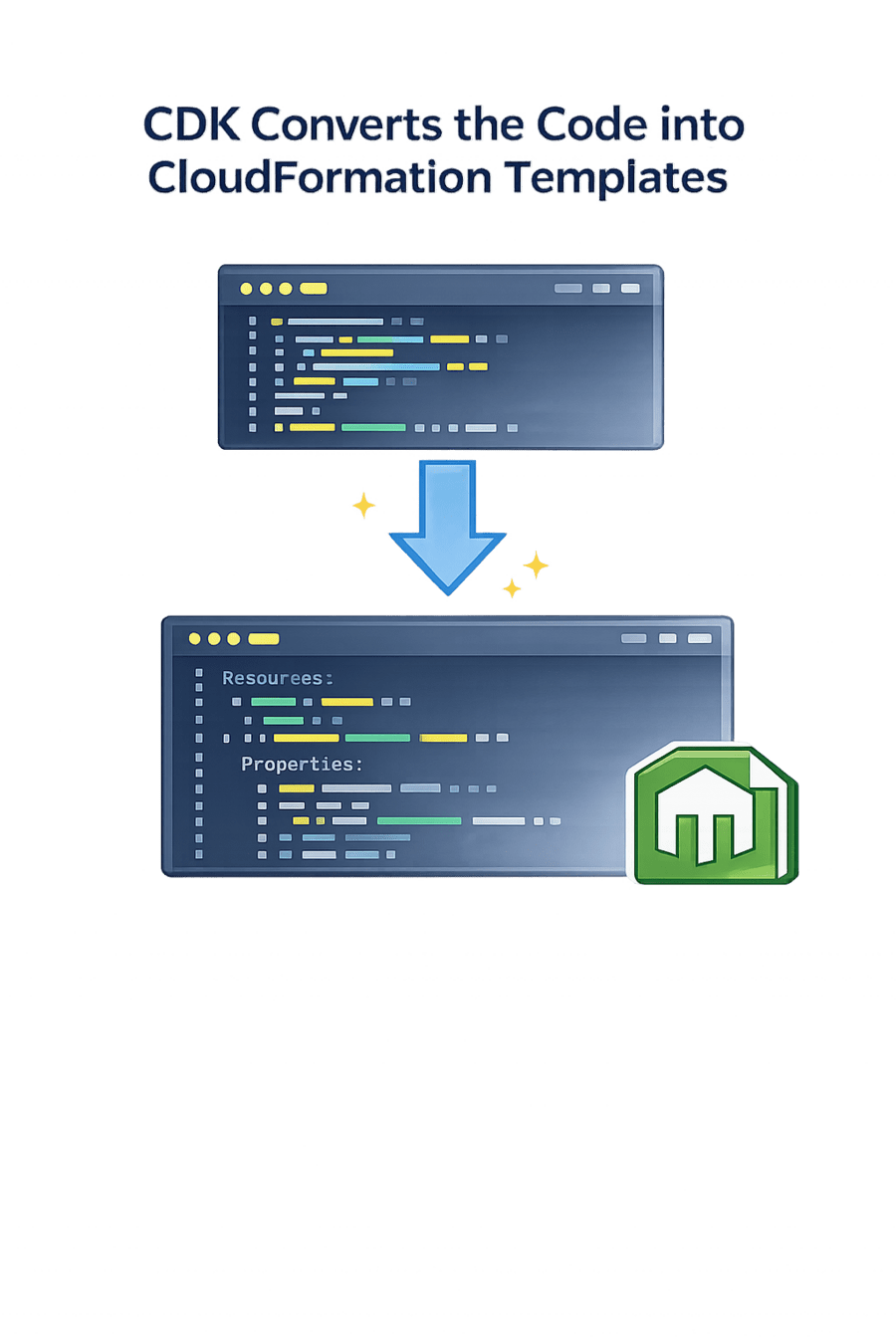
The CDK code is automatically converted into CloudFormation templates
Why CDK is Used ?
CDK provides several advantages:
Familiar programming languages
Reusable components
Better code organization
Easier integration with application code
It simplifies the process of writing complex infrastructure definitions
Relationship Between CloudFormation and CDK
The relationship works like this:
This allows teams to combine software development practices with infrastructure automation
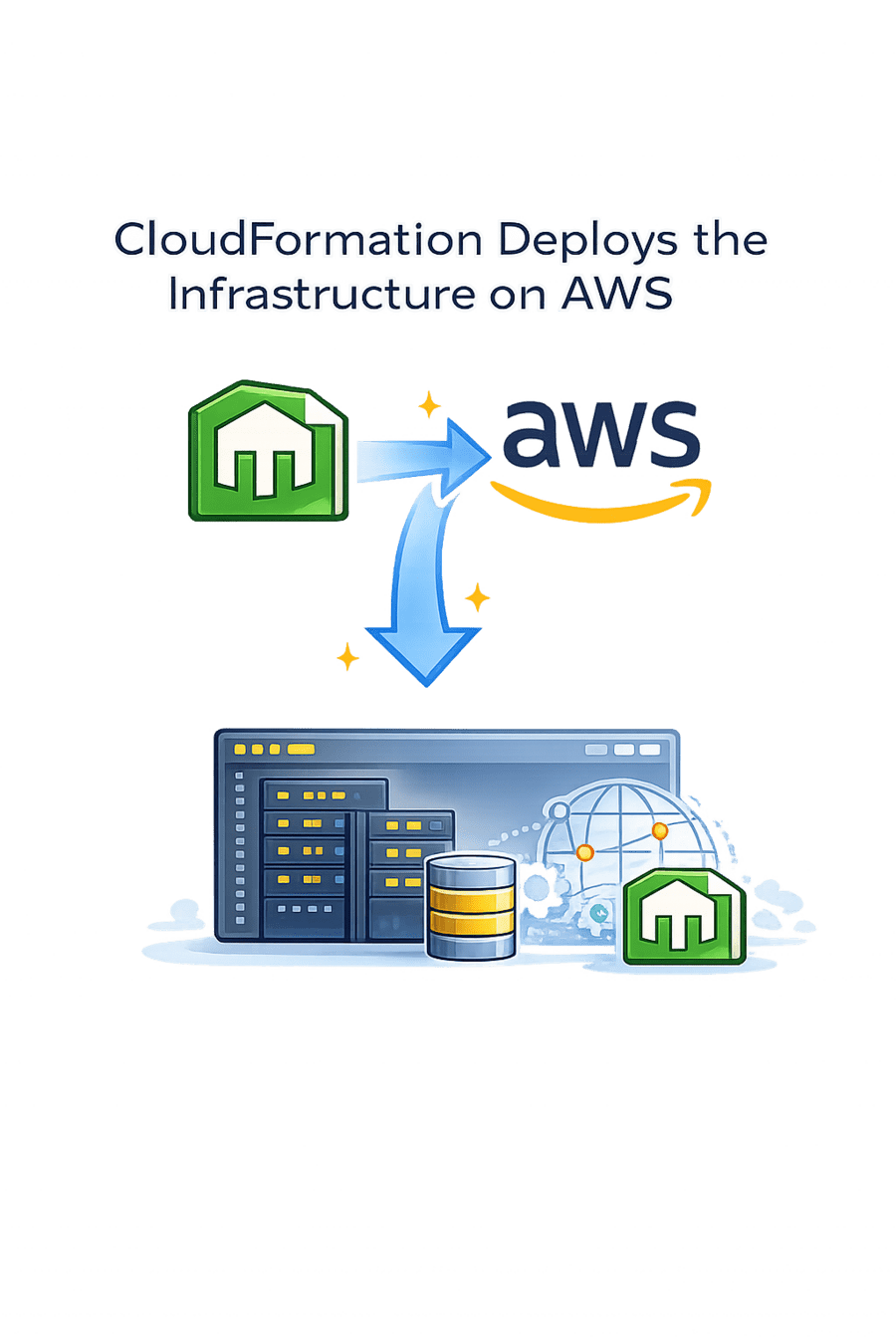
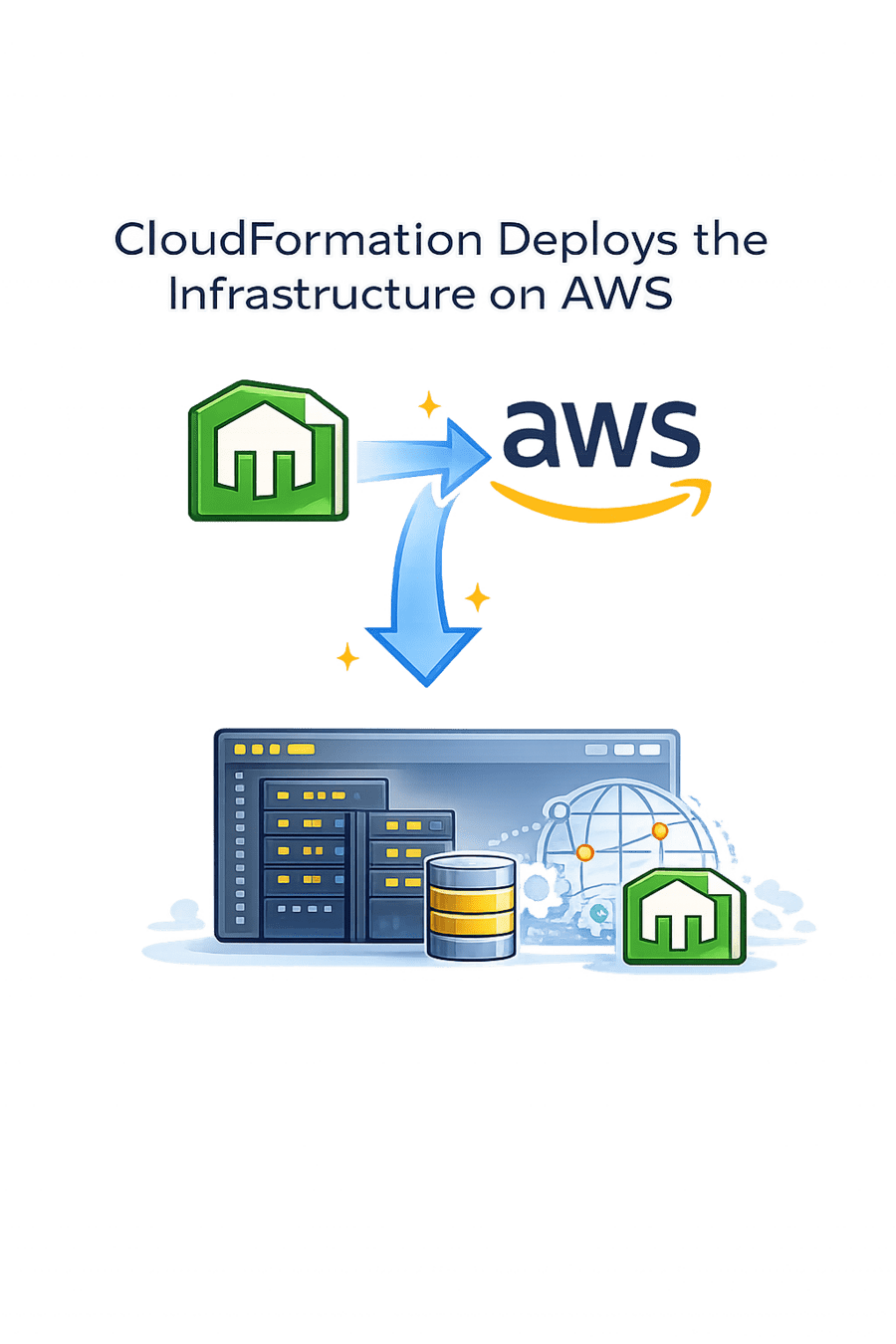
Developers write infrastructure code using CDK
CDK converts the code into CloudFormation templates
CloudFormation deploys the infrastructure on AWS
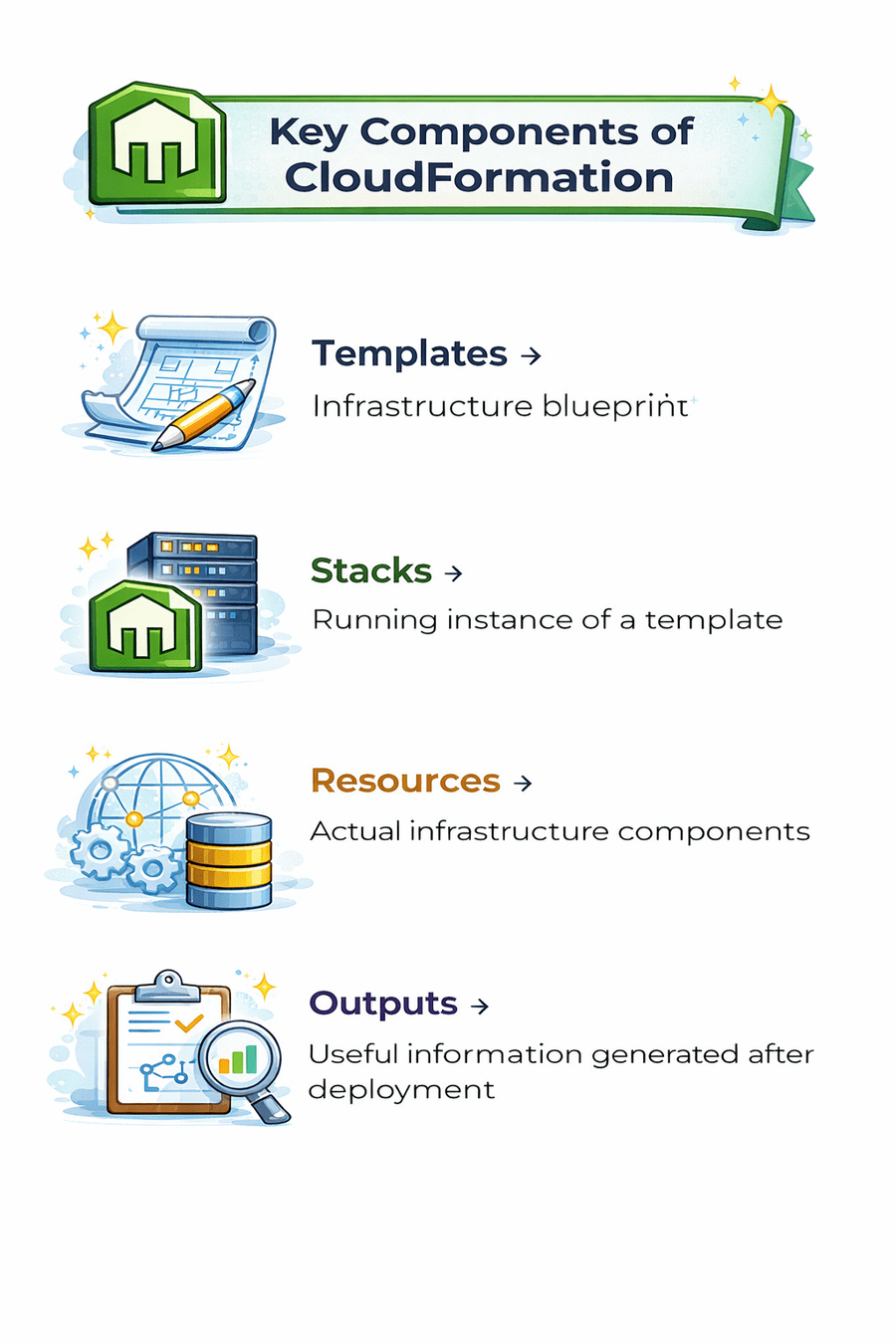
Key Components of CloudFormation
Important elements include:
Templates → Infrastructure blueprint
Stacks → Running instance of a template
Resources → Actual infrastructure components
Outputs → Useful information generated after deployment
Infrastructure Workflow
Typical CloudFormation workflow:
1. Create a template
2. Deploy the template as a stack
3. AWS provisions the resources
4. Outputs provide deployment information
Summary
5
Outputs provide useful deployment information
4
Resources represent AWS infrastructure components
3
Templates create,manage resources using CloudFormation stacks
2
Infrastructure is defined using JSON or YAML templates
1
CloudFormation automates AWS infrastructure (IaC)
Quiz
What is the purpose of an AWS CloudFormation template?
A. To monitor AWS resources
B. To define AWS infrastructure using code
C. To manage AWS billing
D. To configure IAM users
Quiz
What is the purpose of an AWS CloudFormation template?
A. To monitor AWS resources
B. To define AWS infrastructure using code
C. To manage AWS billing
D. To configure IAM users
By Content ITV