





Jesse Bloom PRO
Scientist studying evolution of proteins and viruses.
Fred Hutch Cancer Center / HHMI
These slides at https://slides.com/jbloom/flu-seqneut-2025to2026
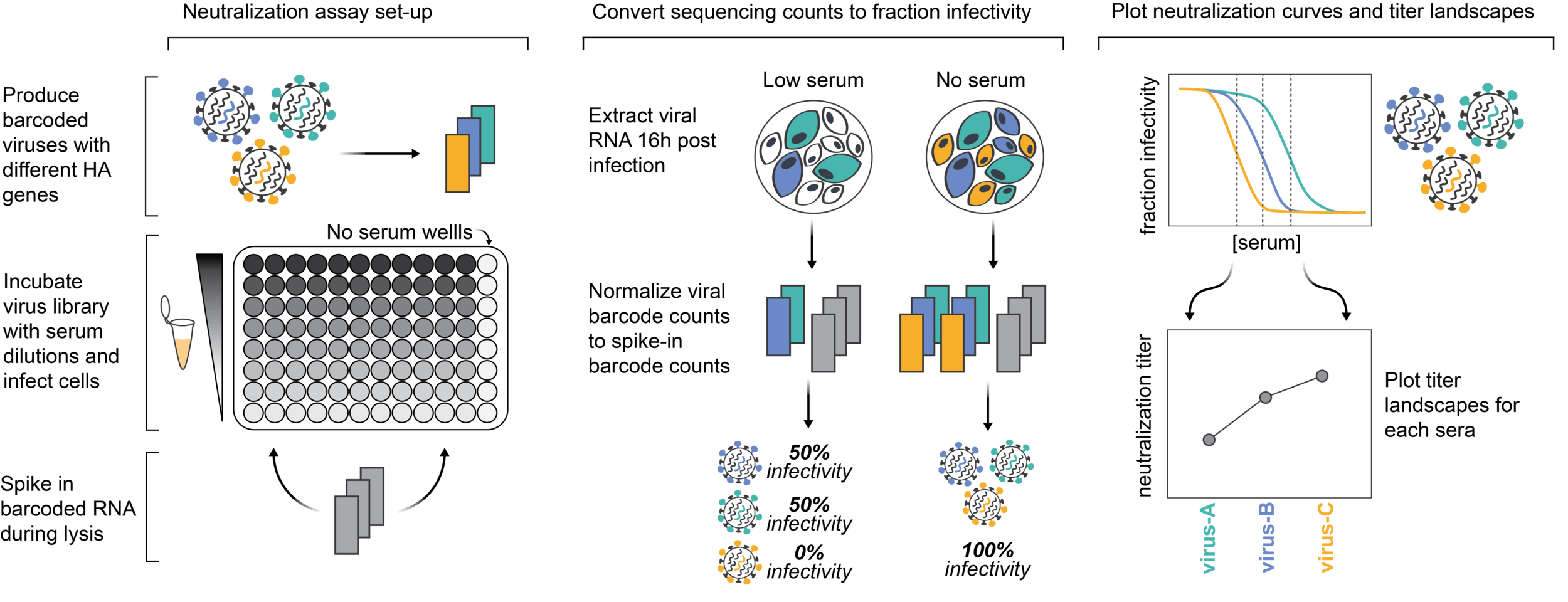
Measure neutralization titers of recent human sera against current human seasonal H3N2 and H1N1 influenza strains.
Share data to inform strain selection for next vaccine.
Overall, we measured titers of 302 human sera against 91 viral strains for 27,409 neutralization titers.
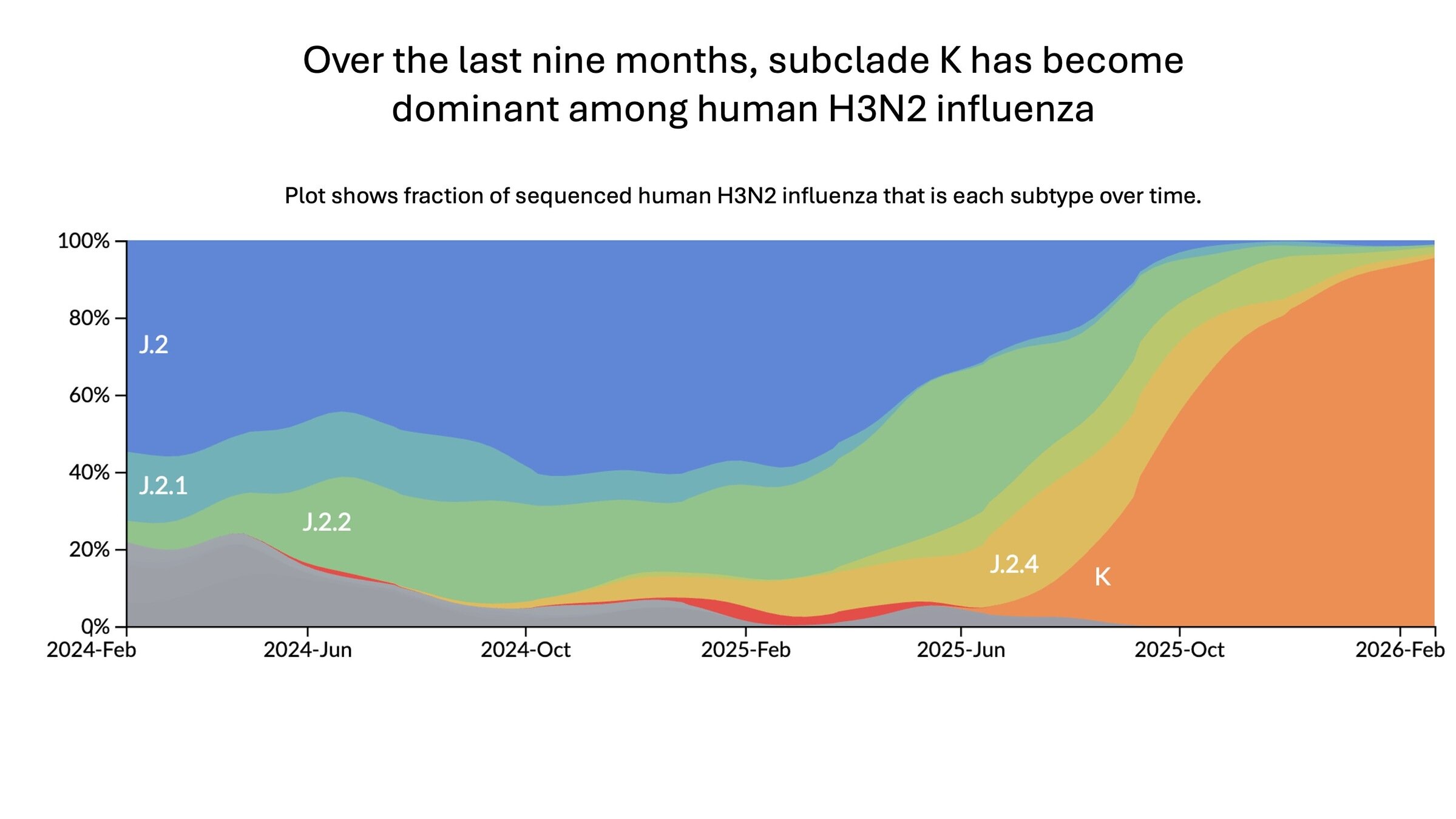
Chose 57 H3N2 strains
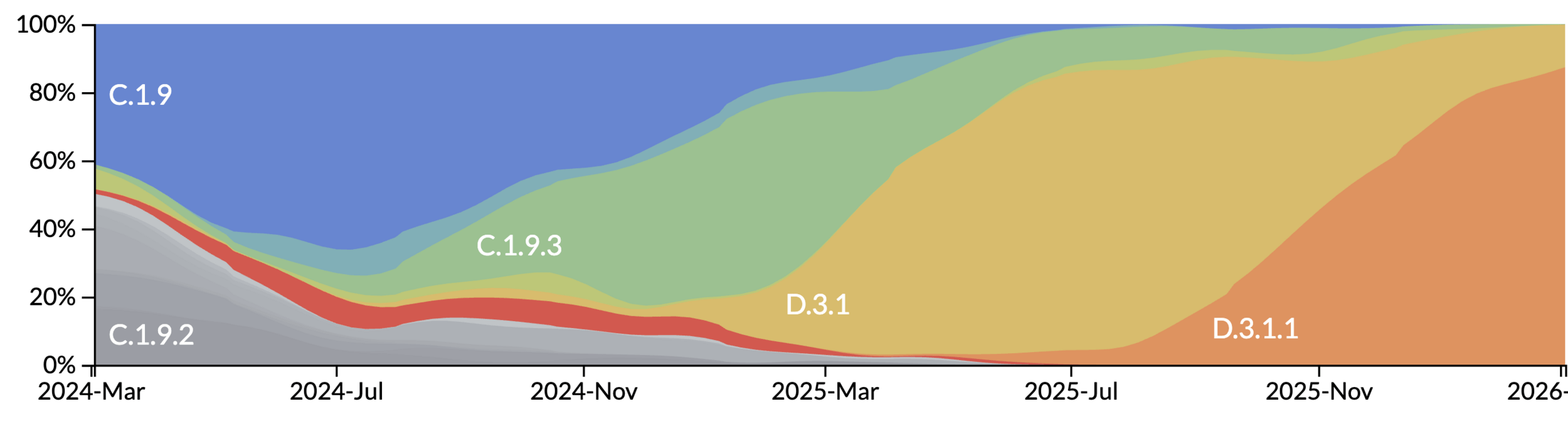
Chose 34 H1N1 strains
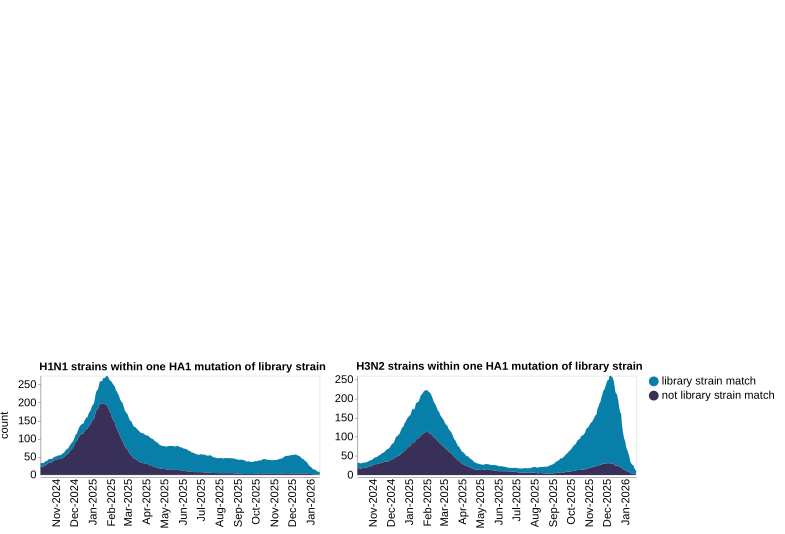
Most recently sequenced human strains within one HA1 mutation of chosen strains
Influenza infects people of different ages, who have different immunity due to different exposure histories.
Influenza transmits around the world, spreading within and between countries.
To forecast which virus an elderly person in the United States might be exposed to next year, we need to understand immunity across ages and geographies.
See Liu et al (2026) for more details.
These slides: https://slides.com/jbloom/flu-seqneut-2025to2026
Fred Hutch
Caroline Kikawa
John Huddleston
Andrea Loes
Penn
Jiaojiao Liu
Sydney Gang
Scott Hensley
Fred Hutch / Seattle Childrens: Trevor Bedford, Janet Englund, Kirsten Lacombe
Penn: Elizabeth Drapeau, Tachianna Griffiths
Cambridge: Sam Turner, Derek Smith
Basel: Richard Neher
Hong Kong: Ben Cowling, Nancy Leung, Faith Ho
NIID Japan: Shinji Watanabe, Hideki Hasegawa
UCSF / Red Cross: Michael Busch, Marion Lanteri, Mars Stone, Bryan Spencer
By Jesse Bloom
Near real-time data on the human neutralizing antibody landscape to influenza virus to inform vaccine-strain selection