LESSON 1.01
The founding promise
How do founding texts express democratic ideals?
AP TOPIC 1.1 · LO 1.1.A · EK 1.1.A.1–3
LET’S PLAY
THE
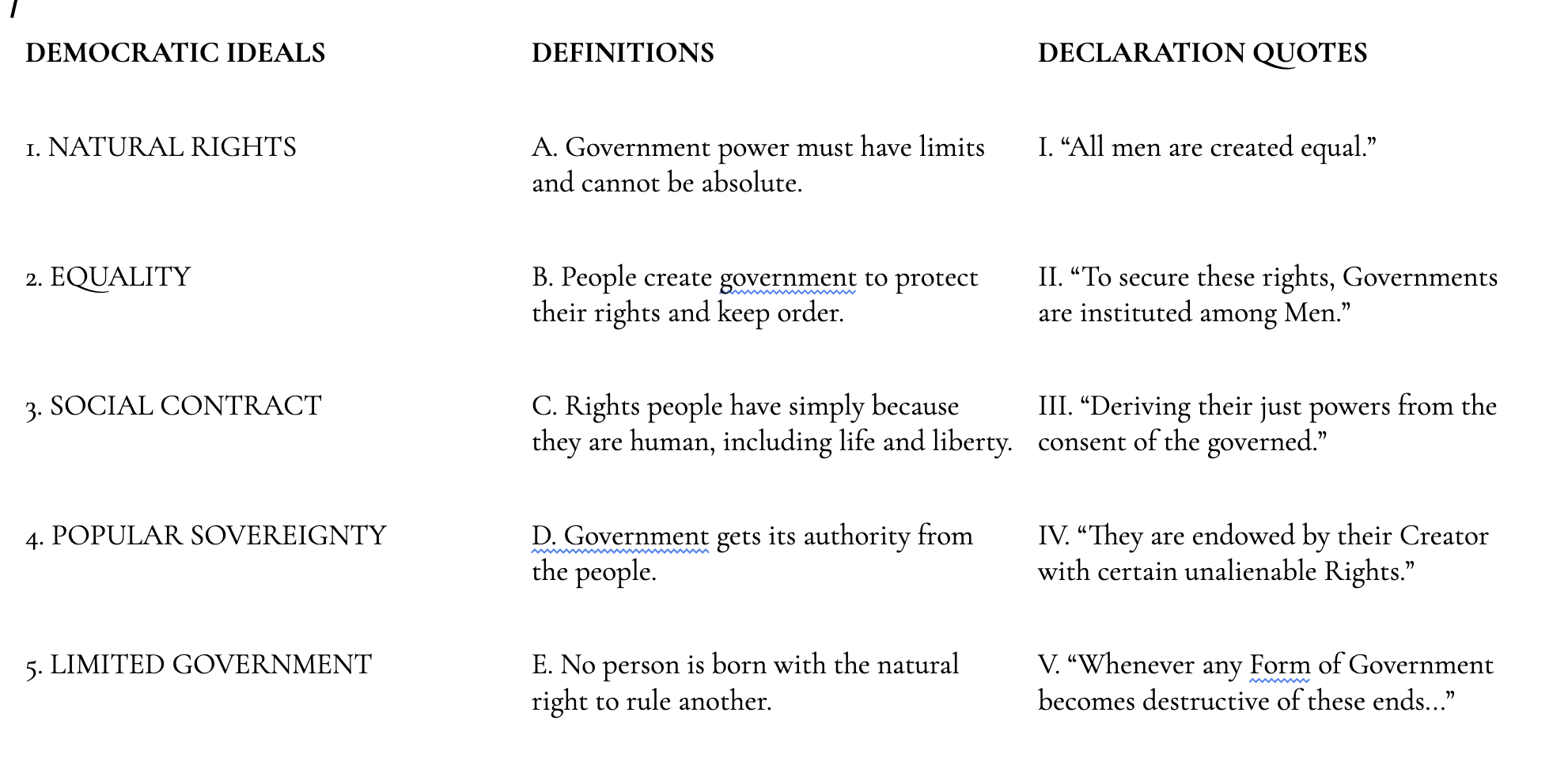
THE DECLARATION CONNECTION FOR KICKBOARD Dollars
Draw a line from each ideal to its matching definition, then to the Declaration quote that supports it.

YOUR TURN
IF YOU RAN THE PLACE…
Brainstorm at least three problems you notice or care about. Do not solve them yet. Start with what feels frustrating, unfair, overlooked—or simply possible to make better.
DO NOT WRITE YOUR NAME ON IT
CLOSE
TO HOME
ACROSS
CALIFORNIA
THROUGHOUT
THE COUNTRY
Come ask for magnets to put yours up!
HAVE A SAY · MAKE THEM LISTEN
CREATIVE ACTIVITY
GETTYSBURG REDUX
Your Task
Recreate the Gettysburg Address in a form people today would understand. Keep Lincoln’s main message, use your own voice, and connect his ideas to life today.
Your Piece Should
Express the ideals of EQUALITY and POPULAR SOVEREIGNTY, and explain what a “NEW BIRTH OF FREEDOM” could mean today.
Choose Your Format
- Modern speech: Lincoln speaking today
- Poem: Free verse
- Rap or song: Rhythm, repetition, or chorus
- Spoken word: A performed monologue
- Open letter: Address Americans today
- Comic or graphic story: Images and captions
- Social-media carousel: 5–7 posts or slides
- Public-service announcement: A “new birth of freedom” today
- Found poem: Words and phrases from the original
Your Creator’s Note
1. What format did you choose?
2. What message from Lincoln did you keep?
3. How does your piece express EQUALITY and POPULAR SOVEREIGNTY?
4. What does “a new birth of freedom” mean in your version?
Submit
Turn in your creative piece and creator’s note together as one document, slide deck, recording, or approved format on Google Classroom.
WE THE PEOPLE
THE PREAMBLE’S SIX BIG JOBS
1 FORM A MORE PERFECT UNION
2 ESTABLISH JUSTICE
3 INSURE DOMESTIC TRANQUILITY
4 PROVIDE FOR THE COMMON DEFENSE
5 PROMOTE THE GENERAL WELFARE
6 SECURE THE BLESSINGS OF LIBERTY
ON YOUR PAGE
1. Put each of the six purposes in your own words.
2. Draw a symbol or emoji for each one.
3. Color the whole page.
6 MEANINGS · 6 SYMBOLS

Imagine this. You are born beyond every border, where no flag flies and no ruler is known. You grow up thinking, speaking, working, and making choices without asking anyone’s permission.
One day, you enter a kingdom. The king stops you.
“Everything here belongs to me. Your work. Your words. Your beliefs. Even your life. You have only the freedoms I choose to give you.”
But you were free before you met him.
Did simply crossing a border change that?
Think-Pair-Share: What should you still be free to say, believe, choose, or keep, even if a king says no?
THE BRIDGE
You just told a king that some freedoms are not his to give. That claim points toward the first of six DEMOCRATIC IDEALS, beliefs about what government should be, do, and protect.
The six explain why government exists, who gives it power, what limits that power, and how people should be treated.
DECLARATION OF INDEPENDENCE (1776)
CONSTITUTION (1787)
GETTYSBURG ADDRESS (1863)
THE DECLARATION OF INDEPENDENCE
1776
1
NATURAL
RIGHTS
2
SOCIAL
CONTRACT
3
POPULAR
SOVEREIGNTY
4
LIMITED
GOVERNMENT
5
EQUALITY
PART 1
[ADD SQUARE IMAGE]
We Hold These Truths
In July 1776, thirteen colonies told one of the world’s most powerful kings: You no longer have the right to rule us.
But the Declaration of Independence was more than a breakup letter. It was a carefully built argument.
First, it explains what people are owed and why government exists. Then, it accuses King George III of betraying those purposes. Finally, colonial representatives announce that British rule is over.
At its center is a radical claim: Government does not own the people. It works for them.
Jefferson did not invent that idea. To find its roots, we need to travel back before 1776.
EQ: How do landmark texts express America’s democratic ideals?
By Nature
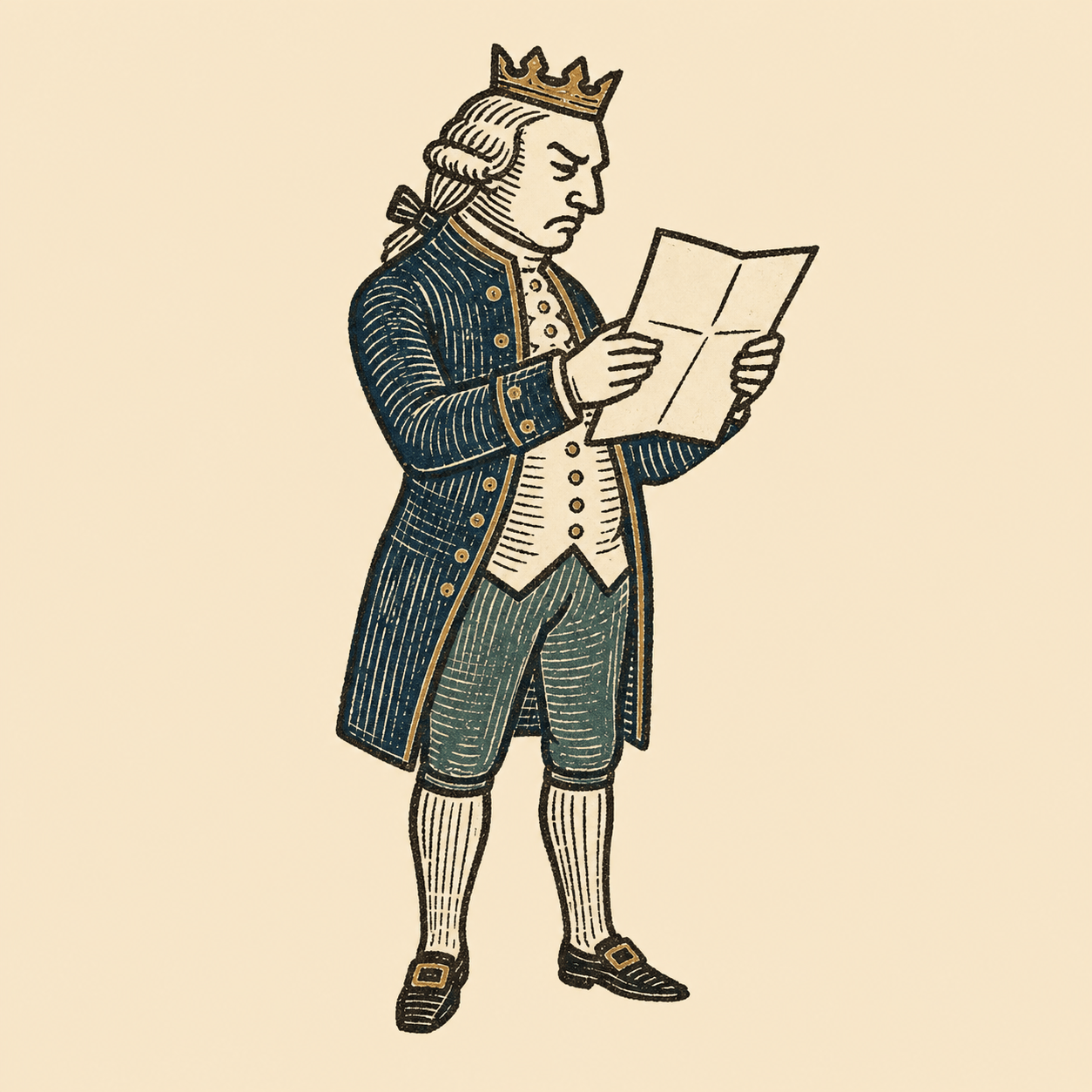
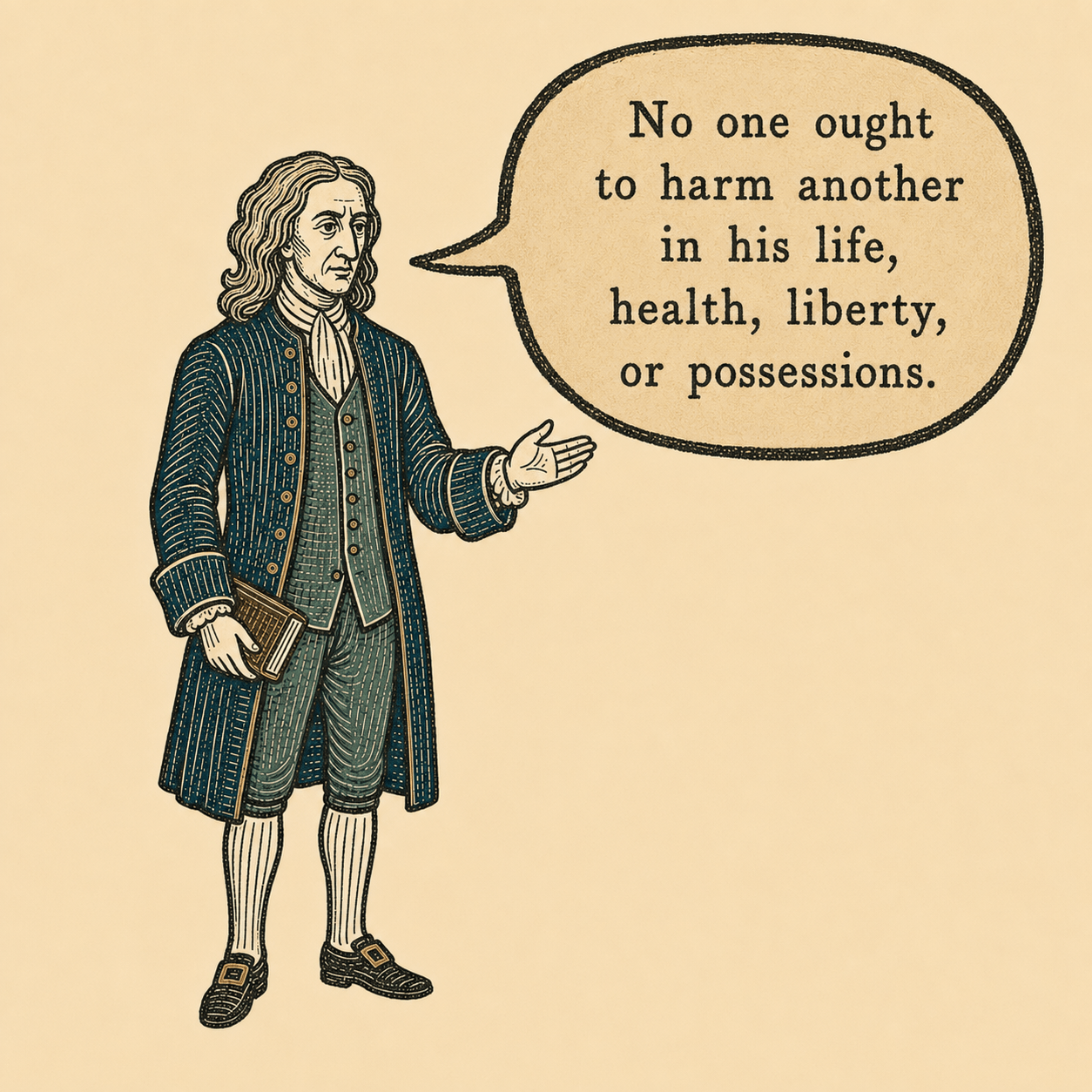
In the late 1600s, English philosopher John Locke challenged DIVINE RIGHT, the belief that kings received authority from God.
Locke pictured people living before government. They were “by nature, all free, equal, and independent.” Each INDIVIDUAL already possessed LIFE, the right to live and be safe; LIBERTY, the freedom to make your own choices; and PROPERTY, including your belongings, land, and what you produced through your work.
Locke called these NATURAL RIGHTS because people possessed them from birth, not because a ruler handed them out.
[ADD SQUARE IMAGE]
EQ: How do landmark texts express America’s democratic ideals?
[ADD SQUARE IMAGE]
Created equal
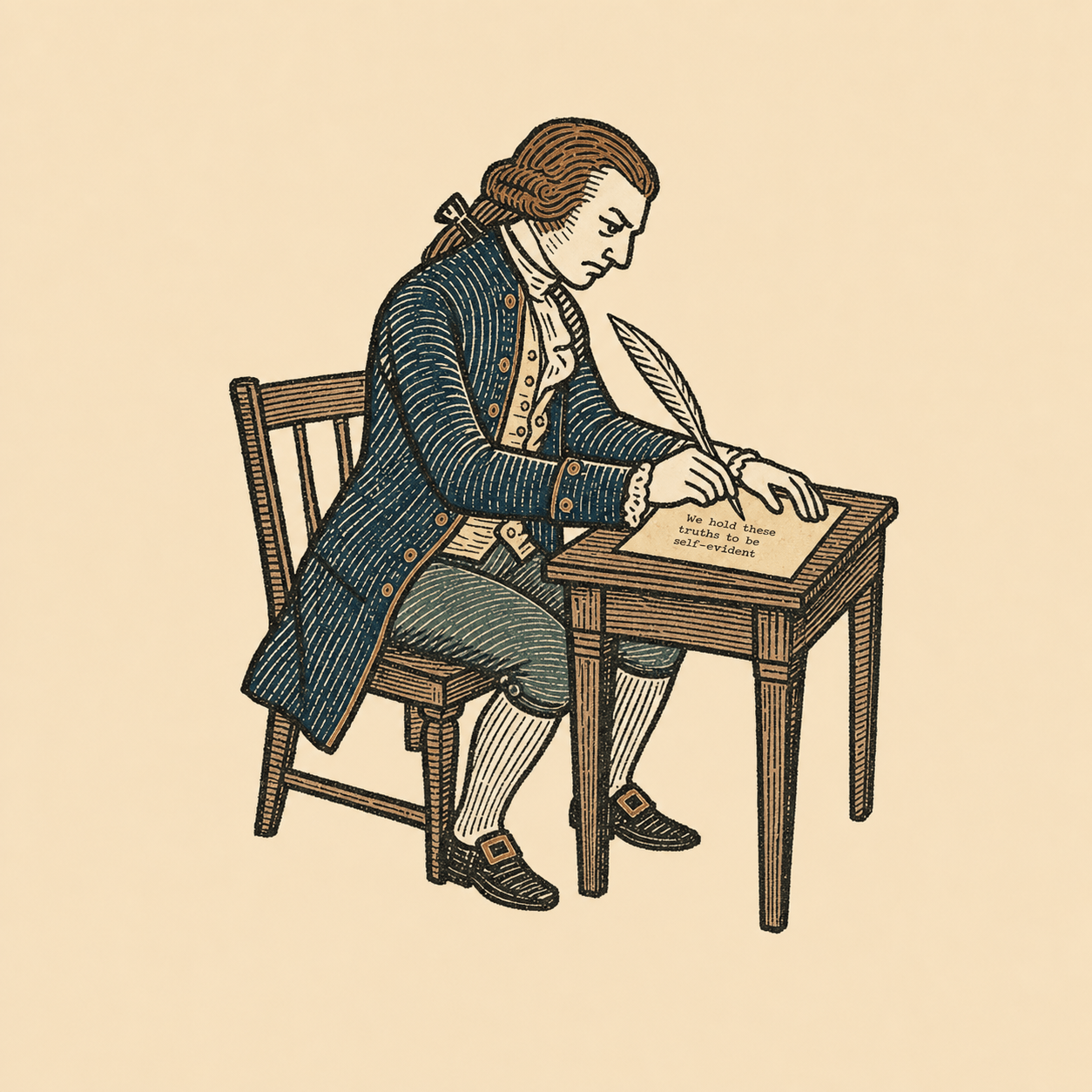
Jefferson used Locke’s ideas to explain why the colonies should break away from Britain. The Declaration says that “all men are created equal” and are “endowed” with UNALIENABLE RIGHTS, including life, liberty, and the pursuit of happiness.
Here, EQUALITY meant that no one was born with the right to rule someone else. It did not mean everyone had the same money, abilities, or influence.
But the new nation did not treat everyone this way. Slavery continued. Women could not vote. Indigenous people were pushed outside the political community. The Declaration announced an ideal that the country had not yet made real.
EQ: How do landmark texts express America’s democratic ideals?
Think of one thing you are not allowed to do.
The bigger, stranger, or more controversial, the better.
When I say, everyone shout their answer out!
Think Pair Share:
Why can’t everyone simply do whatever they want? What would happen if they did?
COLLABORATIVE BRAINSTORM
these ends
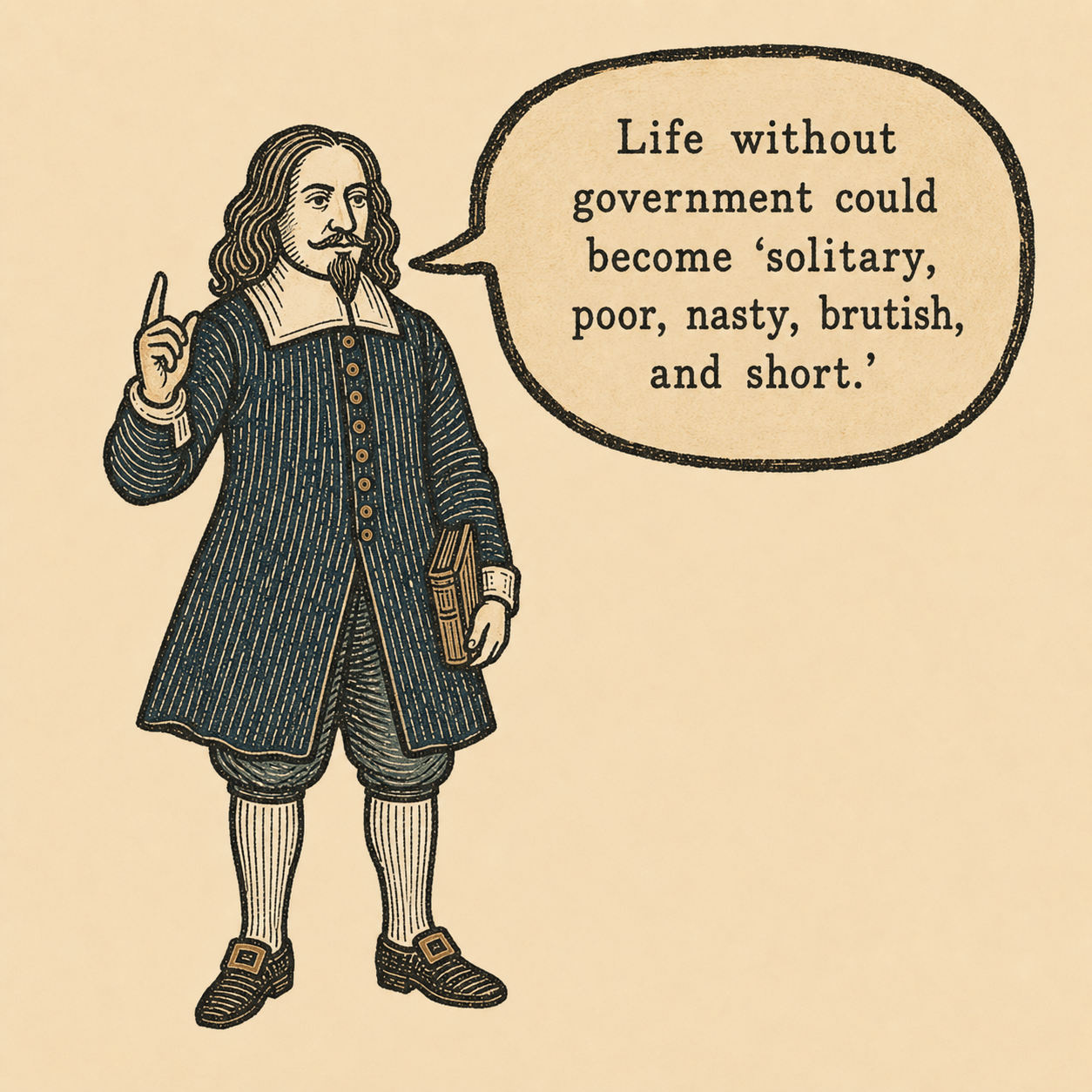
The Declaration says people have rights before any government is created. But people also need safety. Thomas Hobbes warned that life without government could become “solitary, poor, nasty, brutish, and short.”
People solve this problem by making a SOCIAL CONTRACT. They agree to follow common laws and give government the power to enforce them. In return, government protects their lives, liberty, and property.
Like any contract, both sides have responsibilities: people follow the laws, and government protects their rights.
[ADD SQUARE IMAGE]
EQ: How do landmark texts express America’s democratic ideals?
[ADD SQUARE IMAGE]
Their Just Powers
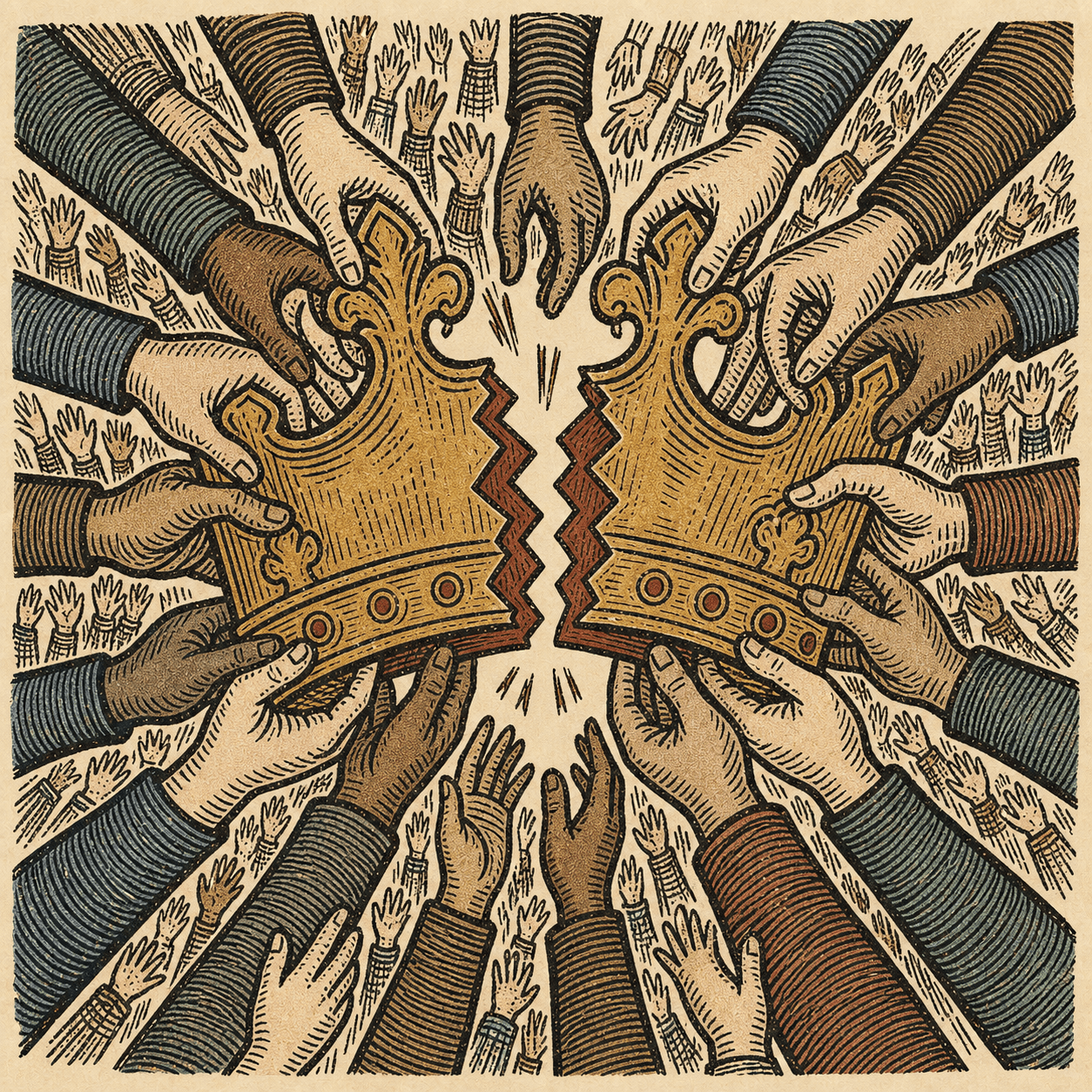
The Declaration says government exists to protect people’s rights. Its power comes from the CONSENT OF THE GOVERNED, meaning people authorize the government to rule.
This is POPULAR SOVEREIGNTY. The people are the highest political authority, not a king.
But popular power does not make government unlimited. LIMITED GOVERNMENT means officials must obey the law and use power only for legitimate purposes.
The Declaration therefore treats British rule as a broken contract that's lost the CONSENT of the people.
EQ: How do landmark texts express America’s democratic ideals?
Life, Liberty, Happiness
The Declaration connects the ideals we have studied:
People possess NATURAL RIGHTS.
Government exists through a SOCIAL CONTRACT.
Its power comes from POPULAR SOVEREIGNTY and the CONSENT OF THE GOVERNED.
Its authority must remain LIMITED.
In 1776, these were fighting words. The Declaration challenged the ancient belief that kings were born to rule and everyone else was born to obey.
It claimed that people could reject a government and build a new one.
[ADD SQUARE IMAGE]
EQ: How do landmark texts express America’s democratic ideals?
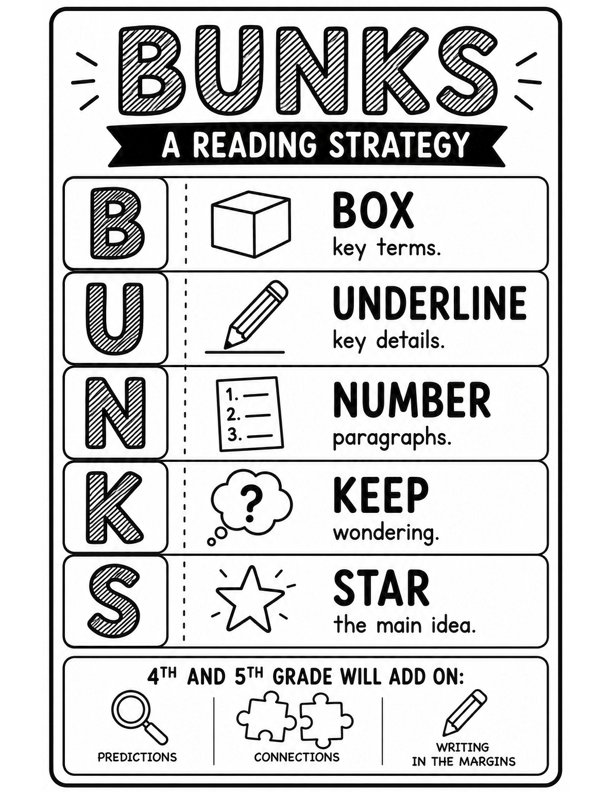
ACTIVITY INSTRUCTIONS
DECLARATION ANNOTATION
Read together, think independently, share as a group.
1
READ TOGETHER
Read your section aloud with your group.
2
READ ALONE
Read it again quietly. Focus on what the words mean.
3
ANNOTATE
Read it a third time. Use BUNKS and label any DEMOCRATIC IDEALS you find.
4
SHARE
Compare your ideas, complete one group summary, and present your section to the class.
Read it. Mark it. Make meaning together.
THE U.S. CONSTITUTION
1787
2
SOCIAL CONTRACT
3
POPULAR SOVEREIGNTY
4
LIMITED GOVERNMENT
6
REPUBLICANISM
PART 2
[ADD SQUARE IMAGE]
WE The people
The U.S. CONSTITUTION was written in 1787 to create a stronger government after independence. Its opening section, the PREAMBLE, explains who creates government and what it should do.
It begins, “We the People.” The people create government to form a stronger Union, establish justice, keep peace, defend the country, promote the common good, and secure liberty.
These shared purposes make the Constitution a SOCIAL CONTRACT. Government exists to serve the people, not a king. The Preamble states the promises. The rest of the Constitution builds the system to carry them out.
EQ: How do landmark texts express America’s democratic ideals?
Secure the Blessings
The Constitution turns promises into a system.
The SOCIAL CONTRACT gives government authority to serve shared purposes. POPULAR SOVEREIGNTY places that authority with the people. LIMITED GOVERNMENT keeps officials within constitutional boundaries.
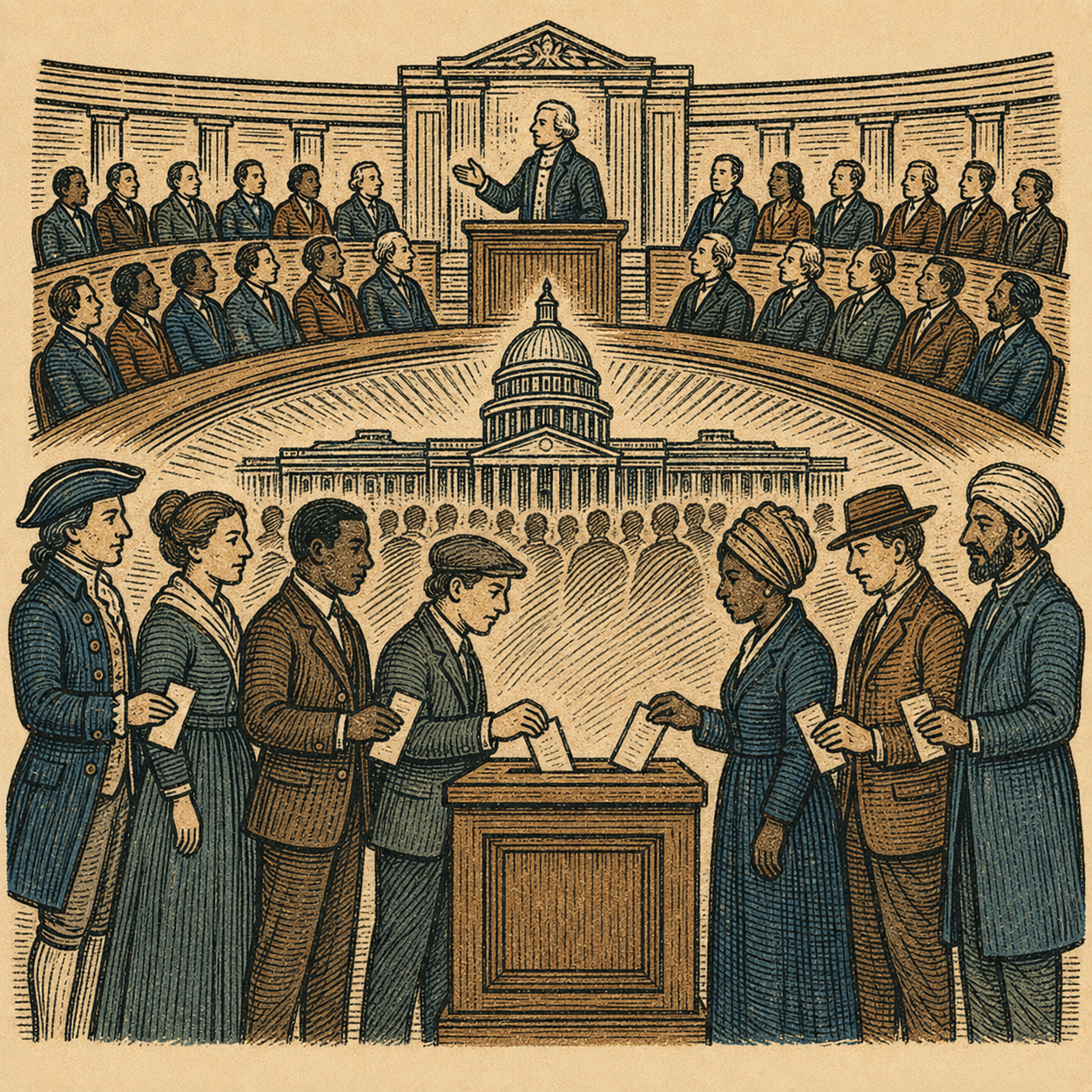
The Constitution also develops REPUBLICANISM. Citizens choose representatives to govern in their name. Those representatives make decisions and remain accountable through elections.
Republicanism gives people a practical way to take part in government.
[ADD SQUARE IMAGE]
EQ: How do landmark texts express America’s democratic ideals?
LOCAL · STATE · FEDERAL
What does republicanism look like?
CITY OF
SAN DIEGO
STATE OF
CALIFORNIA
UNITED
STATES

Henry L.
Foster III
City Council
District 4

Dr. LaShae
Sharp-Collins
State Assembly
District 79

Dr. Akilah
Weber Pierson
State Senate
District 39

Juan
Vargas
U.S. House
District 52

Alex
Padilla
U.S. Senator
for California
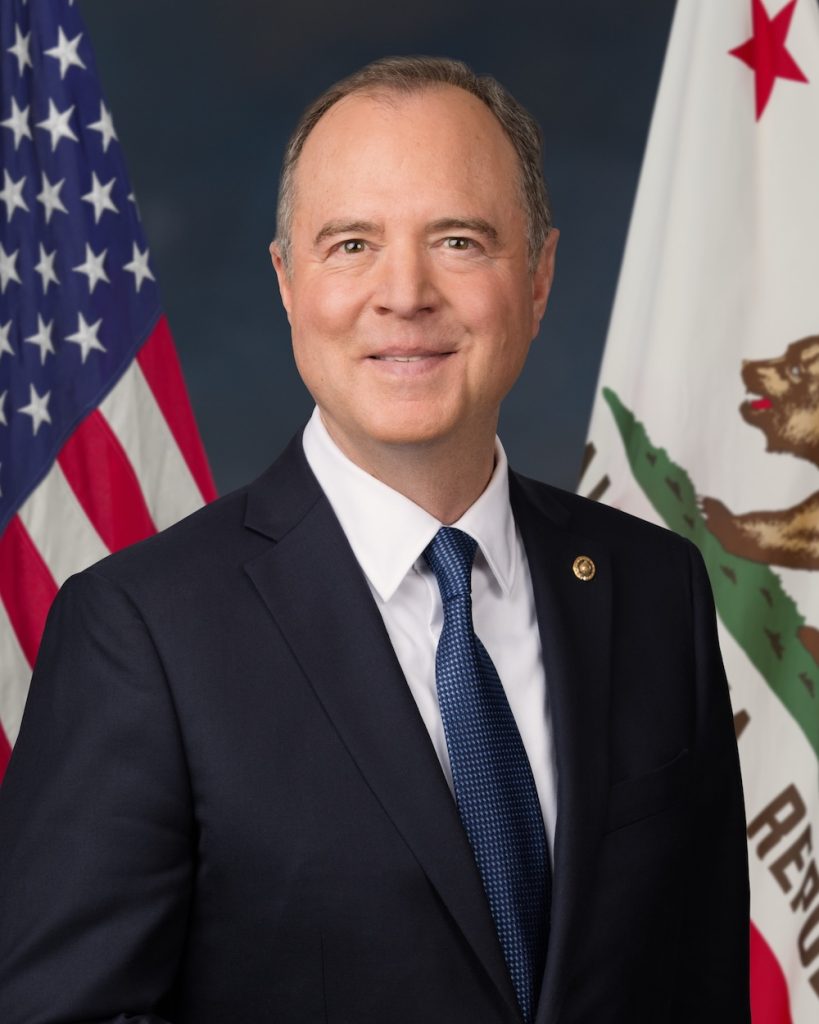
Adam
Schiff
U.S. Senator
for California
Representatives serving San Diego communities at three levels of government
[ADD SQUARE IMAGE]
A More Perfect Union
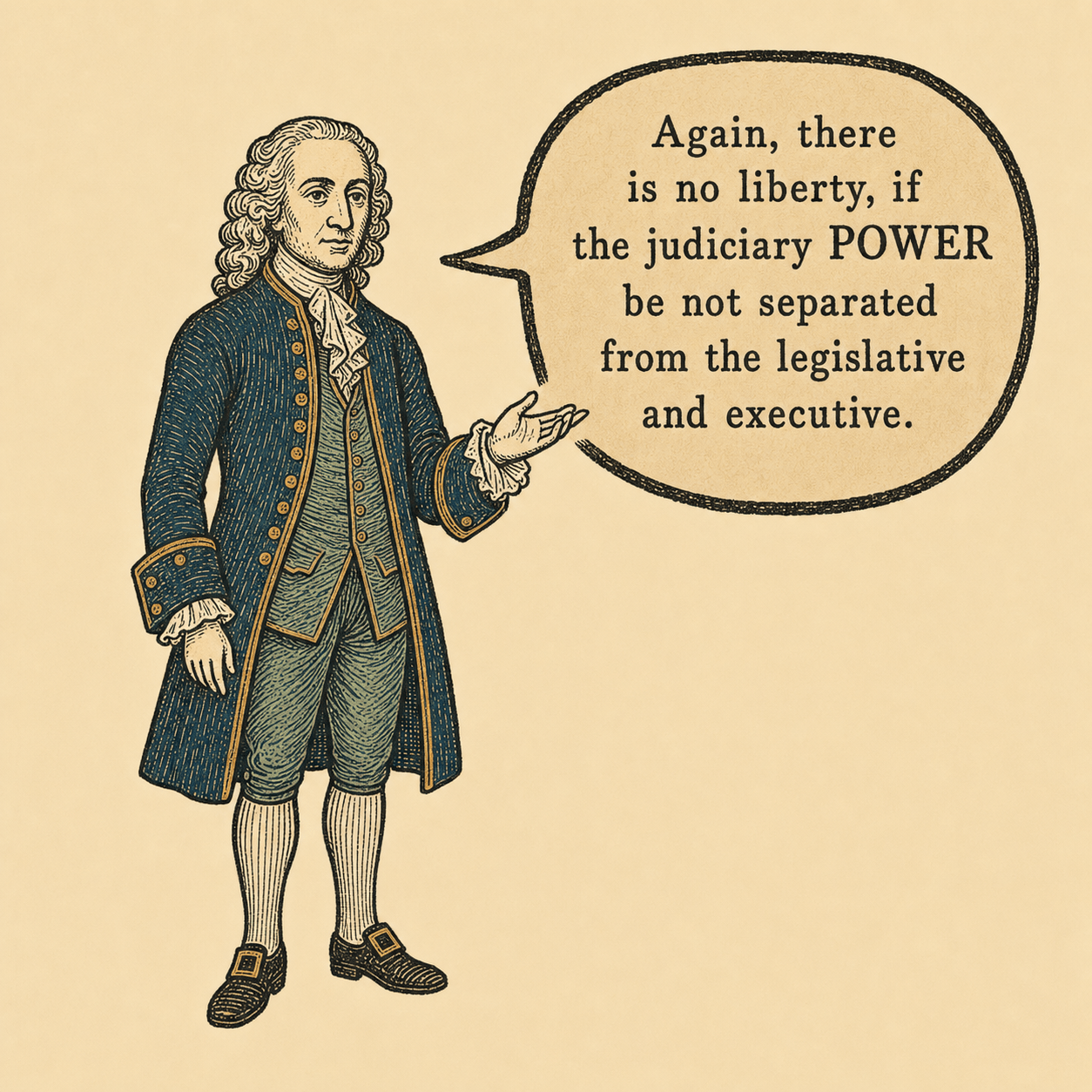
Enlightenment thinker MONTESQUIEU argued that power should restrain power.
The Constitution follows this idea through SEPARATION OF POWERS, dividing authority among three branches. CHECKS AND BALANCES lets each branch push back against the others.
Together, these principles protect LIMITED GOVERNMENT. Government can act, but no branch can rule alone.
Taken together, the Preamble and the Constitution’s structure reflect the DEMOCRATIC IDEALS. They turn those ideas into a government people can use and hold accountable.
EQ: How do landmark texts express America’s democratic ideals?
PREAMBLE TO THE UNITED STATES CONSTITUTION
We the People of the United States, in Order to form a more perfect Union, establish Justice, insure domestic Tranquility, provide for the common defence, promote the general Welfare, and secure the Blessings of Liberty to ourselves and our Posterity, do ordain and establish this Constitution for the United States of America.
Constitution of the United States · 1787
HOLD THAT THOUGHT
The Preamble to the Constitution makes six promises about what government should do.
TPS: Which promise matters most to you from your government? Why?
Preamble’s Promises
- Bring the country together
- Make the laws fair
- Keep peace at home
- Protect the country
- Support people’s well-being
- Protect freedom for everyone, now and in the future
THE GETTYSBURG ADDRESS
1863
3
POPULAR
SOVEREIGNTY
5
EQUALITY
PART 3
Text
[ADD SQUARE IMAGE]
Four Score and Seven
The DECLARATION OF INDEPENDENCE announced America’s DEMOCRATIC IDEALS in 1776. It claimed that people possessed rights and that government needed their consent. The U.S. CONSTITUTION created a system meant to protect those ideals in 1787.
By 1863, those promises faced their greatest crisis. The Civil War had already killed or wounded hundreds of thousands of Americans. The conflict began after years of disagreement over slavery, which denied millions the freedom and equality the nation claimed to value.
At Gettysburg, Lincoln spoke while the country was still fighting for its future.
EQ: How do landmark texts express America’s democratic ideals?
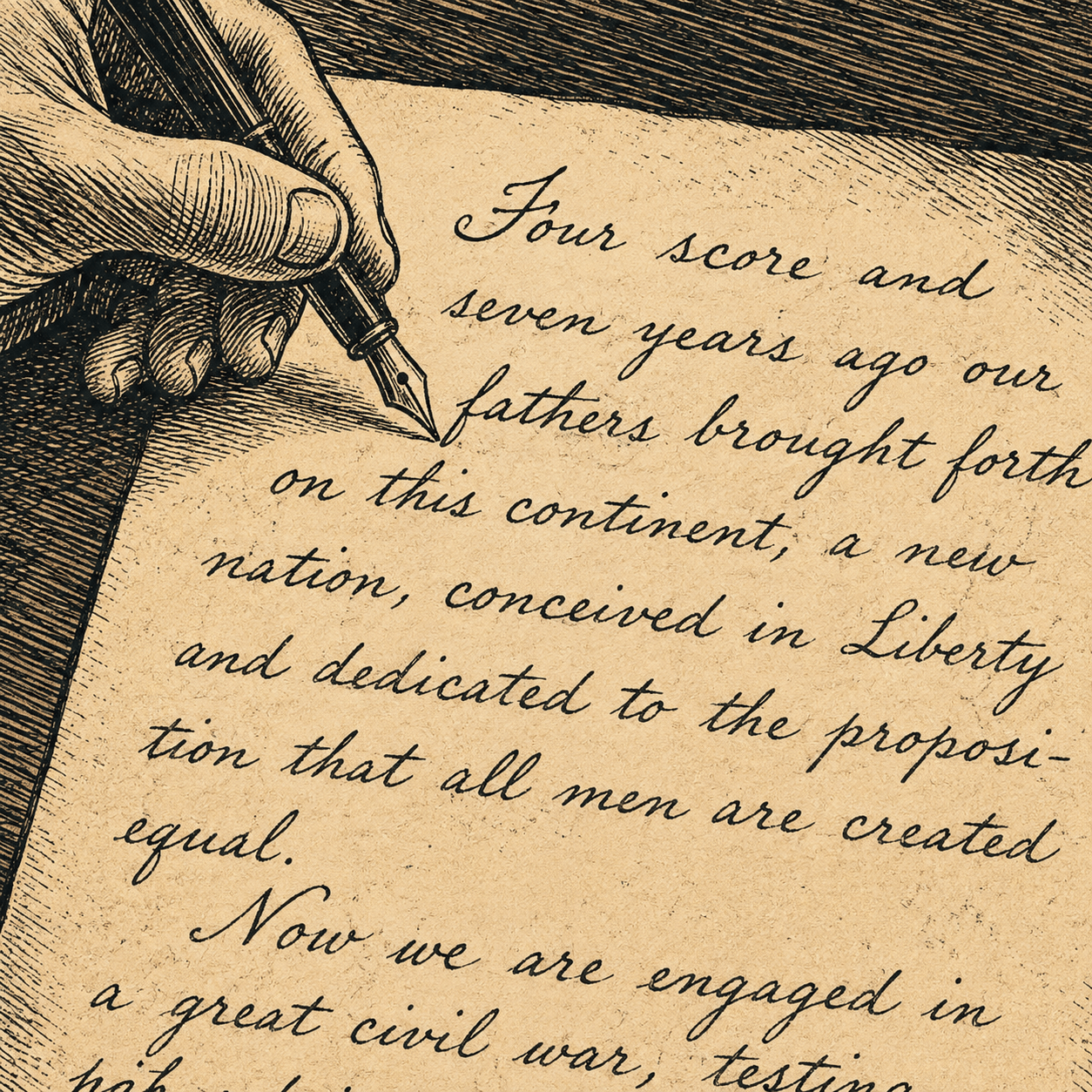
Conceived in liberty
Lincoln began by looking back to the nation’s founding. He said America was “conceived in Liberty” and dedicated to the belief that “all men are created equal.”
He was not simply repeating the Declaration. He was using its words to judge the country’s present crisis. If EQUALITY was a true democratic ideal, slavery could not continue while the nation called itself free.
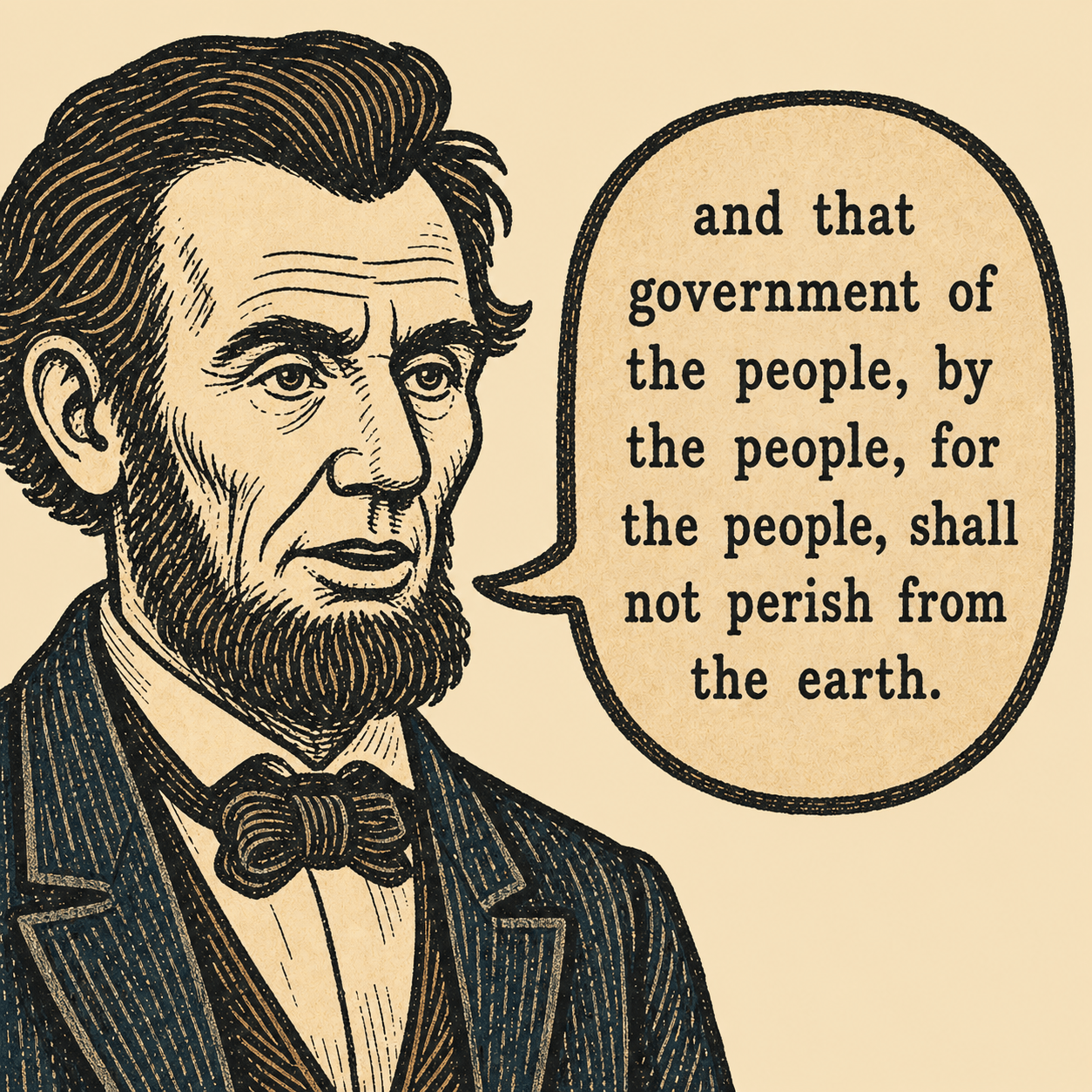
Lincoln also described government as “of the people, by the people, for the people.” This expressed POPULAR SOVEREIGNTY. The people were supposed to hold political power and decide whether the nation’s founding ideals would survive.
[ADD SQUARE IMAGE]
EQ: What democratic ideals are expressed in the Declaration of Independence and the Gettysburg Address?
[ADD SQUARE IMAGE]
A New Birth
Lincoln called the Civil War a “new birth of freedom.” A birth suggests that something new can emerge from a painful struggle.
He hoped the war would give the United States a second beginning. The nation would not merely restore the old Union, because that Union had allowed slavery to exist beside claims of liberty. Instead, the country could become more faithful to its founding ideals.
The phrase mattered because Lincoln gave the soldiers’ deaths a larger purpose. Their sacrifice could help create a democracy where EQUALITY and POPULAR SOVEREIGNTY were not just promises, but principles the nation worked to honor.
EQ: How do landmark texts express America’s democratic ideals?
SYNTHESIS
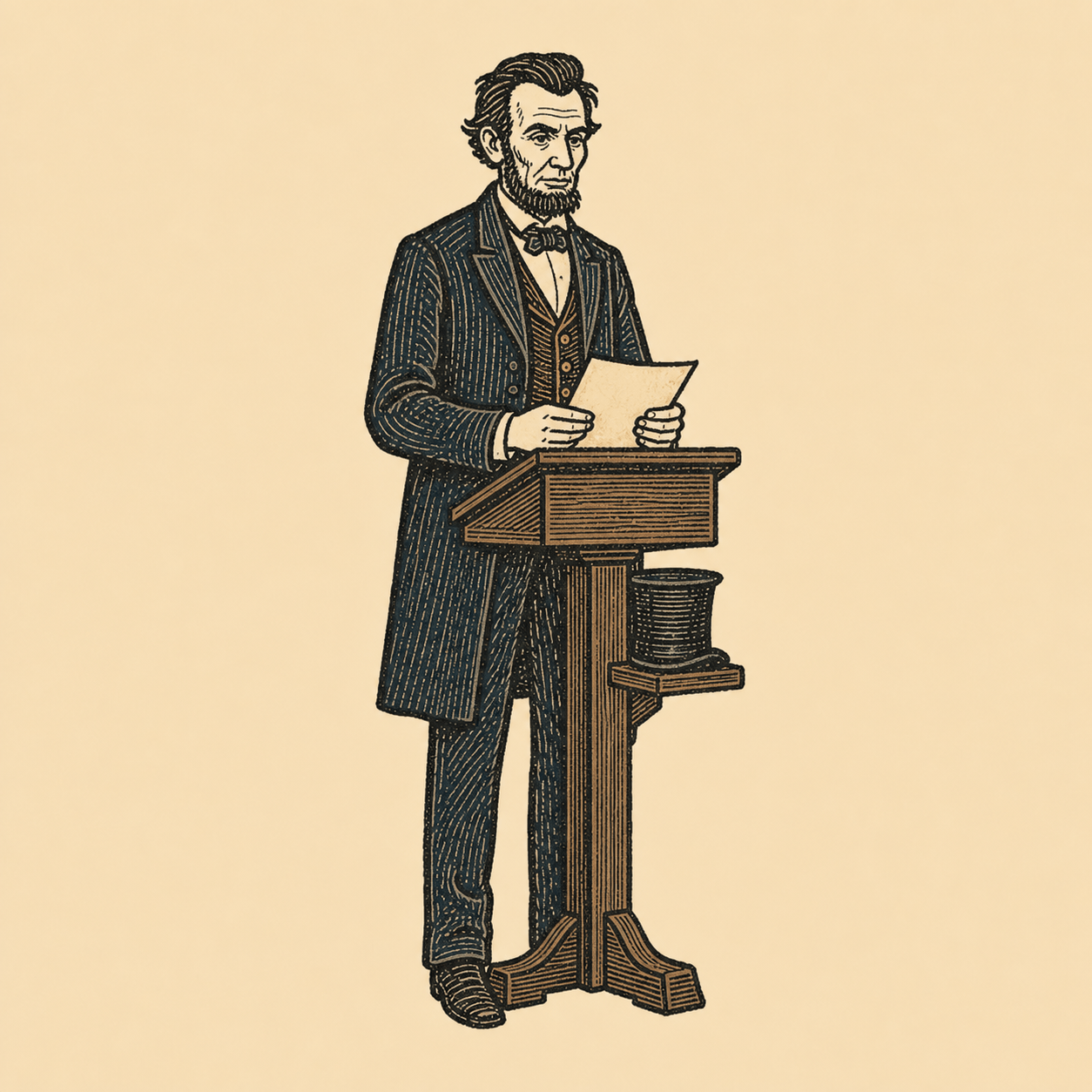
In the Gettysburg Address, Abraham Lincoln connected EQUALITY and POPULAR SOVEREIGNTY to the fight against slavery. He argued that democracy could not survive while people were denied freedom and a voice in government.
Do you think the United States today lives up to those ideals? If not, are we the democracy the nation set out to become in 1776? Explain your thinking.
LESSON RECAP
Across three texts, American DEMOCRATIC IDEALS explain what government should protect, who gives it power, and how that power must be limited.
- DECLARATION: States the founding logic of NATURAL RIGHTS, EQUALITY, SOCIAL CONTRACT, POPULAR SOVEREIGNTY, and LIMITED GOVERNMENT.
- CONSTITUTION: Builds a government based on those ideals and adds REPUBLICANISM, allowing people to govern through representatives.
- GETTYSBURG ADDRESS: Renews the promise of EQUALITY and POPULAR SOVEREIGNTY during the Civil War.
WORD WALL
NATURAL RIGHTS
Rights every person possesses by birth that government cannot rightfully take away.
SOCIAL CONTRACT
An agreement in which people accept government authority in exchange for order and protection of their rights.
POPULAR SOVEREIGNTY
The principle that government power comes from the consent of the people.
LIMITED GOVERNMENT
The principle that government power is restricted by law and cannot be absolute.
REPUBLICANISM
A system in which citizens choose representatives to make government decisions for them.
EQUALITY
The principle that all people possess equal human and political standing. No one is naturally born with the right to rule another.
APG-1.1-founding
By Weston Rogers