














Content ITV PRO
This is Itvedant Content department
Learning Outcome
5
Recognize the standard Machine Learning workflow
4
Identify the right ML approach for a given real-world problem.
3
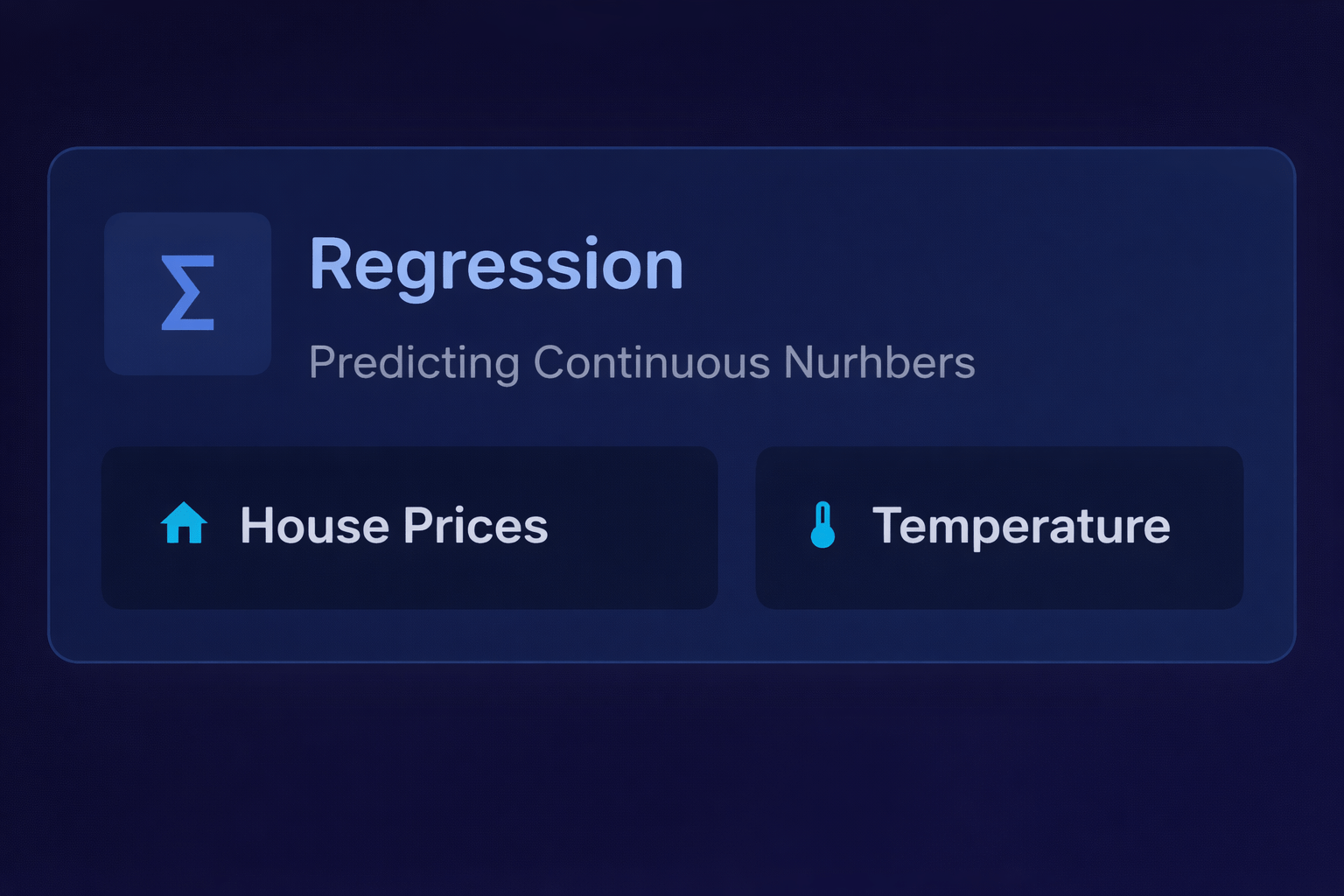
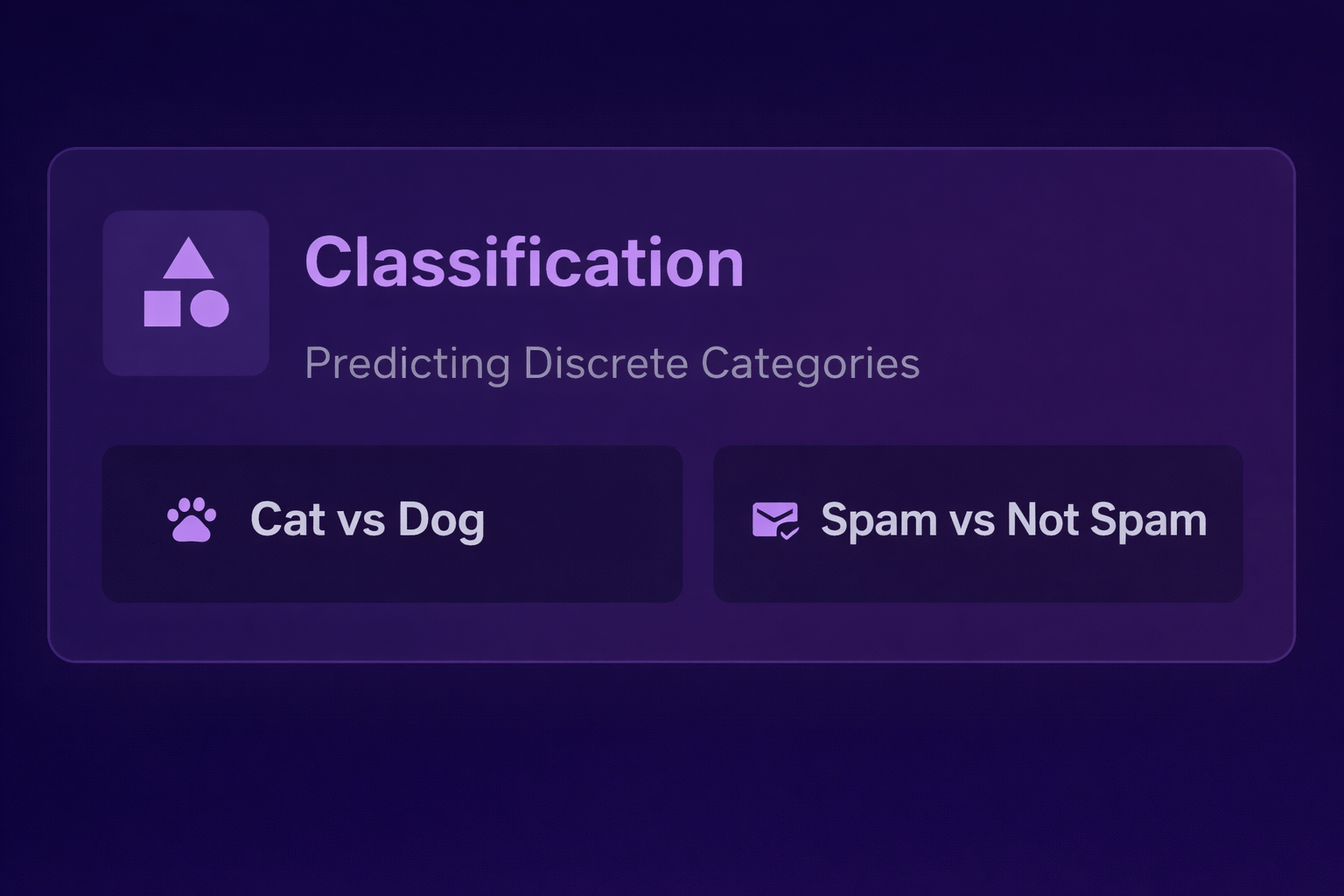
Distinguish between Regression (predicting numbers) and Classification (predicting categories).
2
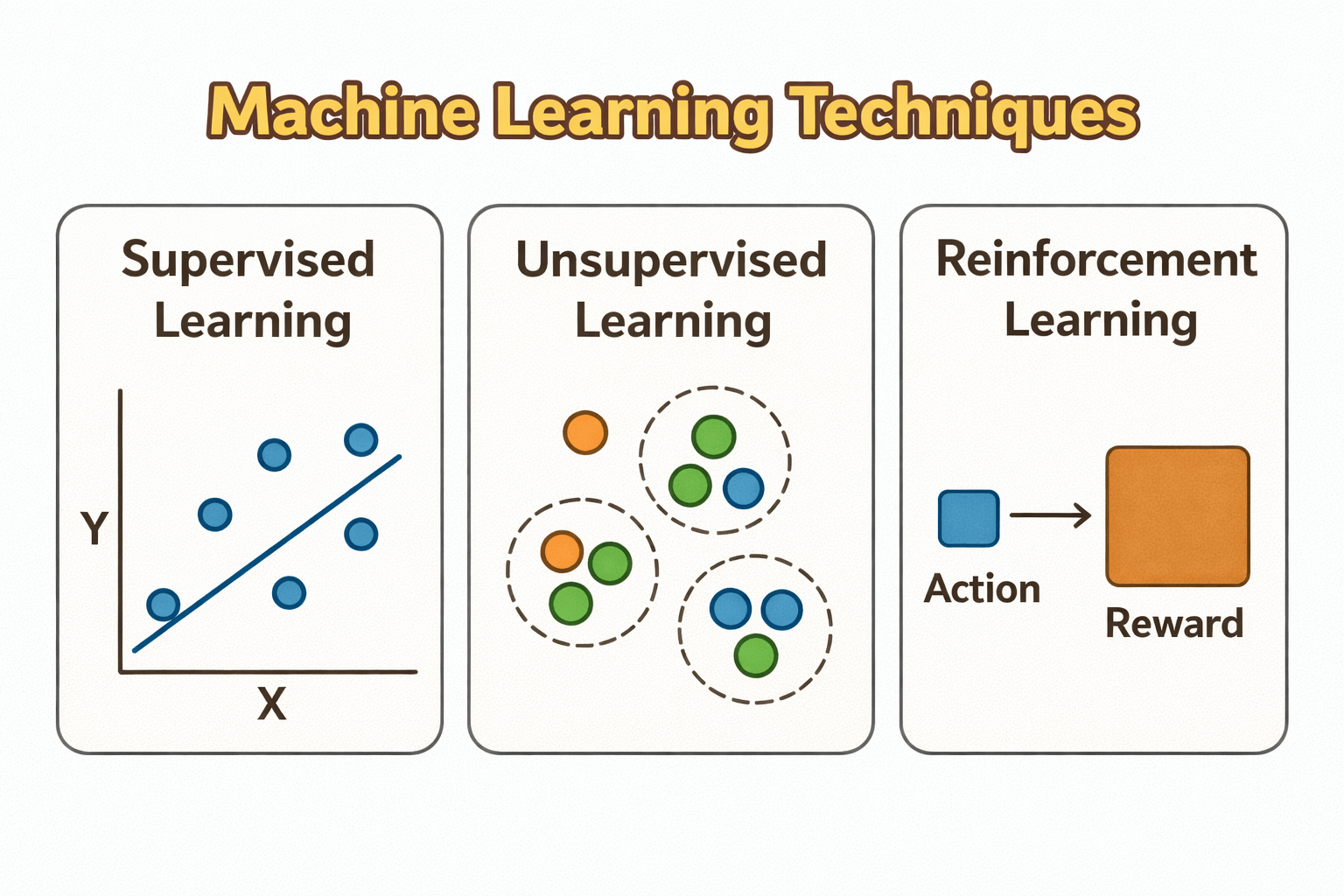
Map out the three major domains: Supervised, Unsupervised, and Reinforcement Learning
1
Understand the difference between Traditional Programming and ML
The Spam Filter Dilemma
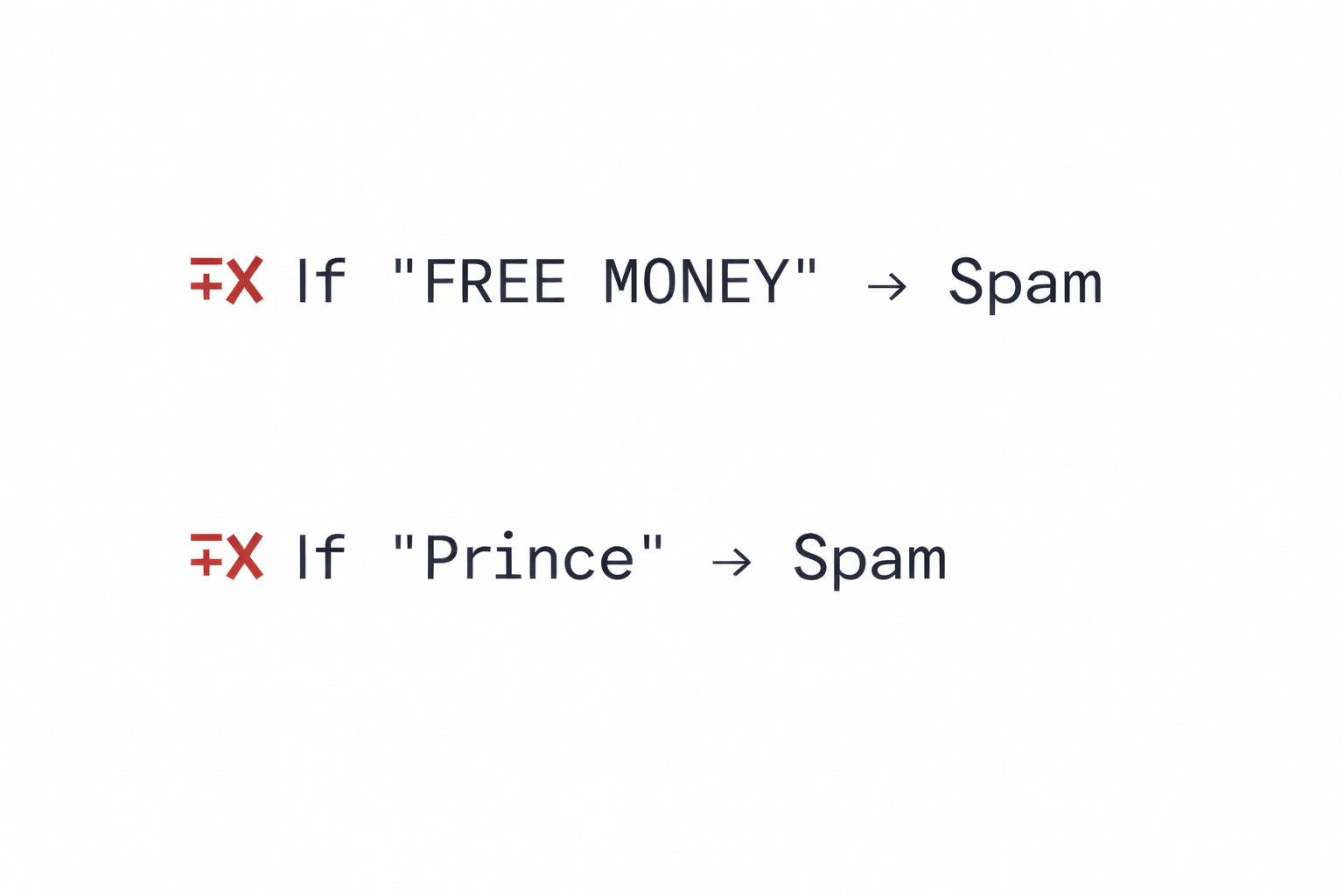
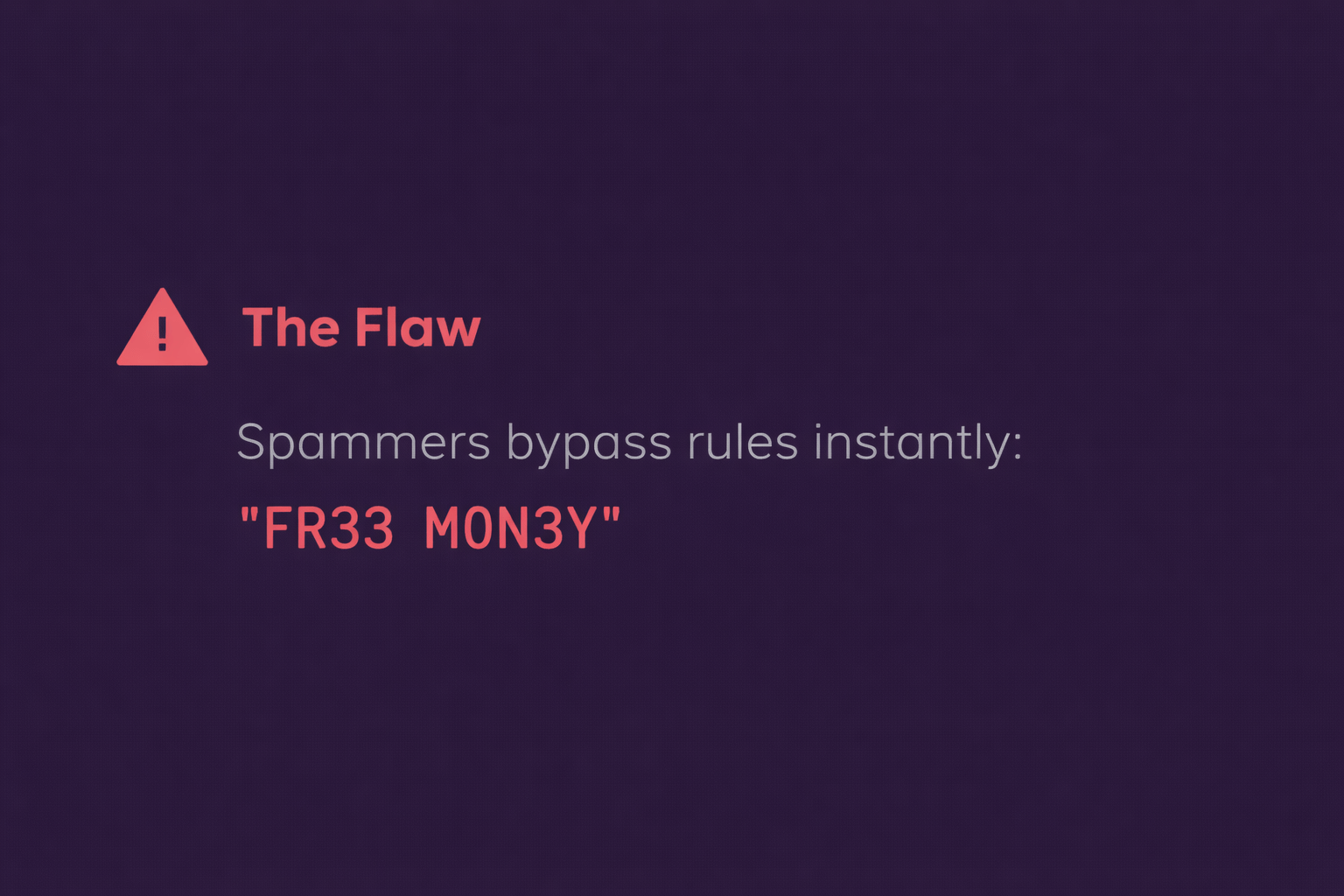
Traditional Programming
The Rule-Maker Approach
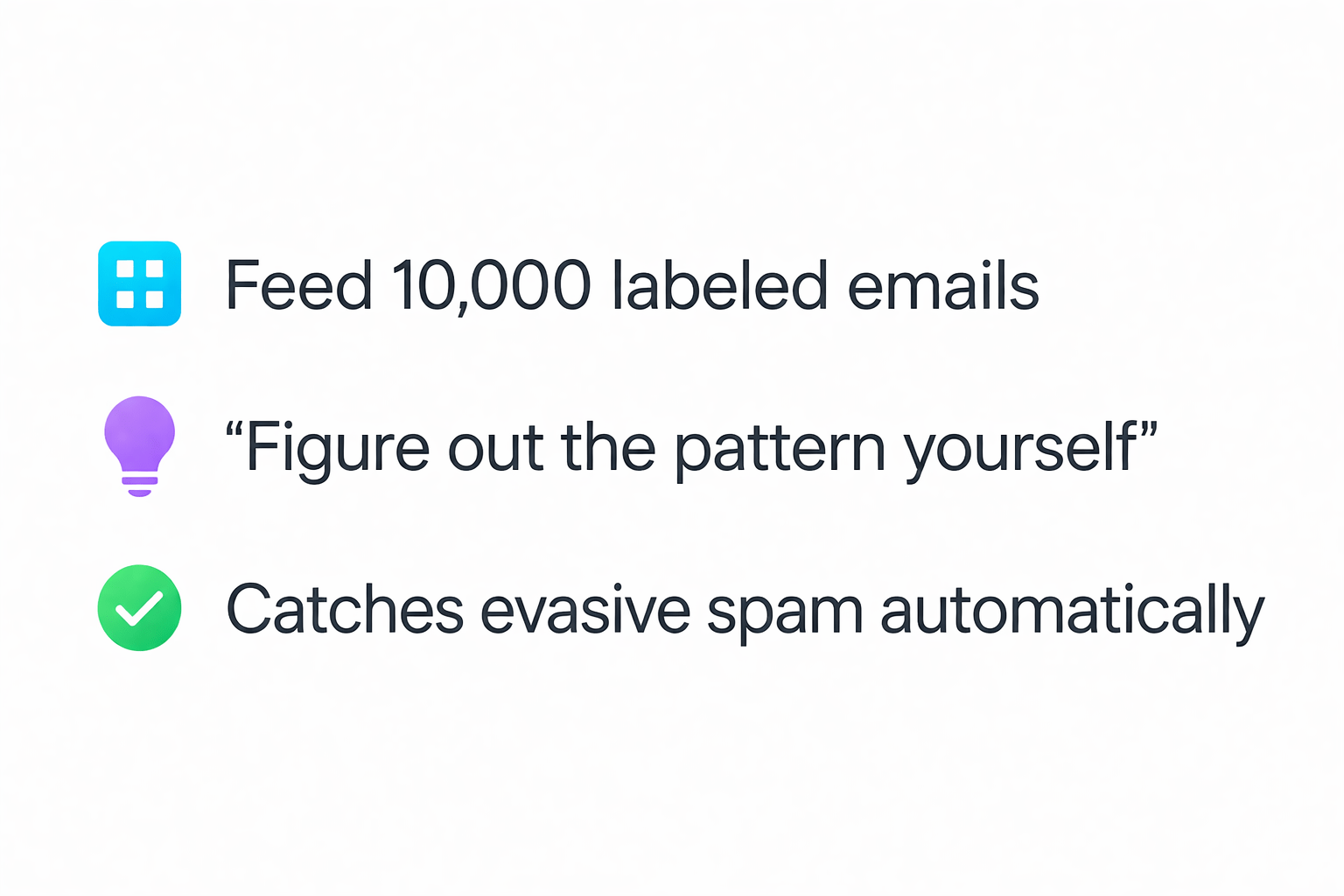
Machine learning approach
The student approach
The Paradigm Shift
DATA + ANSWER
= RULES
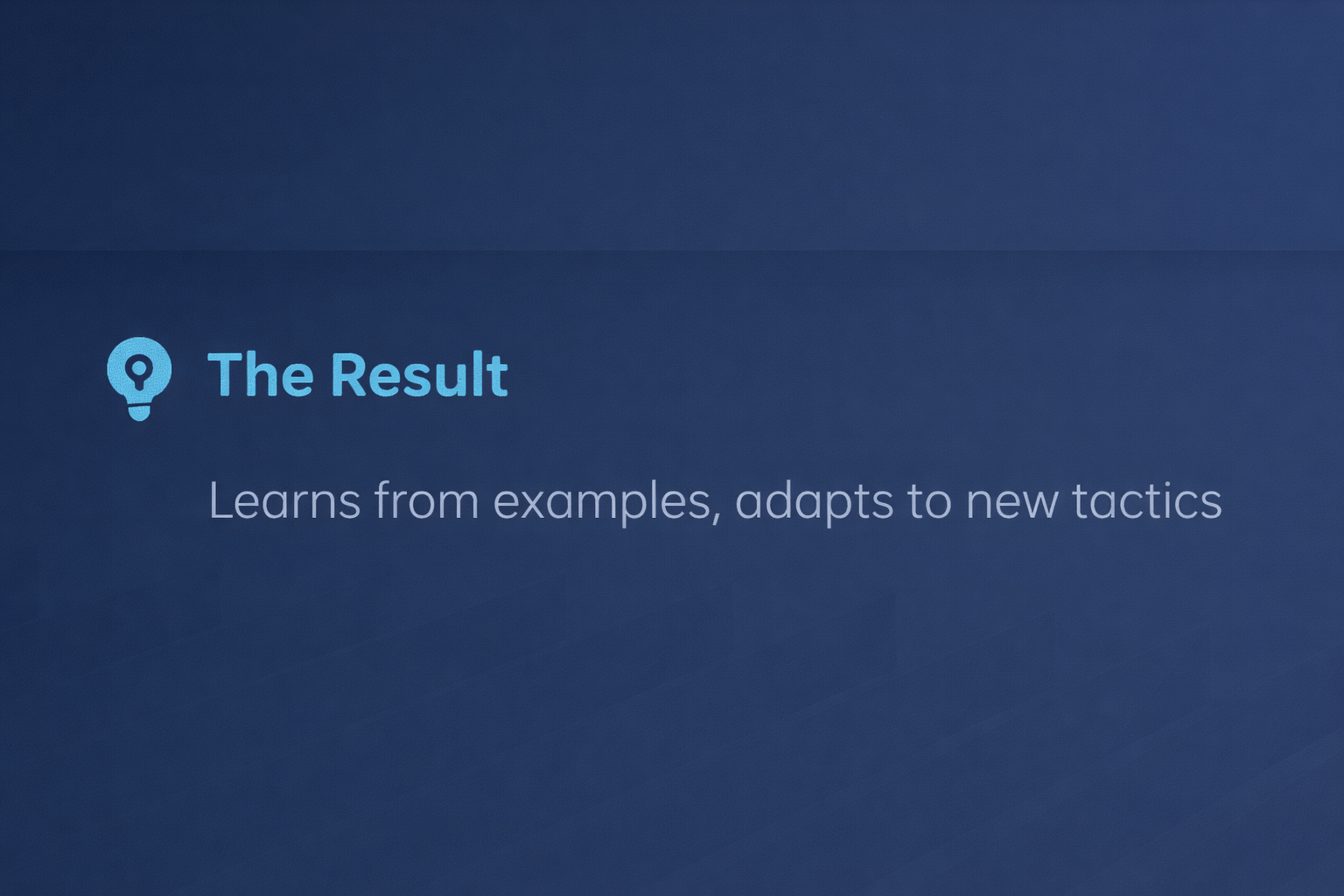
Machine learning
Algorithms learn patterns from historical data
Traditional approach
We write explicit rules to solve problems
DATA + RULES
= ANSWER
DATA + RULES
= ANSWER
Giving history test answers → Writing the textbook
The ML Landscape (The 3 Kingdoms)
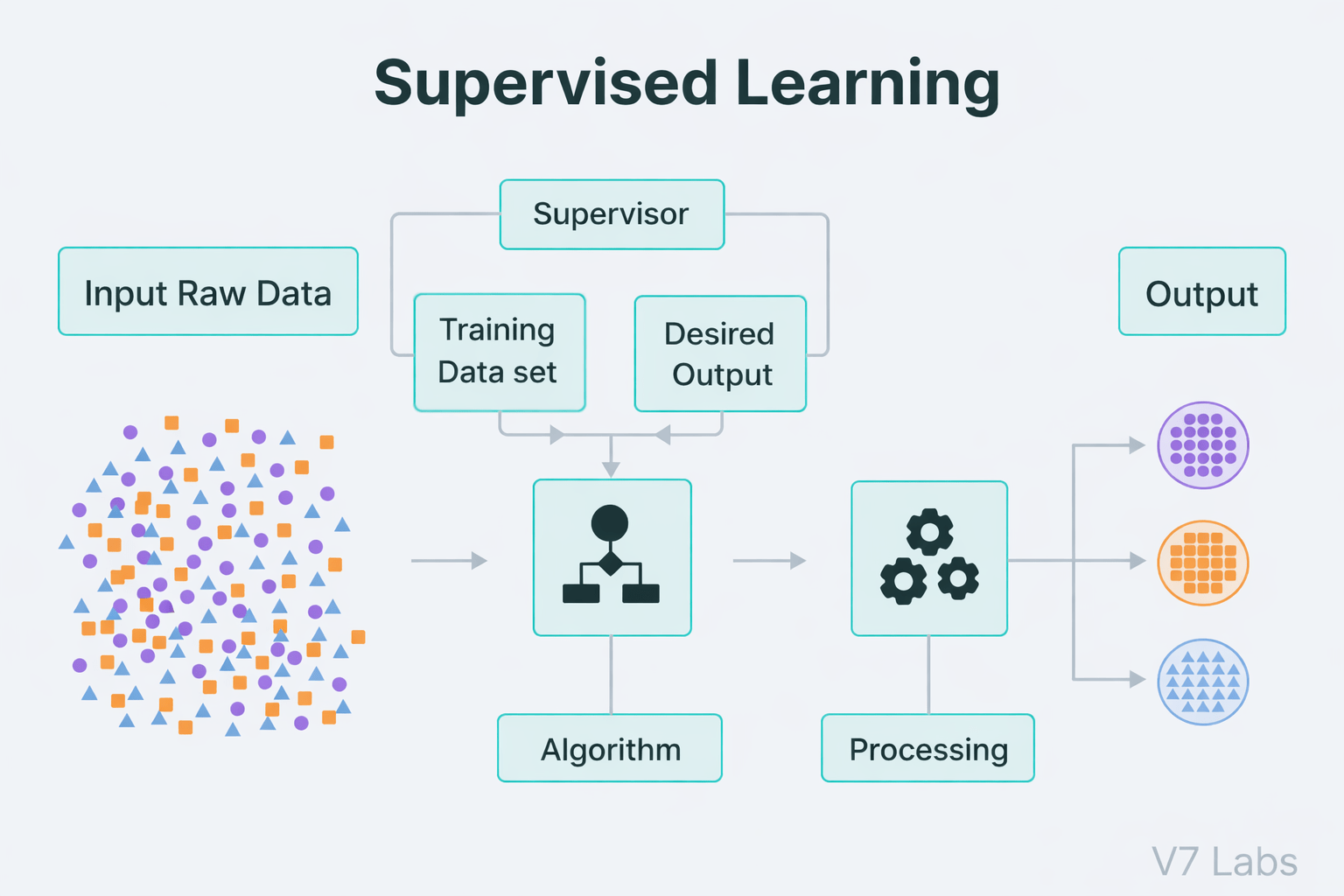
Supervised Learning
Learning with a Teacher
Labels : Data with correct answers provided
Un-supervised Learning
Learning without a Teacher
No - Labels : Finding hidden patterns in raw data
Reinforcement Learning
Learning through Trial and Error
Rewards : Maximizing points through actions
Supervised Learning
The Flashcard Teacher
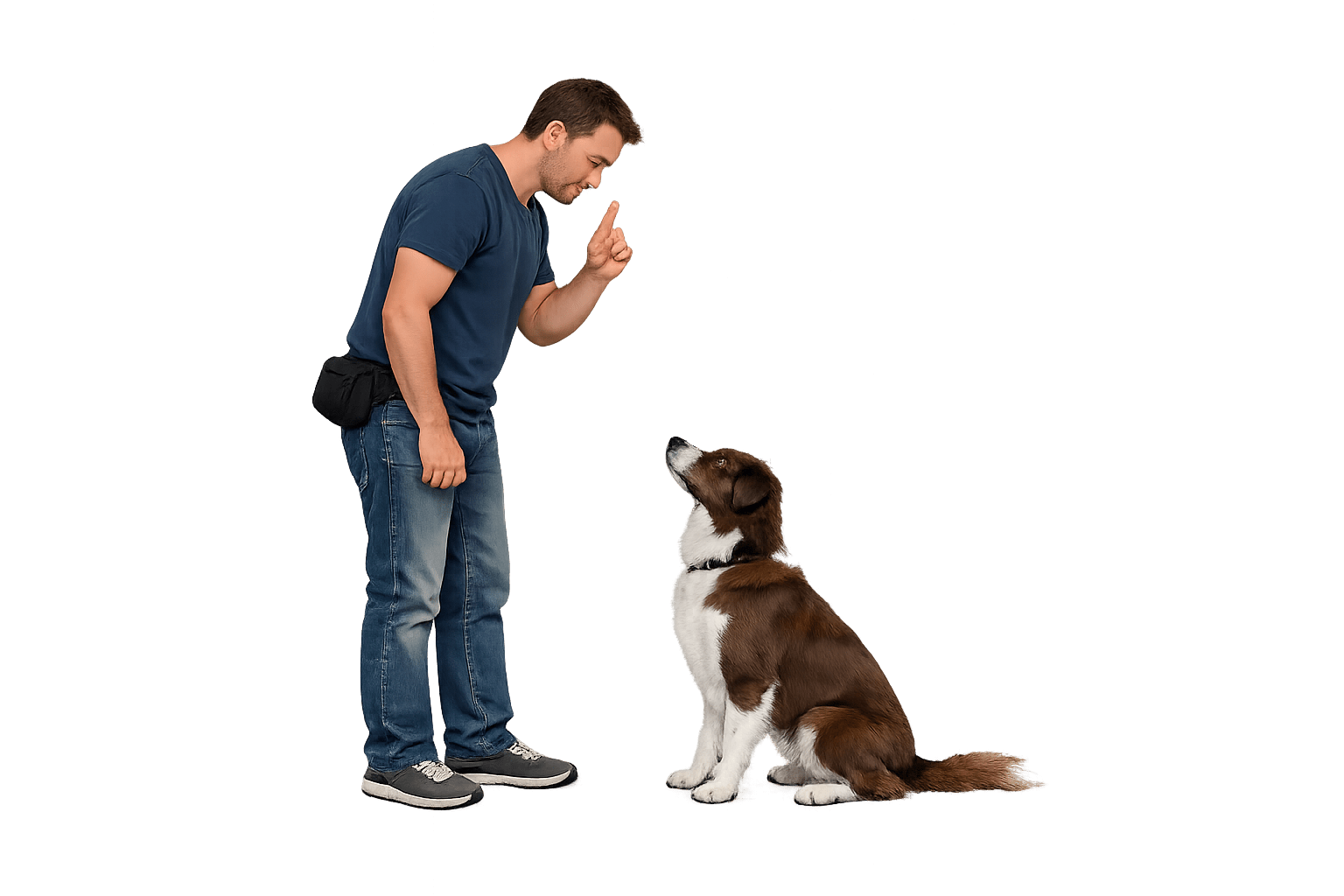
Analogy: Show picture → Say "Cat" → Repeat 100 times → Test recognition
Unsupervised Learning
You dump a box of mixed Lego bricks and ask a child to organise them. Without instructions, they naturally group them into piles like red bricks, blue bricks, and wheels.
The Machine's Logic:
The data is Unlabeled. There are no answers. We just feed the machine raw data and ask it to find hidden structures, clusters, or anomalies.
Real-World use case:
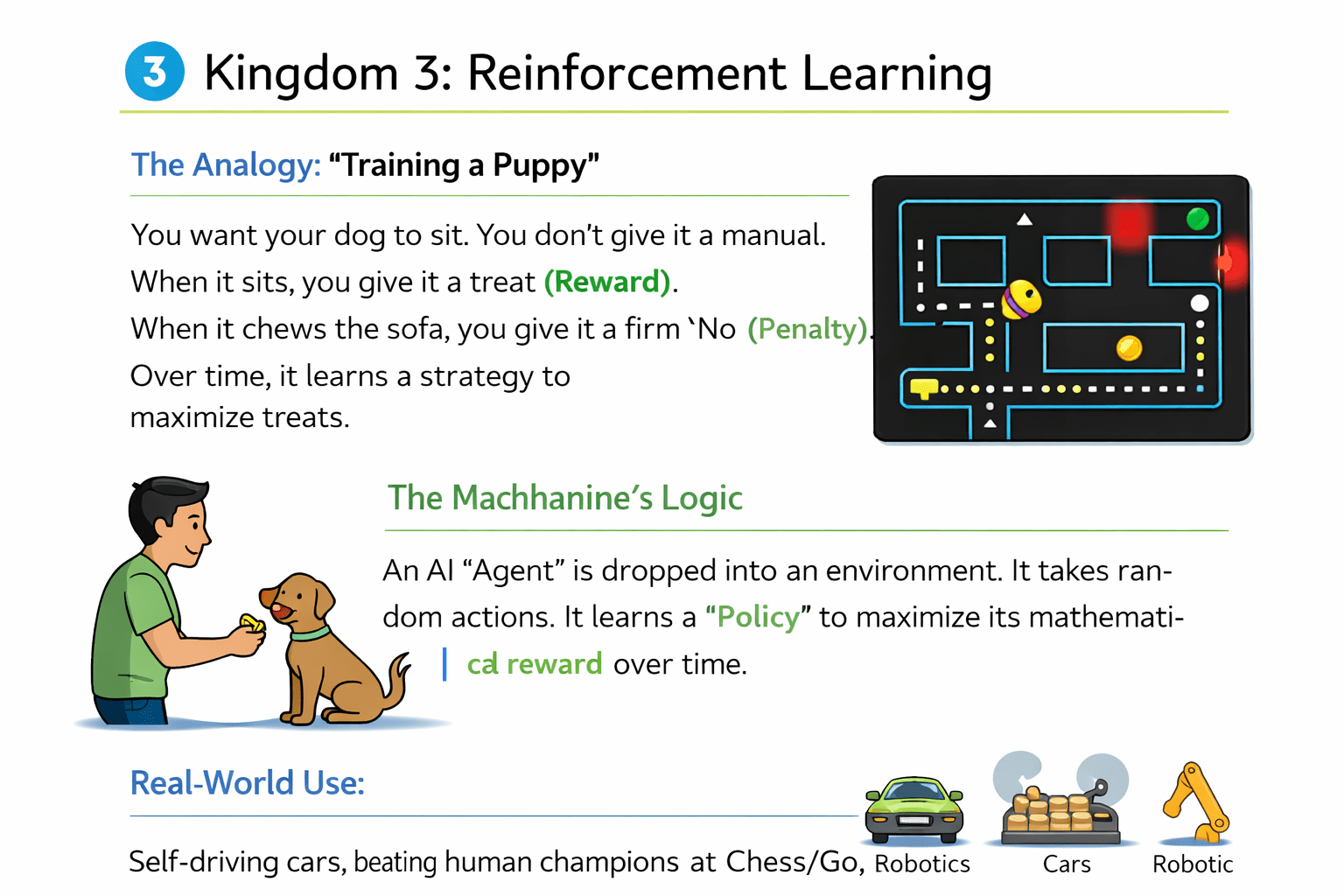
Reinforcement Learning
You want your dog to sit. You don't give it a manual. When it sits, you give it a treat (Reward). When it chews the sofa, you give it a firm "No" (Penalty). Over time, it learns a strategy to maximize treats.
The Machine's Logic:
An AI "Agent" is dropped into an environment. It takes random actions. It learns a "Policy" to maximize its mathematical reward over time.
Real-World use case:
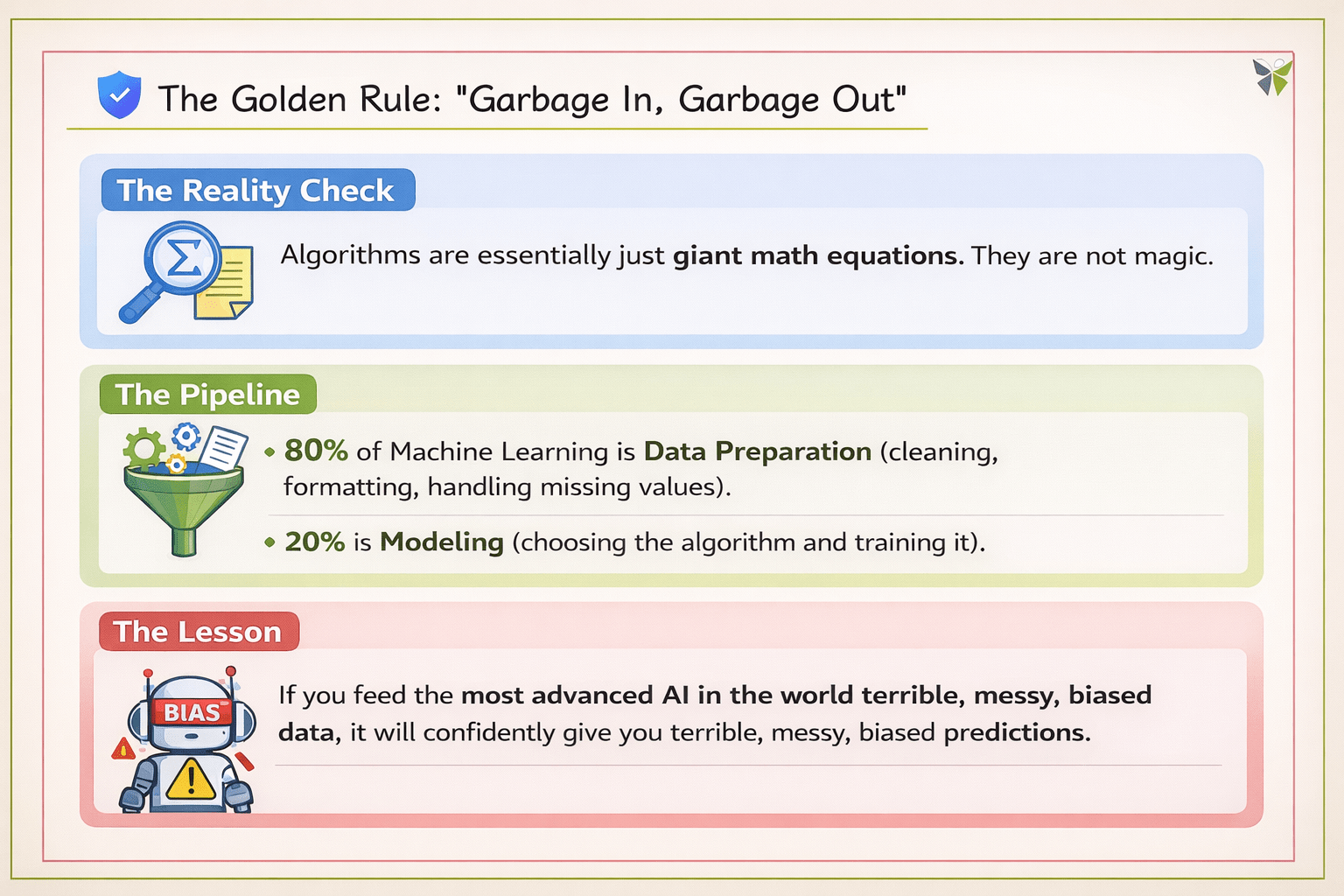
The Golden Rule: "Garbage In, Garbage Out"
Summary
4
Reinforcement Learning: Learns through rewards and penalties.
3
Unsupervised Learning: Finds hidden patterns in unlabeled data.
2
Supervised Learning: Uses labeled data to predict values or categories.
1
Machine Learning: Learns patterns from data to make predictions.
Quiz
A streaming service wants to group movies into 5 “vibe” categories without labels— which ML approach should they use?
A. Supervised Learning (Regression)
B. Supervised Learning (Classification)
C. Unsupervised Learning (Clustering)
D. Reinforcement Learning
Quiz-Answer
A streaming service wants to group movies into 5 “vibe” categories without labels— which ML approach should they use?
A. Supervised Learning (Regression)
B. Supervised Learning (Classification)
C. Unsupervised Learning (Clustering)
D. Reinforcement Learning
By Content ITV